
Beijing voices disapproval of actions aimed at Iran's newly appointed leader
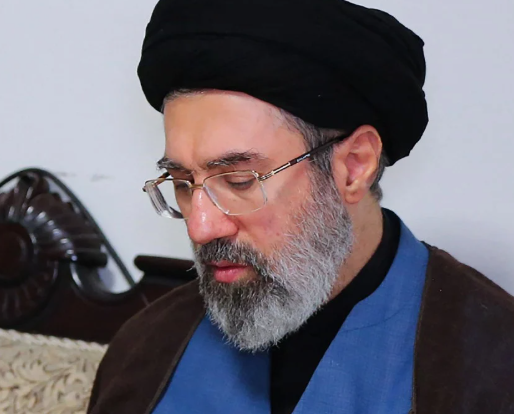
On Monday, China stated that the selection of Mojtaba Khamenei as Iran's new supreme leader, following the death of his father, was a matter of domestic concern, and it opposed any attempts to target him.
nIsrael's military had previously threatened to target any successor to former supreme leader Ali Khamenei, who was killed in the initial wave of US and Israeli strikes on Iran.
nUS President Donald Trump had earlier dismissed Mojtaba Khamenei as a "lightweight" and insisted that he should have a say in the appointment of a new Iranian leader.
nChina's foreign ministry spokesman, Guo Jiakun, told reporters on Monday that Iran's decision to appoint the younger Khamenei was "based on its constitution".
nGuo Jiakun emphasized that "China opposes interference in other countries' internal affairs under any pretext, and Iran's sovereignty, security, and territorial integrity should be respected", in response to questions about the threats against the new leader.
nIsrael and the United States have continued their attacks on Iran in recent days, prompting Tehran to retaliate with waves of missile and drone attacks on Israel and Gulf neighbours hosting US forces.
nBeijing, a close partner of Tehran, condemned the killing of the former supreme leader, but also criticized the Iranian strikes against Gulf states.
nOn Sunday, China's envoy to the Middle East urged de-escalation during a meeting with Saudi Arabia's foreign minister, Faisal bin Farhan.
nZhai Jun stated that "China urges all parties to immediately cease military operations, prevent further escalation of tensions, and avoid causing greater harm to the people of regional countries".
nChina's Foreign Minister, Wang Yi, said on Sunday that the war "should never have happened" and called for an end to the fighting.
nThe conflict has threatened global energy security and trade, as well as China's oil supplies, with more than 80 percent of Iranian oil exports going to China last year, according to analytics firm Kpler.
nThis accounted for approximately 13 percent of China's total seaborne oil imports, based on Kpler data.
nHowever, more than half of China's total seaborne crude imports last year came from the wider Middle East, Kpler said, making it highly dependent on transit through the Strait of Hormuz.
Related Stories
 General News
CELEBRATING TWO YEARS OF TRANSFORMATIONAL LEADERSHIP IN THE PRESIDENTIAL AMNESTY PROGRAMME
Tomorrow, 14TH March 2026, as we look forward to the second anniversary, we reflect on the remarkable two years since the Administrator of the Preside
 General News
PRESIDENTIAL AMNESTY PROGRAMME PHASE 3: DISREGARD PURPORTED STATEMENT ON DELAYED ITA PAYMENTS — OFFICE OF NATIONAL CHAIRMAN
The Office of the National Chairman of the Presidential Amnesty Programme Phase 3, General Elaye ThankGod Dollar Slaboh, has called on beneficiaries a
 General News
RE: CLARIFICATION ON MY PERSONAL RELATIONSHIPS
PUBLIC NOTICErnrnRE: CLARIFICATION ON MY PERSONAL RELATIONSHIPSrnrnIt has become necessary to make this public clarification following the increasing