
Battle for Oyo's Top Spot Heats Up in 2027 as Influential Politicians Regroup to Overcome New Obstacles
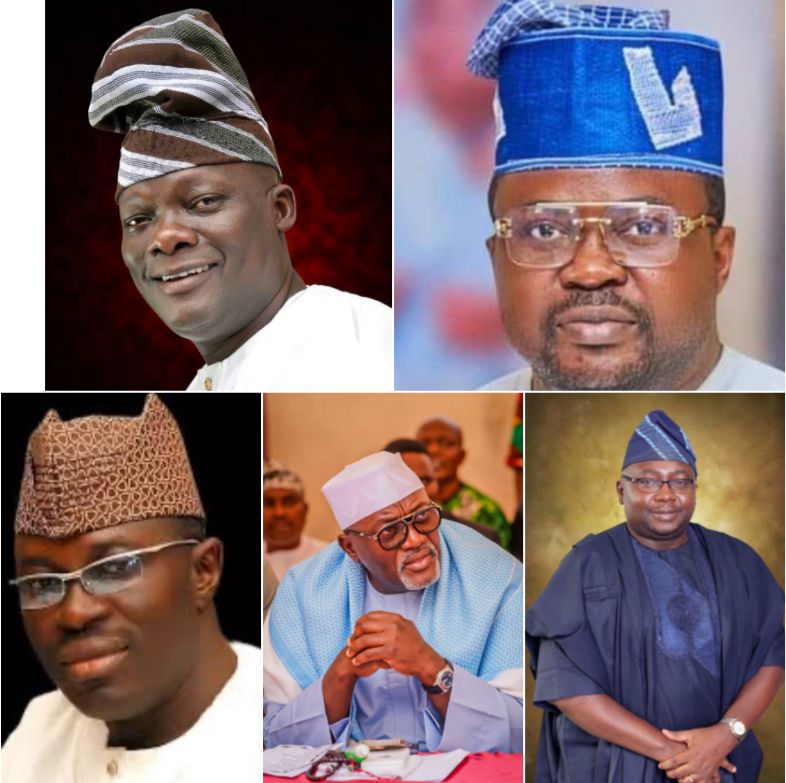
By Adeola Badru
nAs the second term of Governor Seyi Makinde steadily draws to a close, political activities across Oyo State have begun to gather considerable momentum, with several influential figures positioning themselves for what is shaping up to be a keenly contested governorship race.
nAt various public fora, Governor Makinde has remained consistent in his position that the choice of his successor rests squarely with the people of Oyo State. He has repeatedly distanced the process from the influence of political godfathers and entitlement politics. This stance has further heightened public interest and intensified behind-the-scenes manoeuvrings among aspirants.
nWithin the Peoples Democratic Party (PDP), Adedeji Stanley Olajide, popularly known as Odidiomo, has emerged as a prominent contender. As a serving member of the House of Representatives representing Ibadan North and Ibadan South-West Federal Constituency, Olajide has built a reputation as a grassroots politician with a modern, technology-driven governance outlook.
nHis growing popularity, particularly within Ibadan, coupled with his international exposure, places him in a competitive position within the PDP. Also in the PDP is Olufemi Ajadi Oguntoyinbo, a former governorship candidate in Ogun State, who has openly declared his ambition to govern Oyo State.
nAjadi has anchored his aspiration on administrative experience and a commitment to accelerating development, though questions remain regarding the depth of his political structure within Oyo.
nThe APC
nOn the side of the All Progressives Congress (APC), Teslim Folarin continues to stand out as a key figure. A former senator and the party’s candidate in the last governorship election, Folarin has sustained political relevance through youth empowerment initiatives and social intervention programmes. He also serves as an ambassador of the Renewed Hope Agenda of President Bola Tinubu.
nAnother high-profile name is Adebayo Adelabu, the current Minister of Power. However, recent developments suggest that Adelabu may be retreating from his governorship ambition. With President Tinubu’s directive that any cabinet member seeking elective office must resign, Adelabu appears to have recognised the political realities ahead.
nThere are indications that he may no longer be willing to relinquish his ministerial position, a move widely interpreted as an acknowledgment that his gubernatorial ambition may have hit a significant roadblock.
nNot to be overlooked are Taofeek Arapaja of the PDP and Sharafadeen Alli of the APC, both of whom possess deep political roots and enduring influence capable of shaping the direction of the race as alliances begin to crystallise.
nAlli, a former Secretary to the State Government under Rashidi Ladoja, has long been regarded as a strategic force within his political camp. However, his ambition has now been thrown into serious doubt following a major traditional development.
nHe is set to be elevated to the title of Ekaarun Balogun of Ibadanland, with the conferment of a beaded crown, an honour that carries significant cultural prestige but also strict legal implications.
nAccording to a directive issued by the Oyo State Commissioner for Local Government and Chieftaincy Matters, the Olubadan of Ibadanland has been instructed to proceed with the coronation of High Chief Alli alongside other prominent chiefs.
nThe ceremony, scheduled to hold at Mapo Hall, Ibadan, formed part of a broader effort to preserve the integrity of the Ibadan chieftaincy institution and address concerns surrounding delays in crown conferment.
nCrucially, under Oyo State chieftaincy law, holders of beaded crowns are precluded from participating in partisan politics or contesting elective office. This development, unless reversed or legally challenged, effectively places a decisive barrier before Alli’s governorship ambition, potentially bringing it to an abrupt end, regardless of his political standing.
nEarlier speculation surrounding a visit by Ladoja to President Tinubu in Abuja had fuelled suggestions of political alignments aimed at boosting Alli’s candidacy.
nHowever, this narrative was dismissed by the Special Adviser to the Olubadan on Media Matters, who clarified that the visit was purely personal and centred on the longstanding advocacy for the creation of Ibadan State.
nHe emphasised that Ladoja remains a father figure to all and would not interfere in determining who emerges as governor in 2027, while reiterating that the development of Ibadanland remains paramount.
nFor many residents, the central question is no longer whether the race has begun, but how it will unfold, and who will ultimately emerge from the shifting political landscape to succeed Governor Makinde.
nComprehensive Analysis of the Major Aspirants Adedeji Stanley Olajide (Odidiomo) — PDP
nOlajide stands out as one of the most vibrant contenders within the PDP. His political strength lies in his grassroots appeal and his connection with younger demographics, particularly within Ibadan.
nChances:
nRelatively strong, especially if he consolidates support within Ibadan and gains wider acceptance across other zones.
nWeaknesses:
nHis influence remains largely Ibadan-centric, and he may face stiff internal resistance from entrenched party structures.
nGeneral Acceptance:
nHigh in Ibadan, but still evolving across the wider state.
nOlufemi Ajadi Oguntoyinbo — PDP
nAjadi presents himself as a development-oriented candidate with administrative experience.
nChances:
nCurrently limited due to weak local political structures.
nWeaknesses:
nPerceived as an outsider, with stronger political ties to Ogun State than Oyo.
nGeneral Acceptance:
nRelatively low, with the need for significant grassroots penetration.
nTeslim Folarin — APC
nFolarin remains one of the most recognisable figures in Oyo politics.
nChances:
nStrong within the APC, particularly if the party unites behind him.
nWeaknesses:
nHis previous electoral loss may weigh on voter perception, and he must expand his appeal beyond loyalists.
nGeneral Acceptance:
nModerate to high, especially among APC supporters.
nAdebayo Adelabu — APC
nAdelabu’s political trajectory appears to be shifting.
nChances:
nNow significantly weakened due to his apparent decision to prioritise his ministerial role over contesting.
nWeaknesses:
nPerceived indecision and weaker grassroots structures compared to rivals.
nGeneral Acceptance:
nMixed — strong among elite circles but less rooted at the grassroots level.
nSharafadeen Alli — APC
nAlli’s case represents one of the most dramatic twists in the race.
nChances:
nNow highly uncertain and potentially extinguished due to his impending elevation to a beaded crown status.
nWeaknesses:
nBeyond earlier concerns about visibility, the legal restriction tied to his traditional elevation is a decisive limiting factor.
nGeneral Acceptance:
nPreviously moderate with elite backing, but now largely symbolic if he exits partisan politics.
nTaofeek Arapaja — PDP
nArapaja remains a seasoned political actor with deep roots in party politics.
nChances:
nModerate, particularly within PDP internal dynamics.
nWeaknesses:
nLimited populist appeal compared to more visible contenders.
nGeneral Acceptance:
nStrong within party structures but less pronounced among the general electorate.
nFinal Outlook
nThe 2027 governorship race in Oyo State is rapidly evolving into a complex contest shaped by political structure, regional influence, personal credibility, and, increasingly, institutional and traditional considerations.
nThe apparent withdrawal of Adebayo Adelabu and the potential disqualification of Sharafadeen Alli have already begun to alter the balance within the APC, while the PDP continues to grapple with internal competition among its aspirants.
nUltimately, the outcome will depend on how effectively each candidate navigates party politics, builds statewide acceptance, and aligns with the broader expectations of the electorate.
nAs the Makinde era winds down, Oyo State stands on the cusp of a defining political transition, one that will test not only the strength of its aspirants but also the maturity of its democratic process.
n nRelated Stories
 General News
CELEBRATING TWO YEARS OF TRANSFORMATIONAL LEADERSHIP IN THE PRESIDENTIAL AMNESTY PROGRAMME
Tomorrow, 14TH March 2026, as we look forward to the second anniversary, we reflect on the remarkable two years since the Administrator of the Preside
 General News
PRESIDENTIAL AMNESTY PROGRAMME PHASE 3: DISREGARD PURPORTED STATEMENT ON DELAYED ITA PAYMENTS — OFFICE OF NATIONAL CHAIRMAN
The Office of the National Chairman of the Presidential Amnesty Programme Phase 3, General Elaye ThankGod Dollar Slaboh, has called on beneficiaries a
 General News
RE: CLARIFICATION ON MY PERSONAL RELATIONSHIPS
PUBLIC NOTICErnrnRE: CLARIFICATION ON MY PERSONAL RELATIONSHIPSrnrnIt has become necessary to make this public clarification following the increasing