
Baptist officials urge government to address violence and displacement undermining church expansion in Plateau region
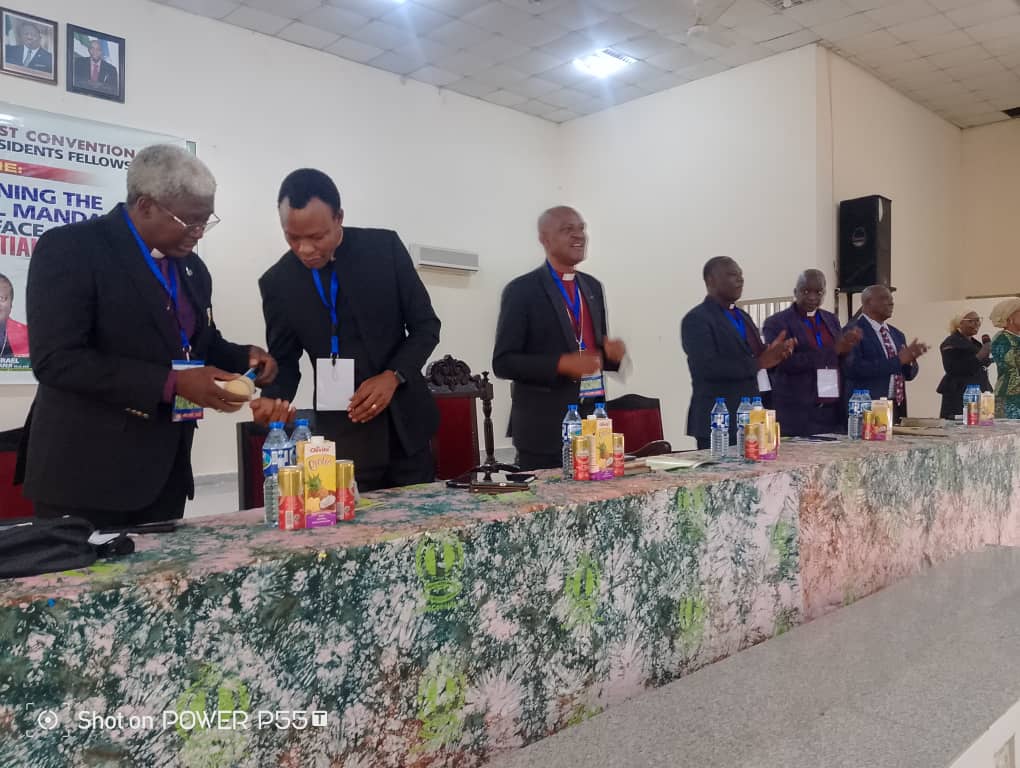
The Nigerian Baptist Convention's Conference Presidents and their wives have voiced deep concern over the relentless attacks on churches and Christian communities in Plateau State and other parts of Northern Nigeria, with warnings that the killings, displacement of worshippers, and destruction of church infrastructure are severely hindering church growth and missionary activities in the region.
nThe Baptist leaders are calling on governments at all levels to transition from promises to decisive action in addressing the insecurity that is affecting communities across the country, emphasizing the need for tangible solutions to the ongoing crisis.
nThe concerns were raised at the conclusion of a three-day annual retreat of the National Fellowship of Conference Presidents of the Nigerian Baptist Convention, which was held at the National Institute for Policy and Strategic Studies in Kuru, Jos South Local Government Area of Plateau State.
nRev. Dr. Kogleh Saleh, President of the Plateau Baptist Conference and Vice Chairman of the Christian Association of Nigeria, Plateau State chapter, lamented that churches in the state have endured over two decades of violence and attacks targeted at Christian communities, with a recent shift in attacks from urban centers to rural communities negatively affecting Baptist missionary work.
nSaleh noted that the Plateau Baptist Conference churches have faced repeated religious violence and systemic attacks on Christian communities, resulting in the destruction or forced closure of several churches, including nine churches in the Mangu Central Baptist Association.
nSpecifically, Alheri Baptist Church in Washna was completely destroyed, with both the church building and pastorium being reduced to rubble, and the entire Christian community was forcefully dispossessed of its land and displaced from its ancestral homes, leading to the church's closure since 2022.
nOther affected churches include Alheri Baptist Church in Kwagaskippanlang, Farawa Baptist Church in Changal, and Shiloh Baptist Church in Kombili, with Saleh commending the members of these churches for their resilience and commitment to worship despite the challenges they face.
nSaleh particularly praised the members of Alheri Baptist Church in Jwakmaitumbi, who continued worshipping in a primary school after being displaced from their community, and the members of Bethel Baptist Church in Kantoma, who continued worship despite losing over 40 members, including their pastor, the late Rev. Mangmos, during an attack on the community.
nThe experience of Baptist Church in Ancha, Bassa Local Government Area, was also highlighted by Saleh, noting that the community had survived repeated attacks in which about 20 church members were killed during each incident, with the church remaining a symbol of resilience despite recurring violence, displacement, and loss of lives.
nSaleh added that several churches continue to operate in communities largely abandoned by their original inhabitants due to insecurity, and the crisis has significantly reduced church income and increased financial pressure on the conference, with Baptist churches across Northern Nigeria facing threats from kidnapping, banditry, and insurgency.
nSaleh urged the government to fulfill its constitutional responsibility of protecting lives and property, advocating for the establishment of state police as part of measures to address insecurity, and emphasizing that security personnel who compromise their duties should be sanctioned.
nThe theme of the retreat, 'Sustaining the Gospel Mandate in the Face of Existential Threats,' was particularly relevant given the security challenges facing Plateau State and other parts of the country, with the gathering bringing together conference presidents and their wives from Nigeria's 36 states and the Republic of Côte d'Ivoire.
nRev. Dr. Richard Udoh King, Chairman of the National Fellowship of Conference Presidents, noted that insecurity in Northern Nigeria affects all Nigerians regardless of their location, emphasizing the need for a collective response to the crisis.
nProf. Ayo Omotayo, Director-General of NIPSS, urged religious organizations to continue promoting honesty, integrity, and national development, highlighting the critical role that faith-based institutions can play in promoting social cohesion and stability.
Related Stories
 General News
CELEBRATING TWO YEARS OF TRANSFORMATIONAL LEADERSHIP IN THE PRESIDENTIAL AMNESTY PROGRAMME
Tomorrow, 14TH March 2026, as we look forward to the second anniversary, we reflect on the remarkable two years since the Administrator of the Preside
 General News
PRESIDENTIAL AMNESTY PROGRAMME PHASE 3: DISREGARD PURPORTED STATEMENT ON DELAYED ITA PAYMENTS — OFFICE OF NATIONAL CHAIRMAN
The Office of the National Chairman of the Presidential Amnesty Programme Phase 3, General Elaye ThankGod Dollar Slaboh, has called on beneficiaries a
 General News
RE: CLARIFICATION ON MY PERSONAL RELATIONSHIPS
PUBLIC NOTICErnrnRE: CLARIFICATION ON MY PERSONAL RELATIONSHIPSrnrnIt has become necessary to make this public clarification following the increasing