
Bamanga Tukur and the In-Law Battle That Wrecked PDP, by Emmanuel Aziken
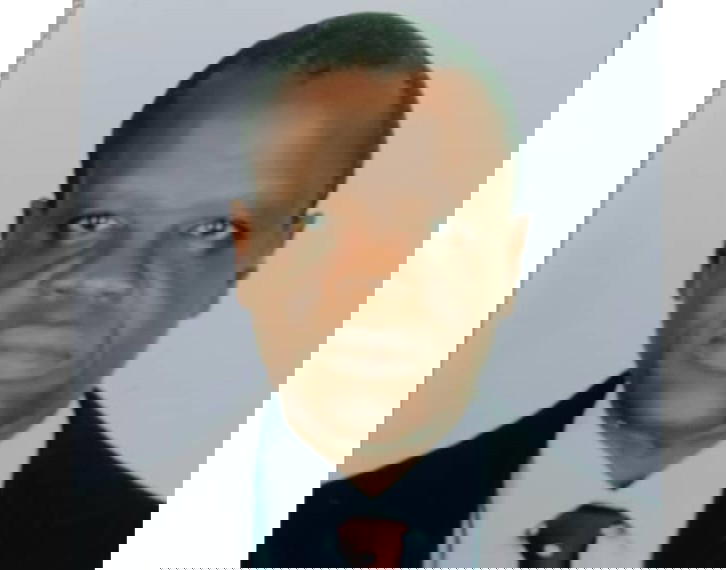
Aziken
nBy the time Alhaji Bamanga Tukur entered the last major chapter of his public career as National Chairman of the Peoples Democratic Party, he had already built a name that did not depend on politics.
nIndeed, politics was only one strand in an extraordinary career spanning port administration, business, government and pan-African economic advocacy.
nTukur, who died on September 12, 2026, at 90, rose to national prominence as General Manager and Chief Executive of the Nigerian Ports Authority between 1975 and 1982. President Bola Tinubu, in his tribute, credited him with helping to modernise port operations and improve Nigeria’s maritime sector. He subsequently won election as governor of the old Gongola State in 1983, although the military coup of December 31 that year abruptly terminated the Second Republic and his administration.
nOne fascinating indication of Tukur’s willingness to reach beyond ethnic boundaries was his relationship with the late Raymond Dokpesi.
nDokpesi, an Edo man, had worked as Tukur’s special assistant at the NPA, became director-general of his 1983 gubernatorial campaign and, following Tukur’s victory, served as his Chief of Staff in Gongola Government House. Their government lasted barely three months.
nIt was an association that said something about the man.
nPANDEF National Chairman, Ambassador Godknows Igali, captured that dimension in his tribute following Tukur’s death: “Creed, tongue and ethnicity were the least of things that mattered” to him. Igali also recalled Tukur’s attention to ports outside Lagos and his contribution to continental business institutions.
nAfter his short governorship, Tukur returned to business and eventually became one of Nigeria’s recognisable voices in continental private-sector diplomacy. He founded BHI Holdings, also known as the Daddo Group, led the African Business Roundtable, chaired the NEPAD Business Group and became the first African vice-president of the International Association of Ports and Harbours.
nThere was, therefore, a Bamanga Tukur before the PDP.
nIronically, however, it was his relatively short period at the helm of the ruling party that produced some of the greatest controversies of his long career.
nWhen Discipline Met Political Reality
nTukur became PDP National Chairman in March 2012. He arrived promising party discipline at a time when governors had become extraordinarily powerful within the PDP.
nHe soon discovered that enforcing discipline against governors was considerably more complicated than managing ports or corporations.
nIn May 2013, the PDP National Working Committee suspended Rivers Governor Rotimi Amaechi, citing alleged violations of the party constitution and presenting the action as part of its determination to “enforce discipline at all levels.” Barely days later, Sokoto Governor Aliyu Wamakko was also suspended for alleged insubordination, although his suspension was lifted later that month.
nThe Battle At Home
nThe most personal of his political battles was with Murtala Nyako, then governor of Adamawa State.
nThe irony was considerable. The two men were not merely prominent politicians from the same state; they were in-laws. A son of Tukur was married to a daughter of Nyako but ironically, family ties could not restrain political rivalry.
nTukur and Nyako became locked in a bitter struggle over control of the Adamawa PDP structure. Shortly after becoming national chairman, Tukur’s leadership dissolved the state executive controlled by Nyako’s allies. The governor resisted, regarding the intervention as an assault on his authority as the state’s PDP leader.
nBy July 2013, the relationship had deteriorated so badly that Tukur publicly told Nyako he was free to leave the PDP if he could not submit to party discipline.
nReports at the time also connected the Adamawa struggle with succession ambitions surrounding their political camps. Later reporting said alleged plans to position Tukur’s son Awwal for the governorship contributed to the crisis.
nIt was an extraordinary spectacle: two in-laws, both accomplished men approaching the twilight of their political careers, locked in a struggle that eventually helped weaken both.
nThen The House Split
nOn August 31, 2013, the wider PDP crisis exploded.
nSeven governors and former Vice-President Atiku Abubakar broke away during the PDP special convention and established what became known as the New PDP.
nFive of those governors — Nyako, Amaechi, Rabiu Kwankwaso, Abdulfatah Ahmed and Wamakko — eventually moved to the newly formed APC. Thirty-seven federal lawmakers subsequently defected from the PDP, significantly strengthening the opposition.
nTukur himself did not survive the upheaval.
nOn January 16, 2014, he resigned as PDP National Chairman. President Jonathan told the party’s NEC that the departure was by mutual agreement and that Tukur had not been found guilty of wrongdoing. But the political context was unmistakable: his chairmanship had been consumed by perhaps the gravest internal crisis the PDP had experienced since taking power in 1999.
nSix months later, Nyako suffered his own political downfall when the Adamawa House of Assembly impeached him.
nA Complicated Political Legacy
nIt would be simplistic to say Tukur alone destroyed the PDP.
nThe crisis was much larger than one chairman. It involved Jonathan’s re-election ambitions, disputes over zoning, powerful governors, control of party structures, the Nigeria Governors’ Forum crisis and the emergence of an opposition coalition capable of absorbing PDP defectors.
nBut Tukur’s tenure undeniably became part of that chain of events.
nThe great irony is difficult to miss.
nHere was a man who had successfully navigated different ethnicities, industries and countries; who had built relationships across Nigeria and helped advance African business cooperation. Yet when handed the management of Nigeria’s dominant political organisation, his insistence on discipline collided with governors who possessed political machines of their own.
nPerhaps Tukur’s mistake was believing that a political party could be administered with the firmness of a corporation. Perhaps the governors mistook indiscipline for political independence. History leaves room for both interpretations.
nWhat is beyond dispute is what followed.
nThe PDP split. Five governors crossed to the APC. The opposition acquired men, structures and momentum. In March 2015, Muhammadu Buhari defeated Goodluck Jonathan, ending the PDP’s uninterrupted 16-year control of the presidency.
nTukur therefore leaves a fascinating contradiction.
nHe was a builder in business, ports and pan-African enterprise. But his final major national assignment coincided with the cracking of the political house he had been asked to hold together.
nThat episode should not define a life of nine decades. But neither can any serious account of Bamanga Tukur omit it.
n nRelated Stories
 General News
CELEBRATING TWO YEARS OF TRANSFORMATIONAL LEADERSHIP IN THE PRESIDENTIAL AMNESTY PROGRAMME
Tomorrow, 14TH March 2026, as we look forward to the second anniversary, we reflect on the remarkable two years since the Administrator of the Preside
 General News
PRESIDENTIAL AMNESTY PROGRAMME PHASE 3: DISREGARD PURPORTED STATEMENT ON DELAYED ITA PAYMENTS — OFFICE OF NATIONAL CHAIRMAN
The Office of the National Chairman of the Presidential Amnesty Programme Phase 3, General Elaye ThankGod Dollar Slaboh, has called on beneficiaries a
 General News
RE: CLARIFICATION ON MY PERSONAL RELATIONSHIPS
PUBLIC NOTICErnrnRE: CLARIFICATION ON MY PERSONAL RELATIONSHIPSrnrnIt has become necessary to make this public clarification following the increasing