
Balancing Retribution for Victims and Clemency for Militants in Operation Safe Corridor
Herbert Norman Schwarzkopf Jr., a US Army General, once said that forgiving is God's function, and it is humanity's job to arrange the meeting, a notion that resonates deeply in the context of Nigeria's insurgency.
nMrs. Liyatu Simon Tawasu still feels the pain of the Boko Haram attack on her village of Gwallam in Borno State, which occurred over a decade ago, on October 1, 2014, resulting in the deaths of scores of residents, including 15 members of her extended family.
nHer uncles were executed before their wives, while survivors returned days later to bury bodies abandoned in the open, leaving Tawasu to lament, "The pillars of my village are gone, I am a victim and no one can quantify my anguish."
nThe question of why the government is investing billions of naira in rehabilitating former terrorists while many victims remain trapped in poverty and displacement is a troubling one, and it lies at the heart of the controversy surrounding Operation Safe Corridor (OPSC), Nigeria's programme designed to de-radicalise, rehabilitate and reintegrate repentant Boko Haram members into society.
nSupporters of the programme see it as a pragmatic strategy to weaken insurgency, while critics argue it risks rewarding perpetrators while neglecting victims, prompting Vanguard to probe into the ideological roots of terror, the failing safety nets for survivors, and the growing outrage over state-funded privileges for repentant terrorists.
nThe roots of the controversy stretch back to 2013, when former President Goodluck Jonathan established a committee to examine the possibility of granting amnesty to Boko Haram members, similar to the Niger-Delta Amnesty Programme, a proposal that was met with ridicule by then Boko Haram leader, Abubakar Shekau.
nIn an audio message, Shekau declared, "Surprisingly, the Nigerian government is talking about granting us amnesty, what wrong have we done, it is we that should grant you a pardon."
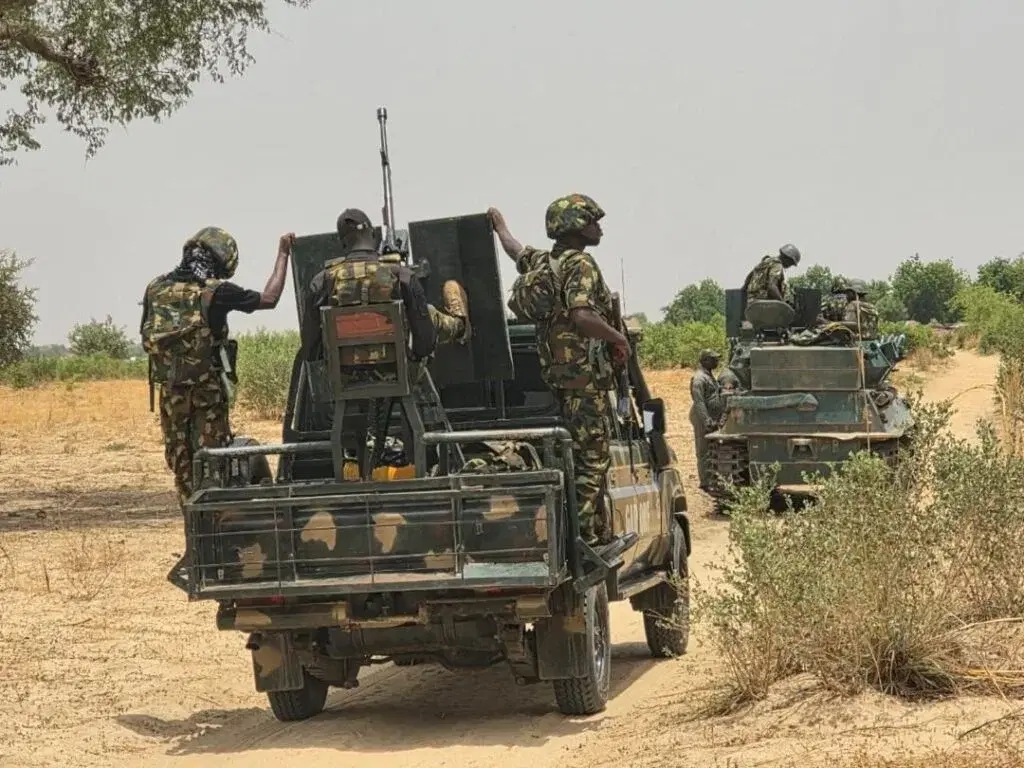
nTwo years later, under late President Muhammadu Buhari, the military launched Operation Safe Corridor, a 24-week de-radicalisation, rehabilitation and reintegration initiative targeting low-risk former insurgents who voluntarily surrendered.
nThe programme's objectives included dismantling extremist beliefs, providing vocational training and preparing participants for reintegration into civilian life, but public debate intensified in March 2026 when Chief of Defence Staff, General Olufemi Oluyede, compared repentant terrorists to the Biblical prodigal son who deserved forgiveness and a second chance.
nFor many victims, the analogy was difficult to accept, and across Nigeria's Internally Displaced Persons (IDP) camps, resentment simmers, with those who bore the brunt of the violence feeling that the concept of state-funded rehabilitation is pure wickedness.
nBitrus James fled insurgent attacks with nothing but the clothes he wore, and he lamented, "I still don't know where my parents are, things are totally bad."
nCecilia, another displaced victim, said, "The terrorists attacked my community and killed many people, seven members of my family disappeared, till today, I don't know where they are."
nMr. Teri Wandi, another displaced victim, said conditions in many camps remain harsh, and he stated, "We survive mainly through occasional NGO support, government has practically abandoned us, we want to return home, but we cannot because insecurity remains."
nFar from being reformed, evidence suggests that some "repentant" insurgents use their rehabilitated status as a weapon of espionage to kill the very soldiers protecting them, with Simon Samaila, an Internally Displaced Person, saying, "The supposedly repentant terrorists are the most dangerous elements in our communities now."
nSamaila recounted an incident where a repentant Boko Haram member stayed with soldiers in a camp, surveyed the area, and left, only to have terrorists attack and kill soldiers four days later, a pattern that has occurred in Chibok and Wada, close to Gwoza.
nA man kills your family, loots your assets, burns your house, and the government rehabilitates him, this is adding salt to injury, Samaila said, a sentiment echoed by German filmmaker, Thomas Dworzak, who observed that no real repentance exists among the inmates.
nDworzak noted that inmates freely admitted to raping women and murdering over 100 people, and he narrowly escaped an assassination attempt when a camp inmate with a hidden weapon approached him.
nDworzak said, "This is where I realised many of these people will never change, they are still Boko Haram members inside, many don't regret a single thing, this guy would have been a hero if he had stabbed me."
nSecurity experts warn that the violence tearing through Nigeria's North is not just localized crime, but part of a coordinated, global extremist movement that cannot be simply preached away, according to Dr. Lionel Rawlins, a Forensic Criminologist and ex-US Marine.
nDr. Rawlins stated, "The core mission of Boko Haram hardliners and ideologists is to establish a caliphate, those who buy into this ideology would rather die than surrender."
nDr. Oamien Roy Okhidievbie, National Secretary of the Retired Members of the Nigerian Armed Forces (REMENAF), noted, "Boko Haram, ISWAP, and brutal bandits have expanded from cattle rustling to human trafficking, today, they operate as real murderers, plundering villages, raping mothers before their children, and killing innocent citizens indiscriminately."
nProfessor Kyari Mohammed, former Vice-Chancellor of Modibbo Adama University of Technology, Yola, said, "We are talking about extremism and extreme ideology, it's a worldwide development, the crisis unfolding in the North-East mirrors events in parts of North Africa, the Sahel, and Iraq."
nGeneral Sirwan Barzani, Commander of the Pêsmerge Special Forces, "The Black Tigers", Kurdistan, said, "The source of ISIL's criminal behaviour is its ideology, striving for a global empire, the group uses any means necessary to reach this goal."
nThis ideological warfare manifests as a rejection of modern statehood, deep-seated ethnic friction, and a weaponization of religion that mainstream Muslims completely disown, according to Hajia Hamsatu Allamin, Founder/Executive Director of the Allamin Foundation for Peace and Development.
nHajia Allamin noted, "Boko Haram forbids Western education and medicine, founder, Mohammed Yusuf blamed Western-educated elites for corruption, inequality, and bad governance, he argued that secular systems must be replaced with strict Sharia rule to ensure peace, equality, harmony, and justice."
nOkhidievbie agrees, "This does not reflect mainstream Islam, as numerous Muslim organisations have publicly disowned these killers, rather, it is a specific, radicalised belief system that weaponizes religion to preach hatred against the West and mandate violence."
nDr. John Emilimor, a US-based retired Dental Surgeon and Pastor, stated, "Millions of Muslims reject the idea that the Qur'an commands them to harm neighbours, peaceful Muslims are simply practicing their faith with wisdom."
nPastor Timothy Balarabe, a missionary in the North-West, said the battle in Sokoto and Kebbi states is deeply tied to historical friction between Hausas and Fulanis, with Fulanis seeing Hausas as foreigners who have come to take over their land.
nPastor Balarabe noted, "For over 200 years, prayers at the tomb of Usman dan Fodio have been geared towards dominating, subduing and conquering, this worsened under Buhari, the plan of dominating Nigeria is happening in that area, and the crisis from the North is already spreading to the South."
nA massive wave of public anger has been triggered by high-ranking government officials who continue to humanize the insurgents, with National Security Adviser, Nuhu Ribadu, stating in a VOA interview that some terrorists "want peace" and are "our brothers", urging dialogue.
nRibadu's comments mirror past comments by former Minister Isa Pantami, who referred to insurgents as "our Muslim brothers", and former presidential aide, Femi Adesina, who controversially remarked that it was better to yield ancestral lands for ranching than to die holding onto them.
nOkhidievbie rejected this soft stance, especially attempts to compare these terrorists to past Niger-Delta agitators, saying, "Comparing Niger-Delta militants to Boko Haram or bandits is a biased and inaccurate equivalence."
nExperts agree that individuals driven by violent, exclusive religious ideologies cannot be de-radicalized through a brief crash program, with Dr. Emilimor stating, "Nigeria's current de-radicalization process is flawed, true rehabilitation requires perpetrators to completely renounce their extremist ideologies under secure confinement."
nDr. Emilimor warned that this policy has directly compromised the institutional integrity and safety of Nigeria's Armed Forces, saying, "By releasing those who kill religious opponents, the state inadvertently emboldens them, this misguided policy explains why terrorists now target high-ranking military officers."
nOkhidievbie added, "Consider victims like the Chibok girls, bandits destroy Nigeria's future by killing youth who could have made groundbreaking discoveries, yet, we welcome back their killers as 'repentant terrorists', negotiating with them, this tragic loss of national potential completely invalidates these de-radicalization
Related Stories
 General News
CELEBRATING TWO YEARS OF TRANSFORMATIONAL LEADERSHIP IN THE PRESIDENTIAL AMNESTY PROGRAMME
Tomorrow, 14TH March 2026, as we look forward to the second anniversary, we reflect on the remarkable two years since the Administrator of the Preside
 General News
PRESIDENTIAL AMNESTY PROGRAMME PHASE 3: DISREGARD PURPORTED STATEMENT ON DELAYED ITA PAYMENTS — OFFICE OF NATIONAL CHAIRMAN
The Office of the National Chairman of the Presidential Amnesty Programme Phase 3, General Elaye ThankGod Dollar Slaboh, has called on beneficiaries a
 General News
RE: CLARIFICATION ON MY PERSONAL RELATIONSHIPS
PUBLIC NOTICErnrnRE: CLARIFICATION ON MY PERSONAL RELATIONSHIPSrnrnIt has become necessary to make this public clarification following the increasing