
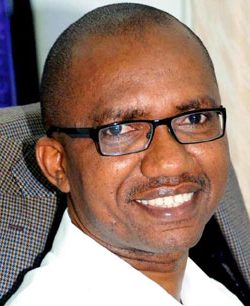
Azu Ishiekwene likens Adelabu's electrical cables to clotheslines
Earlier in the week, heavy rains brought significant relief from the scorching heat in many parts of the country, but the lack of electricity from public supply channels exacerbated the situation, making it even more unbearable.
nThe average daytime temperatures in Lagos and Abuja ranged from 33 degrees to 38 degrees centigrade throughout March, highlighting the need for a reliable electricity supply to mitigate the effects of the heat.
nNigeria's public electricity grid is one of the most intractable problems facing any developing country, with the constant announcement of grid collapse leaving businesses and homes to seek alternative sources of power and incur unplanned expenses.
nDuring his 2023 campaign, President Bola Ahmed Tinubu promised to fix the electricity problem, stating that if he failed to do so, he did not deserve a second term in office.
nHowever, since the beginning of his administration in May 2023, there have been multiple grid collapses, with the highest number recorded in 2024 at 12, and sporadic outages have continued to occur even when incidents were fewer.
nThe failure of the public electricity supply system is attributed to a mix of technical, structural, and administrative weaknesses, but there is more to it than meets the eye.
nThe Presidential villa has appropriated N10 billion in 2025 and an additional N7 billion in 2026 for the installation of a solar mini-grid to disconnect Nigeria's seat of power from the national grid, which is plagued by ageing transmission lines that collapse repeatedly due to sabotage, poor maintenance, and frequency imbalances.
nNigerians, known for making light of their problems, are shocked beyond humour by the frequent power outages, and the joke is on them as they struggle to cope with the unreliable public electricity supply.
nIn some communities, people have become so accustomed to the lack of electricity that they use high-tension cables as makeshift clotheslines, knowing that the lines are unlikely to be electrified.
nA video of a masquerade performing on a streetlight pole has gone viral, with the crowd applauding its invincibility, but both the crowd and the masquerade know that the lines have not been electrified for months.
nHope was rekindled at the beginning of the Tinubu administration when it was announced that Nasir el-Rufai, the former governor of Kaduna State, had produced a blueprint to sort out Nigeria's notorious electricity sector and was discussing a $10 billion investment agreement with the Saudis.
nHowever, el-Rufai's plans were put on hold, and Adebayo Adelabu took over the job, performing so disastrously that saying he failed would be an honour.
nAdelabu's appointment as Minister of Power was a surprise, given his background as an auditor at PWC, Executive Director/CFO at First Bank, and deputy governor at the Central Bank, but his banking career should have raised red flags.
nDespite his impressive resume, Adelabu's tenure as Minister of Power has been marked by incompetence, and his decision to split electricity consumers into parallel payment bands has not reflected improved services.
nAccording to energy expert Dan Kunle, a power minister should provide a solid framework to create the right environment and attract sovereign intervention, but Adelabu has failed to do so.
nAdelabu is running the power ministry with the 1950 operational manual of the Electricity Corporation of Nigeria, which is outdated and ineffective for a population that has grown four times since then.
nThe same old problems persist, including gas shortages, moribund plants, infrastructure deficits, massive debts, and frequent grid collapses, limiting supply to about 4,000 MW despite a capacity of 13,000 MW.
nThe sector is drowning under the yoke of N6 trillion in debt as of late 2025, fuelled by non-cost-reflective tariffs and unpaid bills to both generating and distribution companies.
nAdelabu's incompetence has worsened the problems, and he still has the ambition to become the governor of Oyo State, despite his disastrous three years as minister.
nExamples from other African countries, such as Egypt, South Africa, Ghana, and Kenya, show that it is possible to achieve universal electricity access and stable supply, but Nigeria lags behind with only 57 percent of its population grid-connected.
nNigeria's frequent outages, poor metering, and corruption sustain estimated billing and inefficiencies, making it one of the worst-performing countries in terms of electricity supply.
nAfter watching Adelabu perform so poorly over the last two years, it is hoped that he will go away quietly, but since he insists on staying on, it may be necessary to drag him to Oyo State to see how he will turn their night into day.
Related Stories
 General News
CELEBRATING TWO YEARS OF TRANSFORMATIONAL LEADERSHIP IN THE PRESIDENTIAL AMNESTY PROGRAMME
Tomorrow, 14TH March 2026, as we look forward to the second anniversary, we reflect on the remarkable two years since the Administrator of the Preside
 General News
PRESIDENTIAL AMNESTY PROGRAMME PHASE 3: DISREGARD PURPORTED STATEMENT ON DELAYED ITA PAYMENTS — OFFICE OF NATIONAL CHAIRMAN
The Office of the National Chairman of the Presidential Amnesty Programme Phase 3, General Elaye ThankGod Dollar Slaboh, has called on beneficiaries a
 General News
RE: CLARIFICATION ON MY PERSONAL RELATIONSHIPS
PUBLIC NOTICErnrnRE: CLARIFICATION ON MY PERSONAL RELATIONSHIPSrnrnIt has become necessary to make this public clarification following the increasing