
Avian Collisions with Aircraft Occur
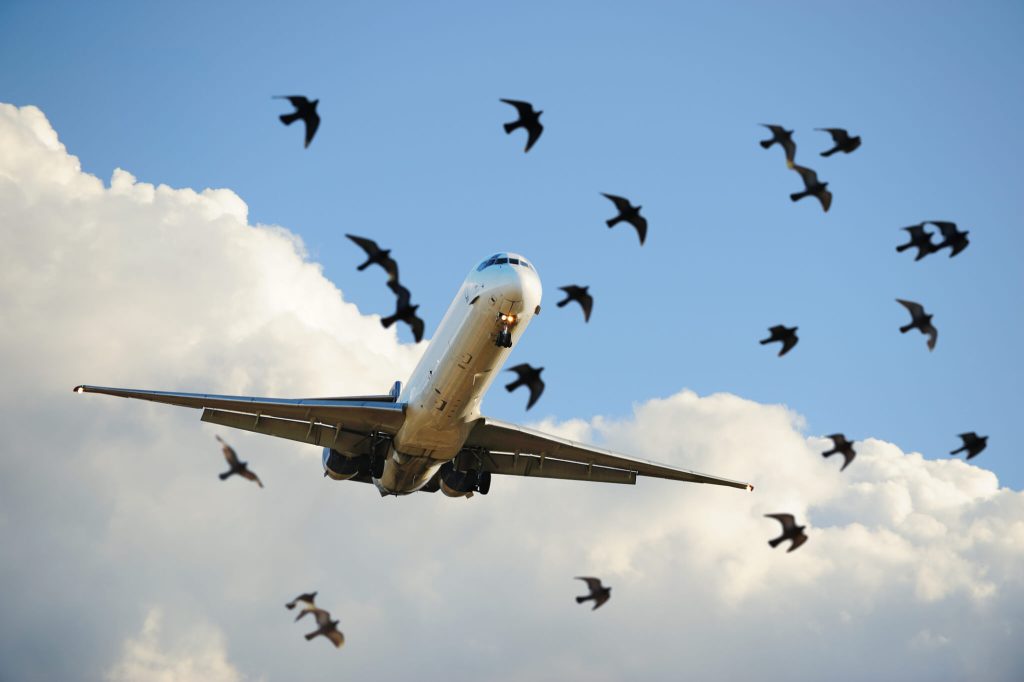
Nigerian airlines have recorded at least 11 bird strikes since the beginning of the year, resulting in operational disruptions and significant financial losses.
nThese incidents have led to costly unscheduled maintenance, temporary grounding of aircraft, and ticket refunds due to flight disruptions, affecting not only the airlines but also passengers who have experienced delays and cancellations.
nThere are over six domestic airlines operating in Nigeria, including Air Peace, Arik Air, Ibom Air, United Nigeria Airlines, ValueJet, Aero Contractors, Max Air, Enugu Air, and XeJet, with Air Peace and UNA being the worst hit due to their repeated disclosures of such incidents in recent weeks.
nA recent incident involved an Air Peace aircraft operating from Murtala Muhammed Airport in Lagos to Osubi Airport in Warri, which was grounded upon landing in Osubi.
nA document obtained showed that Air Peace recorded several other incidents between January and June 2026 on various routes, including Owerri-Lagos, Lagos-Asaba, and Asaba-Lagos, with the first incident occurring on January 5, 2026, in Abuja.
nOn January 18, the airline's Owerri-Lagos flight suffered another bird-related damage upon arrival in Lagos, followed by another wildlife strike on January 28 on the Lagos-Asaba route.
nFurther incidents occurred on February 20 in Kano and on March 19 on a flight scheduled to operate the Asaba-Lagos route, highlighting the recurring nature of the problem.
nUNA suffered three major bird strikes between April 14 and 16, including one that damaged the aircraft's nose landing gear door linkage during takeoff of Flight UN0561 from Benin City Airport to Abuja.
nThe airline's Airbus A320 operating Flight UN0515 from Port Harcourt to Abuja was also struck by a bird while landing at the Nnamdi Azikiwe International Airport, damaging the aircraft's nose section.
nAn Ibom Air aircraft recorded a bird strike while on short final approach into Lagos from Uyo during the same period, underscoring the widespread nature of the issue.
nChibuike Uloka, spokesperson for UNA, shared insights into the scale of the problem, stating that conservative estimates show the airline spent about $45,000 on emergency repairs in recent weeks.
nUloka explained that the cost of repairing damage from bird strikes can be substantial, with each borescope inspection costing around $30,500 and fan blades costing between $800 and $1,000.
nBeyond repair costs, Uloka noted that the incidents consistently disrupt flight schedules and revenue generation, with significant financial implications for the airline.
nThe financial burden of bird strikes is further exacerbated by the existing challenges faced by airlines, including high fuel costs, foreign exchange pressures, and limited access to financing.
nAirline Operators of Nigeria expressed sadness over the situation, with spokesperson Professor Obiora Okonkwo stating that bird strikes account for nearly half of aircraft downtime experienced in the country.
nOkonkwo called on Original Equipment Manufacturers to provide equipment to help mitigate bird strikes, emphasizing the need for collaborative efforts to address the issue.
nFor domestic travelers, the incidents have caused frequent disruptions to personal plans, with passengers like Akin and Chukwuma sharing their experiences of delayed or cancelled flights due to bird strikes.
nA wildlife expert attributed the rising bird strikes to seasonal environmental changes and poor environmental management around airports, which attract birds due to the presence of food and water sources.
nAccording to the expert, large expanses of open grasslands around runways provide natural habitats for species such as lapwings, egrets, kites, and quelea birds, while poor waste management and agricultural activities near airports increase bird presence.
nThe expert recommended integrated wildlife hazard management strategies, including regular bird hazard assessments, habitat modification, and the use of bird deterrent systems, to mitigate bird strikes.
nIndustry stakeholders estimate that Nigerian airlines lose at least N60 billion annually to bird strikes, including engine replacements that can cost as much as $3.2 million per incident.
nGbenga Onitilo, Managing Partner at Aeronexus Partners Ltd, noted that the absence of a centralized and mandatory wildlife-strike database in Nigeria hinders effective wildlife-hazard management.
nOnitilo advocated for a shared liability mechanism, potentially involving FAAN, the Airline Operators of Nigeria, and NAICOM, to prioritize wildlife hazard control and drive institutional urgency.
nAviation expert Alex Nwuba urged FAAN and the Nigerian Civil Aviation Authority to treat wildlife hazard management with priority, emphasizing the need for a layered and disciplined approach to prevent bird strikes.
nNwuba recommended the use of non-lethal green beam laser deterrents, which have been effectively deployed at airports worldwide to clear flocks of birds before they become a threat.
nEfforts to reach FAAN for comment on the measures being taken to mitigate bird strikes across its airports were unsuccessful, with spokesperson Henry Agbebire unavailable for comment.
Related Stories
 General News
CELEBRATING TWO YEARS OF TRANSFORMATIONAL LEADERSHIP IN THE PRESIDENTIAL AMNESTY PROGRAMME
Tomorrow, 14TH March 2026, as we look forward to the second anniversary, we reflect on the remarkable two years since the Administrator of the Preside
 General News
PRESIDENTIAL AMNESTY PROGRAMME PHASE 3: DISREGARD PURPORTED STATEMENT ON DELAYED ITA PAYMENTS — OFFICE OF NATIONAL CHAIRMAN
The Office of the National Chairman of the Presidential Amnesty Programme Phase 3, General Elaye ThankGod Dollar Slaboh, has called on beneficiaries a
 General News
RE: CLARIFICATION ON MY PERSONAL RELATIONSHIPS
PUBLIC NOTICErnrnRE: CLARIFICATION ON MY PERSONAL RELATIONSHIPSrnrnIt has become necessary to make this public clarification following the increasing