
Authorities Plan to Implement New 10-Year Blueprint Starting in 2026
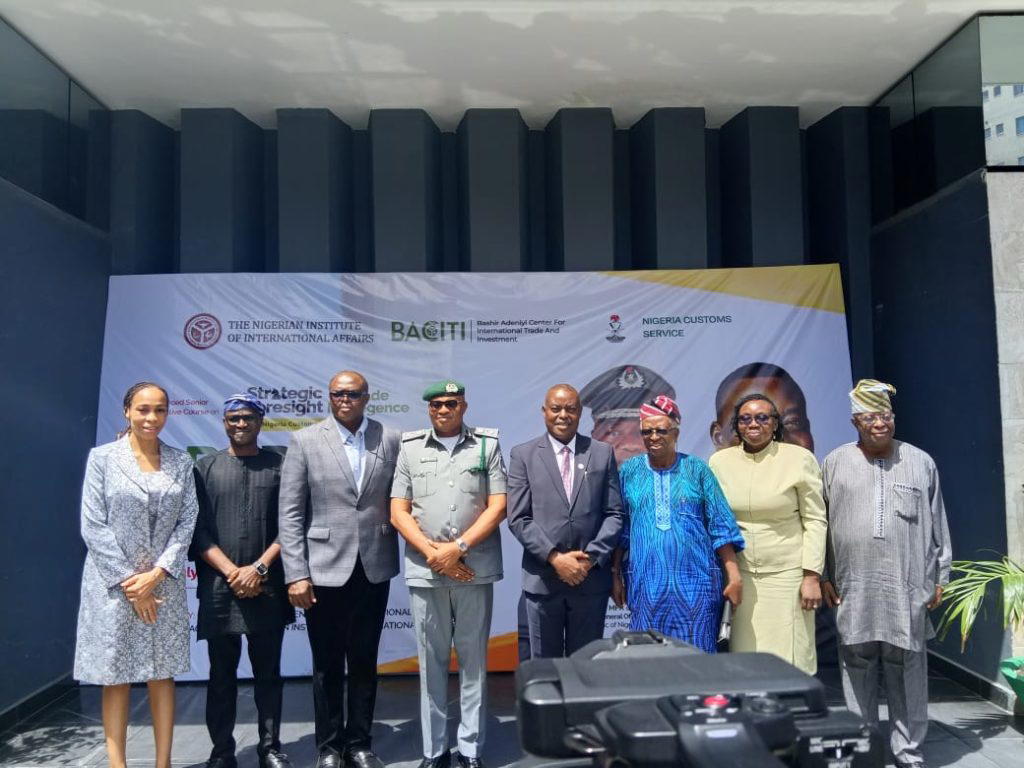
The Nigeria Customs Service has unveiled plans to shape its future operations around strategic foresight, incorporating proposals from its senior officer graduates into a new policy framework spanning 2026–2035.
nThe Comptroller-General of Customs, Bashir Adewale Adeniyi, announced this at the graduation ceremony of 40 senior officers from the Advanced Senior Executive Course at the Nigerian Institute of International Affairs in Lagos, where he was represented by Gabo Aliu, Comptroller, Federal Operations Unit, NCS.
nAdeniyi emphasized that global customs operations are dynamic and evolving, necessitating a forward-thinking approach that responds to emerging trade realities, and that the incoming framework will be all-inclusive, with the graduates' deliverables forming the basis of the strategic policy direction for the next generation of customs officers.
nAccording to Aliu, the Comptroller-General's administration is characterized by its forward-thinking, responsive, and resilient nature, with a clear objective to position the NCS at the forefront of trade, policy formulation, and integration.
nAliu noted that the Service must be futuristic and prepared to address the evolving demands of global customs operations, stating that "custom operation globally is dynamic, it's evolving, we need to be futuristic, we need to be able to look ahead of what it is now, and the service in its wisdom is preparing future generations of custom officers that will respond to the dictates of the time going forward."
nThe Comptroller-General has approved a structured mentor-mentee programme for the pioneering set of graduates, who will serve as ambassadors of the NCS and NIIA, and are expected to share their knowledge with future generations of officers.
nAliu explained that the graduates will be responsible for cascading the knowledge acquired to future generations of officers, which will be a "win-win for the Nigerian Customs Service and the industry in general."
nIn response to the "no-regret strategies" proposed by the participants for the Service, Aliu assured that management would review all submissions, stating that "all the things that they've brought forward will be appropriately looked at the management level, and that will be the policy thrust of the next generation looking at 2026 to 2035."
nProf Eghosa Osaghae, Director-General, NIIA, described the graduation of senior customs officers as a significant milestone in the institute's collaboration with the Nigeria Customs Service, aimed at repositioning the Service for global trade complexities.
nThe partnership between NIIA and the Nigeria Customs Service, established about 18 months ago, focuses on capacity building to align the NCS with the changing times, the complexities of world trade, and customs services, with a particular emphasis on trade facilitation under the African Continental Free Trade Area, AfCFTA.
nOsaghae noted that while technological solutions can be pursued, the human factor must also be developed to keep pace with these changes, stating that "technological solutions can be pursued, we can have AI; we can all those things, but if the human factor doesn’t also lift up itself to be at the same level of these changes, we cannot go far."
nDr. Adesuwa Erediauwa, Head/Director of the Bashir Adeniyi Centre for International Trade and Investment at the NIIA, urged graduating senior customs officers to become "interpreters of change" and architects of institutional resilience as the Nigeria Customs Service prepares for 2035 and beyond.
nErediauwa emphasized that customs administrations globally face shifting trade routes, AI-driven border management, geopolitical tensions, climate change, and supply chain disruptions, rendering yesterday's methods insufficient for today's challenges, let alone tomorrow's.
nShe stressed that future customs officers "must not just be an administrator or a gatekeeper" but must become "an analyst of uncertainty, a strategist, and an innovator" to effectively navigate the complex landscape of global trade.
Related Stories
 General News
CELEBRATING TWO YEARS OF TRANSFORMATIONAL LEADERSHIP IN THE PRESIDENTIAL AMNESTY PROGRAMME
Tomorrow, 14TH March 2026, as we look forward to the second anniversary, we reflect on the remarkable two years since the Administrator of the Preside
 General News
PRESIDENTIAL AMNESTY PROGRAMME PHASE 3: DISREGARD PURPORTED STATEMENT ON DELAYED ITA PAYMENTS — OFFICE OF NATIONAL CHAIRMAN
The Office of the National Chairman of the Presidential Amnesty Programme Phase 3, General Elaye ThankGod Dollar Slaboh, has called on beneficiaries a
 General News
RE: CLARIFICATION ON MY PERSONAL RELATIONSHIPS
PUBLIC NOTICErnrnRE: CLARIFICATION ON MY PERSONAL RELATIONSHIPSrnrnIt has become necessary to make this public clarification following the increasing