
Asia’s World Cup falls apart with just two countries remaining
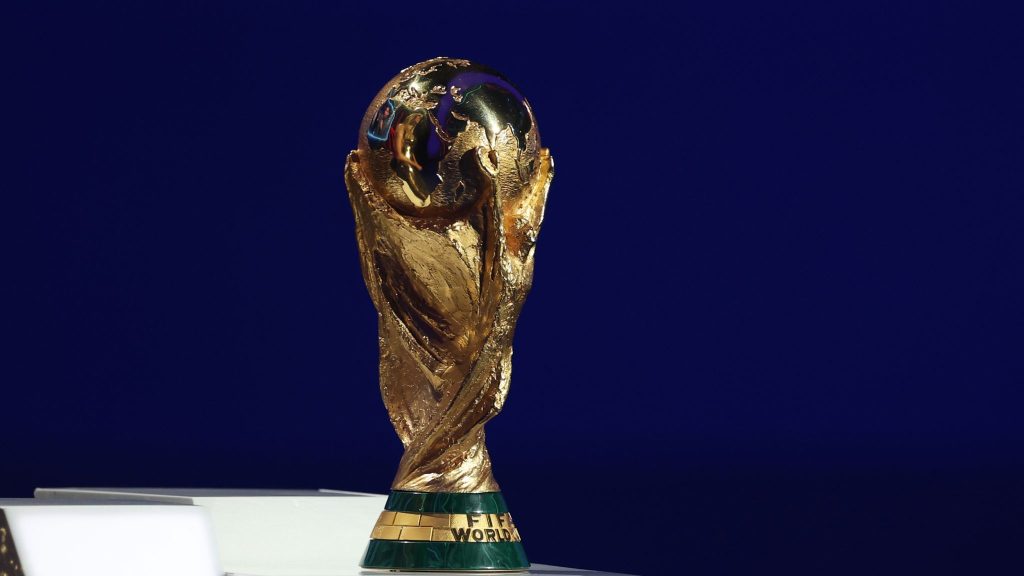
The gap between Asia’s best teams and the rest has been laid bare by the region’s disappointing World Cup as just two AFC sides reached the knockout rounds.
nA record nine countries from the Asian Football Confederation (AFC) reached the finals in North America after the tournament was expanded to 48 teams.
nBut with the group phase having concluded on Saturday, only Australia and Japan remain.
nOf 27 group games contested by AFC teams, they won only three.
nIn contrast, it has been a success story for African football, with nine of their 10 sides reaching the last 32.
n“Where we need to improve is in Asian football (as a whole), not only Uzbekistan,” said Fabio Cannavaro, the Italian 2006 World Cup winner and now Uzbek coach.
nUzbekistan, playing at a World Cup for the first time, finished bottom of their group with zero points and a goal difference of minus nine.
nAlthough they had good moments going forward and were in a hard group, they were ultimately well beaten in all three matches, including being thrashed 5-0 by a Cristiano Ronaldo-inspired Portugal.
n“Other than Japan, Australia and maybe Iran… every (Asian) team needs to improve,” said Cannavaro, who previously managed in China including a short stint as national coach.
nFellow AFC sides Jordan, Iraq, Saudi Arabia and Asian champions Qatar all finished last in their groups.
nAlso gone at the first hurdle were Iran — whose tournament was overshadowed by war and politics — and most surprisingly of all, South Korea.
nMuch-maligned coach Hong Myung-bo quit on Sunday.
nJapan, touted as outside bets to go deep in North America, face Brazil in Houston on Monday.
nAustralia play Egypt in Arlington, Texas on July 3.
nThe president of the AFC suggested Asian sides had underperformed.
n“Having two representatives advance highlights the incredibly high level of global competition,” said Sheikh Salman bin Ebrahim Al Khalifa.
n“It shows that while our teams are making strides and displaying great fighting spirit, the gap at the absolute top tier remains tight, and we must continue to work hard to bridge it.”
n– Remaining hopes –
nAt the 2022 World Cup in Qatar, which had 32 teams, Australia, Japan and South Korea made the first knockout round.
nAll three lost, and an Asian team has never won the World Cup, the best result being South Korea reaching the semi-finals at home in 2002.
nThis year Jordan, playing at their first World Cup, lost all three of their games including a 3-1 defeat to world champions Argentina on Saturday.
nJordan reached the final of the Asian Cup in 2024, losing 3-1 to hosts Qatar, but like the Qataris were outclassed on the biggest stage.
nThey were missing key attacker Yazan Al-Naimat through injury, but they were chaotic defensively with goalkeeper Yazeed Abulaila especially culpable in defeat to a much-changed Argentina who had already qualified.
nJordan’s coach Jamal Sellami said they would be better for the experience, with the Asian Cup early next year.
nThe Moroccan said more Asian players needed to go to European clubs for the region to push on.
nComparing Asia’s showing with Africa’s at the World Cup, he said: “Because African players compete in the major European leagues.
n“The most important thing for Jordanian football, if it is to have a greater chance of achieving results, is to have players competing in stronger and more competitive leagues.”
n– Big money, small rewards –
nSaudi Arabia will host the 2027 Asian Cup, seen as a test run for when it stages the World Cup in 2034.
nSaudi authorities have thrown money at the game in the country, luring Ronaldo and other foreign stars on vast wages.
nThat failed to translate into success at the World Cup, where they were held 0-0 by Cape Verde in a game they needed to win.
nCritics say the influx of foreign players has limited the playing time of their Saudi counterparts.
nCannavaro, whose coaching career has never matched his stellar playing days, hopes the chastening experience will not set Uzbekistan backwards.
n“I’m here to help my players to improve, to try to maybe be at the next World Cup and to have the organisation ready to be in the World Cup,” said the 52-year-old former defender, who took over in October.
n“This takes time and it’s really important for Uzbekistan football to not give up.”
n nRelated Stories
 General News
CELEBRATING TWO YEARS OF TRANSFORMATIONAL LEADERSHIP IN THE PRESIDENTIAL AMNESTY PROGRAMME
Tomorrow, 14TH March 2026, as we look forward to the second anniversary, we reflect on the remarkable two years since the Administrator of the Preside
 General News
PRESIDENTIAL AMNESTY PROGRAMME PHASE 3: DISREGARD PURPORTED STATEMENT ON DELAYED ITA PAYMENTS — OFFICE OF NATIONAL CHAIRMAN
The Office of the National Chairman of the Presidential Amnesty Programme Phase 3, General Elaye ThankGod Dollar Slaboh, has called on beneficiaries a
 General News
RE: CLARIFICATION ON MY PERSONAL RELATIONSHIPS
PUBLIC NOTICErnrnRE: CLARIFICATION ON MY PERSONAL RELATIONSHIPSrnrnIt has become necessary to make this public clarification following the increasing