
As Osun Votes Today: Will bread, rice, money determine winner?
*Money will influence outcome —Stakeholders; parties transferring N20,000, N10,000, N5000; violence, thuggery, hate speech take centre stage; politicians desert homes; competence, credibility will matter —Ex-lawmaker
nBy Dapo Akinrefon & Shina Abubakar
nThe die is cast. Tension in the polity is palpable. No fewer than 1.9 million registered voters, who collected their permanent voters cards, PVCs, will head to the ballot box to decide the winner of today’s governorship contest in Osun State.
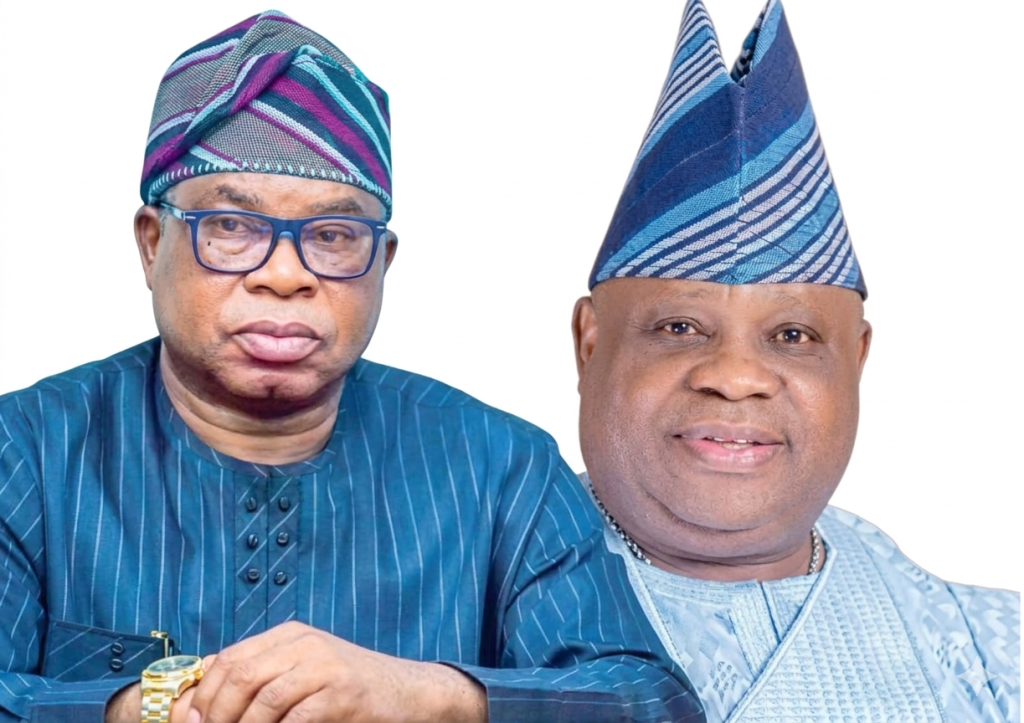
nThe contest, expected to be a two-horse race between the incumbent, Governor Ademola Adeleke of the Accord Party and Mr Bola Oyebamiji of the All Progressives Congress, APC, is being heralded by violence.
nThe build up to the election also saw the various gladiators locked in exchange of brick bats and mudslinging. Now many political actors are scared and have abandoned their homes for hotels or secret locations to avoid being killed.
nTongues are already wagging, and the decisive question remains: Will manifesto and performance triumph over the powerful forces of stomach infrastructure?
nInterestingly, financial inducement, food handouts, amid severe economic hardship are heavily influencing voter behavior. Across the 30 Local Government Areas of Osun State, the various contenders have adopted subtle ways of inducing or wooing voters.
nWhile some have embarked on sharing branded bread and rice, others have devised means of doling out money to curry votes from the electorate.
nIn the past, the slogan for vote buying was ‘see and buy,’ but politicians have gone a step further to lure the electorate into voting for them on Election Day.
nFor instance, one of the leading candidates distributed branded loaves of bread directly to residents on the streets of Osogbo to secure grassroots engagement, during the campaigns.
nAlso, viral videos have surfaced showing political mobilisers distributing “election rice.”
nIn some videos, coordinators were seen handing out portions of rice and warning voters that spiritual consequences would follow if they collect the food and vote against the party.
nIndeed, the shadow of vote-buying looms large over the election.
nPrior the election, Saturday Vanguard gathered that some political parties had transferred funds ranging from N20,000, N10,000 and N5,000 to induce voters.
nSpate of violence
nAsides from vote buying, the spate of violence experienced in the build up to the election by political actors raised some dust.
nThe trend of violence was most prevalent in Ijesaland, particularly, Ilesa, Ijebu-Ijesa and Esa-Oke.
nIt led to a substantial number of deaths.
nThough, the clashes were cult- related, the political parties pointed accusing fingers at each other.
nWhile the APC alleged that over 30 of its members were killed, the Accord Party counter-claimed that 20 of its members were killed in Ijesaland.
nIn Osogbo, violent attacks on party members were reported during the campaigns.
nSome APC members were attacked at the Owode area in Osogbo where one person was killed and several others injured.
nIn addition, two cult members were killed around Ota-Efun community at different times.
nAccord Party members were reportedly killed in Ikire, while three others were injured.
nThe party disclosed that its officials were shot at Okinni in Egbedore local government area.
nPoliticians desert homes
nAs a result of the heightened violence, many political gladiators have deserted their homes over fear of being attacked.
nMr Olamide Tiamiyu, an Accord party chieftain and Chief Press Secretary to the Speaker of the House of Assembly, said he has relocated his family house.
nAlso, a member of the APC media committee, Mr Kehinde Ayantunji, had moved out of his home with his family too.
nSaturday Vanguard gathered that many other political gladiators, from respective parties, have abandoned their homes and checked into hotels.
nThe situation led to high demands in hotel accommodations as most of them were fully booked ahead.
nStakeholders in the state have, however, expressed worry that such disturbing trend has started taking roots in Nigeria’s politics.
nVote buying, hate speech, violence may mar exercise — Yiaga Africa
nAn election observation group, Yiaga Africa, yesterday, expressed worry over the governorship election in Osun State, warning that vote-buying, hate speech, violence and thuggery, among others may mar the exercise.
nAddressing journalists in Osogbo, a member of the group, Dr Asmau Sani Maikudi, warned that “pre-election violence” may suppress participation on the election day.
nYiaga Africa said it was concerned by the escalation of incendiary rhetoric and hate speech attributed to political actors.
nYiaga Africa, while frowning against voters’ inducement, accused some politicians of distributing food items to woo voters.
nExpressing concerns over the security situation in the state ahead of the election, it said: “While earlier security incidents were largely associated with political rivalry, campaign-related violence and conflicts within transport union structures, incidents documented in the weeks preceding the election indicate a troubling shift towards the direct disruption of electoral activities and contestation over strategic public spaces.
n“The attack on a PVC collection centre in Odo-Otin LGA, politically linked violence in Osogbo LGA, and disputes over the control of motor parks have significantly heightened the security risks surrounding the election.
n“Yiaga Africa is equally concerned by the escalation of incendiary rhetoric and hate speech attributed to political actors. Such rhetoric is particularly dangerous in an already tense and competitive electoral environment, as it can legitimize violence, deepen partisan hostility, and undermine public confidence in the process.
n“These developments demand intelligence-led, coordinated and strictly impartial security deployment, with enhanced protection for electoral personnel, facilities, materials and voters.”
nYiaga Africa condemned “violent and inflammatory rhetoric, particularly by senior political figures, who bear a heightened responsibility to exercise restraint.”
nOn voters’ inducement, it said it remains a significant integrity risk.
nYiaga Africa said it “documented the distribution of money and gift items by political actors. Although some were presented as social interventions or charitable support, their timing and proximity to campaign activities raise serious concerns about voter inducement and undue influence.”
nCompetence, credibility will determine winner — Ex-lawmaker
nHowever, a chieftain of the APC in Osun State, Mr Olatunbosun Oyintiloye, holds a contrary view about financial inducement determining the winner of the election.
nThe former member of the Osun State House of Assembly stated that competence and credibility will play a more decisive role in who emerges winner of today’s election.
nOyintiloye noted that while material inducements might temporarily influence some voters, they would not ultimately determine their choices at the poll.
nHe said Osun people are intellectually sophisticated, politically conscious and highly educated, adding that they are increasingly looking beyond temporary material benefits and are more concerned about the dividends of democracy that will improve their lives, benefit their children and advance the development of the entire state.
nAccording to him, the people desire sound healthcare delivery, quality education at all levels, good road networks, employment opportunities, economic empowerment and inclusive governance.
n“These are issues that directly affect their future, and I believe they will weigh them carefully when making their choices at the polls,” he said.
nOyintiloye noted that voters may accept money, rice, bread or other items offered by politicians, but stressed that accepting such materials does not necessarily translate into voting for the person who offered them.
n“For me, the competence, credibility, capacity and track record of a candidate will matter far more than temporary inducements. Osun voters are looking towards the future, and I believe their ultimate choice will be influenced by who they consider capable of providing sustainable and meaningful dividends of democracy,” he said.
nHe further maintained that although money and other material inducements may form part of the political dynamics surrounding elections, they would not determine who emerges victorious on Saturday.
nIt has become part of our political culture — Alimi, OAU don
nSharing his perspective on vote-buying, the Head of Department of History, Obafemi Awolowo University, OAU, Ile-Ife, Dr Shina Alimi, said vote-buying in Nigerian politics is a peculiar form of politics. The Nigerian political landscape is characterised by violence, intimidation, bribery and corruption.
n“In winning elections, every politician goes an extra mile to convince or confuse their fans or their supporters. In winning elections, politicians prioritise certain factors.
nFirst is their personal interest, which is to capture power, and to have access to the corridor of power.
Another is the immediate interest or short-term interest of the electorate.
While the long-term goals or interests of the electorates really considered to be unimportant. So what are the immediate goals or interests of the electorates? The immediate goals of the electorate are to
nfulfill their immediate needs, to satisfy their immediate needs, which sometimes range from domestic needs to other things.”
nOn why some voters are been induced financially, the university don said: “You know, many people in Nigeria still find it extremely difficult to feed themselves, to feed their families. So I mean food and basic needs are the immediate needs of most electorates.
n“So politicians capitalise on these to entice the electorates to cast their ballots for them. And in doing so, poverty has become weaponised in Nigerian elections.
n“Lack of access to basic needs, food, shelter, and basic amenities that can make life easier for everyone in Nigeria are particularly lacking. So what the politicians are doing is to weaponise poverty. So during election, many Nigerians find it difficult to make ends meet.
n“Many Nigerians, who find it difficult to make ends meet. These bribes range from money, staple food to what have you. And that is in Nigerian political landscape, it is called Diboh sebe (vote and cook soup).”
nHe expressed worry that the trend has become part of the Nigeria’s political culture, adding that some political scientists are now conceptualising this idea of Diho ko se obe.
nVote buying may influence outcome — Ologunde, TOM
nSpeaking on the possibility of the outcome being influenced by vote buying, coordinator of The Osun Masterminds, TOM, Mr Ayu Ologunde, said it was unfortunate.
nOlogunde said the trend has become part of Nigeria’s electioneering campaign. “It’s quite unfortunate that the distribution of food, food materials, even money before the day of election is seen as part of campaign. It is a form of vote buying.
n“When you begin to share money, food items and other things before the day of election, you are simply making an attempt at influencing the opinion and vision of voters. And such is seen as a form of vote buying.
n“I’m even aware that in Osun State, some parties are already doing deposits to buy votes for N20,000, N5,000, transferring 10,000 ahead, hoping that voters will get the balance at the end of the voting.
n“All of this put together has no other name than vote-buying. It is quite unfortunate that this is now creeping into our democracy. They made it popular in Ekiti State by former Governor when they called it stomach infrastructure. They took it to another dimension when they called it ‘Dibo ko sebe’ (vote and cook stew) in Ondo State.
n“And this has taken over the trend in our politics which is quite unfortunate.”
Cautioning over what he described as a dangerous trend, he said: “We must do all that is necessary to discourage our people from taking such inducement ahead of the election.”
Money now plays a major role in elections — Waheed, Convener Dialogue 365
nSimilarly, the Convener of Dialogue 365, Mr Saka Waheed, said vote-buying is already taking roots in the country’s electioneering campaign, and called on anti-corruption agencies to prosecute people for it.
nHis words: “A lot of vote-buying was ongoing in the state even before this time. And it is unfortunate that it will determine the outcome of this Saturday election, there is no doubt about that.
n“We need to start taking this seriously; it has become a matter of the highest bidder and the Economic and Financial Crimes Commission, EFCC, needs to start prosecuting people over vote- buying crime. It is an economic crime with grave consequences. So, we must start prosecuting people to serve as deterrent to others, who might want to repeat the same act.
n“For the election, the outcome will be based on the highest spenders, especially as we have seen what is going on with distribution of money as well as oath-taking to get people’s votes.”
n nRelated Stories
 General News
CELEBRATING TWO YEARS OF TRANSFORMATIONAL LEADERSHIP IN THE PRESIDENTIAL AMNESTY PROGRAMME
Tomorrow, 14TH March 2026, as we look forward to the second anniversary, we reflect on the remarkable two years since the Administrator of the Preside
 General News
PRESIDENTIAL AMNESTY PROGRAMME PHASE 3: DISREGARD PURPORTED STATEMENT ON DELAYED ITA PAYMENTS — OFFICE OF NATIONAL CHAIRMAN
The Office of the National Chairman of the Presidential Amnesty Programme Phase 3, General Elaye ThankGod Dollar Slaboh, has called on beneficiaries a
 General News
RE: CLARIFICATION ON MY PERSONAL RELATIONSHIPS
PUBLIC NOTICErnrnRE: CLARIFICATION ON MY PERSONAL RELATIONSHIPSrnrnIt has become necessary to make this public clarification following the increasing