
Army reveals details of foiled coup against Tinubu in court testimony
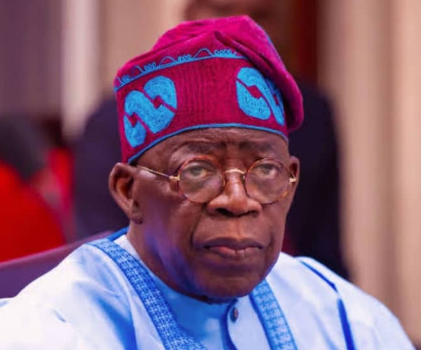
President Tinubu
n…insists ex-Governor Sylva was involved
nBy Ikechukwu Nnochiri
nABUJA – The Nigerian Army, on Wednesday, confirmed before the Federal High Court in Abuja that there was indeed a plot to overthrow the administration of President Bola Tinubu through a coup d’état.
nA soldier from the Nigerian Army Corps of Military Police (NACMP), whose identity was shielded by order of the court, mounted the witness box and testified against the six alleged masterminds of the alleged coup plot.
nThe defendants in the charge marked FHC/ABJ/CR/206/2026 are retired Major General Mohammed Ibrahim Gana; retired Naval Captain Erasmus Ochegobia Victor; serving Police Inspector Ahmed Ibrahim; and three others—Zekeri Umoru, Bukar Kashim Goni, and Abdulkadir Sani.
nA former governor of Bayelsa State—who also served as Minister of State for Petroleum Resources under the late former President Muhammadu Buhari—Timipre Sylva was also mentioned in the charge filed by the Office of the Attorney-General of the Federation and Minister of Justice.
nThe former governor is said to be at large after fleeing the country before the alleged coup plot was exposed.
nTestifying as the fourth prosecution witness, the Army officer, who was simply identified as “AAA,” told the court that he was part of the team that investigated the matter.
nHe said the investigation commenced after the then Chief of Army Staff (COAS), General O. O. Oluyede, received an intelligence report that one Colonel M. A. Ma’aji and some others were plotting to overthrow the democratically elected government of President Tinubu.
nLed in evidence by the Director of Public Prosecution of the Federation (DPPF), Mr. Rotimi Oyedepo (SAN), the PW-4 confirmed to the court that he knew the six defendants.
nHe added that the defendants were apprehended due to their connection with the coup plot involving Col. Ma’aji, some serving military officers, and civilians.
nAccording to the witness, after his team received the intelligence report by the then COAS, it was analysed, processed and found to be credible.
nAfterwards, he said the then COAS directed his team to thoroughly investigate the allegations and report back.
nIt was the evidence of the witness that, following the then COAS’s instruction, his team proceeded to arrest Col. Ma’aji, during which a Samsung Galaxy phone was retrieved from him.
nHe said the team equally searched his residence and recovered a jotter, among other items.
nThe witness told the court that the jotter contained operational plans, names and designations of ranking members of the current regime, as well as officers that were to be assassinated in the course of the coup.
n“Inside the jotter, we also found information about political and structural changes that were to be made upon the execution of the coup,” the witness added.
nHe further told the court that when the phone that was recovered from Col. Ma’aji was sent for forensic analysis, the result showed elaborate plans that linked the Colonel, some military officers, and the defendants in the case.
n“We also found financial trails between Ma’aji, former Governor Timipre Sylva and some of the defendants here before the court.
n“Also, inside the phone, we found code words known among the plotters, including some of the defendants before this court.
n“We also observed financial trails between some of the defendants and Col. M. A. Ma’aji. Monies were paid to some of the defendants in pursuit of the coup plot,” the witness added.
nFurthermore, he told the court that in the course of the investigation, his team came across a company called Purple Wave, which he said was used as a conduit to sponsor the coup plot.
nHe said financial records of the company were provided by the Economic and Financial Crime Commission (EFCC), which also investigated the transactions.
nWhen the witness was shown the company’s financial records, he identified how funds were allegedly disbursed for the purpose of the alleged coup.
nThe witness said two entries of September 19 2025, showed a debit transaction of N100 million and another N50 million debit transaction.
nAccording to the witness, on September 22, 2025, there were two debit transactions of N100m and N50m; on September 24, 2025, N100m and N50m; on September 26, 2025, N80m; on September 29, 2025, N70m; on September 30, 2025, N90m and on October 2, 2025, N90m.
nThe witness said that although the transactions carried narrations of what the funds were meant for, the investigation revealed that the money was used for the coup plot.
nLikewise, he told the court that whereas the first debit entry of N100m was described as part payment for clearing of debris along the coastal corridor to Purpose Wave, investigators found that it was not used for that purpose, but dispensed in pursuit of the coup plot.
nThe witness said his team found out that several meetings were held in places like Green Land Apartment and BrookVille Hotel in Abuja, where discussions centred on the planned coup.
n“They discussed negative things about the government and concluded that there was the need for a regime change,” the witness added, saying the alleged plotters drew a plan that identified key government officials and officers who would assassinate them.
nHe said major targets to be attacked were also pinpointed by the masterminds.
nSuch targets, according to the witness, included the Niger barracks where senior military officers live.
nHe said the plotters equally planned to take over key highways and streets while the coup was being executed.
n“The plotters also shared appointments among themselves, including agencies to be set up and those to be merged after the coup.
n“The plotters also did extensive consultation and divination, in which some of the defendants took part, knowing that a coup was ongoing. They received money for these purposes.
n“They also bought vehicles, which were recovered from shops where they were being retrofitted for kinetic purposes.”
nIn the course of the investigation, the witness said his team found out the hotels, rooms, and spaces where the meetings were held.
n“We also recovered receipts used for payment for hotel reservations,” he told the court.
nAn attempt by the prosecution counsel, Mr. Oyedepo, SAN, to tender a letter from BrookVille Hotel and documents attached to it, which included payment receipts, was opposed by counsel to the defendants.
nThe defendants insisted that the documents did not meet the threshold for admissibility, although they reserved full reasons for their objection until the final address stage.
nConsequently, Justice Joyce Abdulmalik admitted the documents in evidence and marked them as exhibits.
nEqually admitted in evidence were extracts from the phone recovered from Col. Ma’aji.
nThe witness told the court that the defendants volunteered written statements before a special investigative panel that was set up, saying the statement-taking sessions were also audio-visually recorded.
nHe said they also made voluntary written statements before the Military Police, which were also captured on video.
nThe witness said it was only the 6th defendant, Sani (the sixth defendant), who was the last to be arrested, that did not make his statement before the special investigative panel, but did so before the Military Police.
nA flash drive containing the audiovisual recordings of the statement-taking sessions was tendered before the court, even though the defendants raised objections.
nPart of the contention of the defence lawyers was that the device was not front-loaded as required by law.
nIn view of the situation, Justice Abdulmalik ordered the prosecution to ensure that the exhibits were served on the defence before the audio-visual recordings could be played in the open court.
nEarlier in the proceedings, the court granted the FG’s application to shield the identities of some of the proposed witnesses.
nThe prosecution applied to shield the identities of witnesses from the Nigerian Army, saying the move would insulate them from “unnecessary attack.”
nThe application, anchored on Section 232 of the Administration of Criminal Justice Act (ACJA), 2015, was not opposed by the defendants.
nThe defence lawyers, however, argued that they should be allowed to know the witnesses to ensure a fair hearing.
nThey contended that shielding the witnesses from the public might be justified, but full anonymity from the defence would be prejudicial and would prevent proper testing of credibility.
nLikewise, the defendants argued that, though Section 232 of the ACJA allows protective measures in such cases, it does not remove the need for basic identification within proceedings.
nThey therefore urged the court to strike a balance between security concerns and fair trial rights.
nThe defence lawyers recommended that sensitive parts of the proceedings could be restricted from public access if necessary.
nIn her ruling, Justice Abdulmalik held that the FG’s request was justified in view of the sensitive nature of the case, which touches on terrorism.
nShe held that the law permits protective measures, including non-disclosure of names, addresses, and contact details, where the court is satisfied that security concerns exist.
nConsequently, the court acceded to masking the identities of the witnesses, adding that their names must not appear in court records or proceedings accessible to parties or the public.
nThe ruling came after FG had produced three bank officials who tendered in evidence documents that included letters obtained from the Economic and Financial Crimes Commission (EFCC).
nFurther hearing in the case has been adjourned till May 4 and 5.
nThe allegations against the defendants include treason, terrorism, failure to disclose security intelligence, and money laundering in furtherance of terrorist acts.
nThe FG alleged that the defendants, sometime in September 2025, conspired to levy war against the state to overawe President Tinubu, an offence punishable under Section 37(2) of the Criminal Code.
nIt was further alleged that the defendants had prior knowledge of a planned treasonable act involving Colonel Mohammed Alhassan Ma’aji and others, but failed to alert the appropriate authorities.
nThe FG stated that they rendered assistance to Colonel Ma’aji, as shown by their failure to disclose the coup plot to the President or a peace officer.
nThe defendants were also accused of failing to take preventive steps, having “not used any reasonable endeavours to prevent the commission of the offence.”
nOther allegations centred on terrorism-related offences under the Terrorism (Prevention and Prohibition) Act, 2022. The defendants were said to have conspired to commit an act of terrorism in Nigeria.
nHowever, upon their arraignment before the court on April 22, the defendants pleaded not guilty to the 13-count charge and were remanded in the custody of the Department of State Services (DSS) pending the determination of the case.
n nRelated Stories
 General News
CELEBRATING TWO YEARS OF TRANSFORMATIONAL LEADERSHIP IN THE PRESIDENTIAL AMNESTY PROGRAMME
Tomorrow, 14TH March 2026, as we look forward to the second anniversary, we reflect on the remarkable two years since the Administrator of the Preside
 General News
PRESIDENTIAL AMNESTY PROGRAMME PHASE 3: DISREGARD PURPORTED STATEMENT ON DELAYED ITA PAYMENTS — OFFICE OF NATIONAL CHAIRMAN
The Office of the National Chairman of the Presidential Amnesty Programme Phase 3, General Elaye ThankGod Dollar Slaboh, has called on beneficiaries a
 General News
RE: CLARIFICATION ON MY PERSONAL RELATIONSHIPS
PUBLIC NOTICErnrnRE: CLARIFICATION ON MY PERSONAL RELATIONSHIPSrnrnIt has become necessary to make this public clarification following the increasing