
ANIMAL HUSBANDRY SECTOR: Foreign Imports Strengthen Grip, Surge 14.5% to N1.7 Trillion
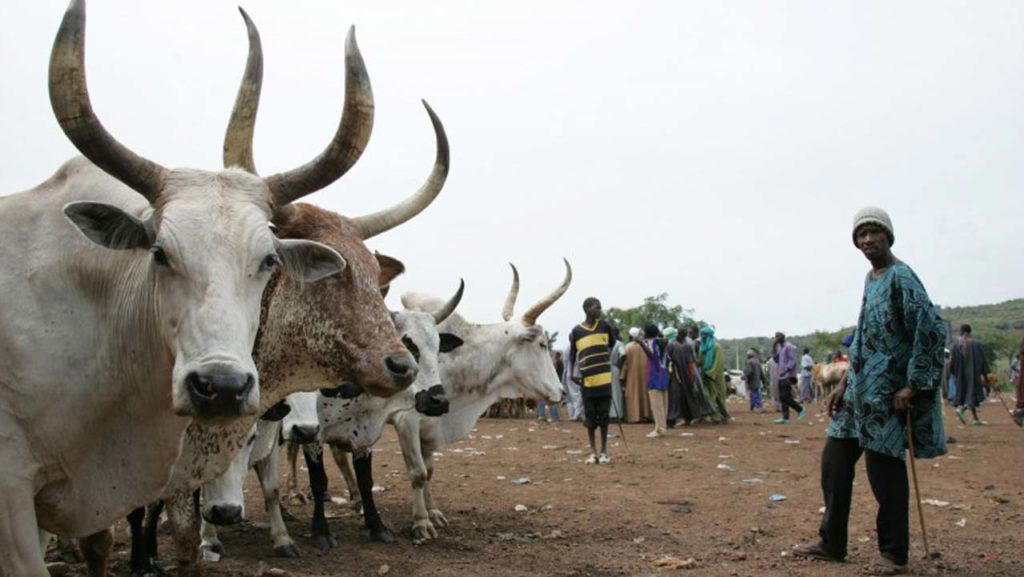
Nigeria's efforts to diversify its economy are being hindered by the dominance of foreign imported livestock products, with imports rising to N1.71 trillion in 2025, a 14.5 per cent increase from N1.49 trillion in 2024, according to the National Bureau of Statistics.
nThe country is struggling with a significant diary gap, which has led to increased imports, with the Ministry of Livestock Development confirming that Nigeria spends over $1.5 billion annually on dairy imports, and the Food and Agriculture Organisation noting that about 60 per cent of dairy products consumed locally are imported.
nThe dairy subsector is the weakest link in the livestock industry, with domestic production of roughly 0.5 million tonnes falling short of the estimated annual demand of 1.3 million tonnes, and the average milk yield per cow in Nigeria being about 213 litres per year, less than one-tenth of the global average.
nNigeria currently hosts 273 million animals, with goats dominating at a population of 138.95 million, sheep at 64.93 million, and cattle at 54.81 million, while poultry numbers are estimated at 250 million birds, but the sector's productivity is hindered by structural challenges.
nDespite the import surge, the livestock sector contributed N11.9 trillion or 5.6 per cent to the nation's Gross Domestic Product in 2024, and is expected to show further increase when the 2025 GDP figures are released, but experts warn that this contribution does not equate to competitiveness or export strength.
nBrazil, with over 238 million cattle, contributed about $185.7 billion to GDP from livestock in 2024 and is a global export powerhouse, highlighting the significant gap between Nigeria's livestock sector and global leaders.
nStakeholders attribute Nigeria's growing dependence on imported livestock products to deep-rooted structural weaknesses, including entrenched cultural practices, low productivity, insecurity, policy inconsistencies, and prolonged neglect of the livestock value chain.
nTraditional nomadic grazing, largely practiced by Fulani herders, has slowed the transition to settled ranching systems, disrupting feeding patterns, weakening animal health supervision, and limiting productivity, according to the Food and Agriculture Organisation.
nRising feed costs, driven by currency depreciation and reliance on imported inputs, have forced many operators to scale down, further exacerbating the sector's challenges, and stakeholders are calling for government investment in ranching, improved breeds, and feed stock development to support livestock businesses.
nPresident of the Nigeria Agribusiness Group, Arc Kabir Ibrahim, warned that poorly assessed foreign investments could pose risks to the sector, and called for massive government investment in ranching, improved breeds, feed stock development, and inclusive economic reforms to support livestock businesses.
nIbrahim noted that the weak purchasing power of the citizenry and the high cost of animal feed are significant factors militating against businesses in Nigeria, including the livestock sector, and that unless productivity is adequately scaled, the sector cannot become sustainable.
nThe President-General of the Fulbe Global Development and Rights Initiative, Dr Salim Umar, said Nigeria's livestock sector suffers from inconsistent policies, poor institutional coordination, underinvestment, insecurity, cattle rustling, and poor infrastructure, which disrupt production systems and deter private investment.
nUmar urged the government to reposition livestock as an economic asset, not merely a security issue, and called for evidence-based policymaking, stronger financing mechanisms, and development-driven interventions to curb insecurity and address the sector's challenges.
nDr Gani Enahoro, a member of the Governing Board of the Veterinary Council of Nigeria and a Senior Animal Health Specialist at the Food and Agriculture Organization, said sustainable progress in the livestock sector requires robust, inclusive, corruption-free policies, a bottom-up approach, and measurable progress metrics.
nEnahoro cited Sudan's livestock reform experience as an example of structured transformation and noted that President Bola Tinubu has consistently emphasized the need for livestock development programmes, but that political will and implementation are necessary to drive progress.
nThe Founder of Vet Konect, Dr Terese Shadrach Akpem, highlighted inadequate veterinary infrastructure, poor disease surveillance, climate pressures, weak extension services, and lack of coordination as pressing threats to the livestock sector, and recommended stronger veterinary systems and digital animal health platforms to unlock productivity and resilience.
nAkpem noted that the solution to most of the challenges facing the sector is to scale up digital animal health solutions, strengthen veterinary systems, enforce quality standards for veterinary medicines, invest in youth and women-led enterprises, and embed One Health approaches to unlock productivity and sustainability.
Related Stories
 General News
CELEBRATING TWO YEARS OF TRANSFORMATIONAL LEADERSHIP IN THE PRESIDENTIAL AMNESTY PROGRAMME
Tomorrow, 14TH March 2026, as we look forward to the second anniversary, we reflect on the remarkable two years since the Administrator of the Preside
 General News
PRESIDENTIAL AMNESTY PROGRAMME PHASE 3: DISREGARD PURPORTED STATEMENT ON DELAYED ITA PAYMENTS — OFFICE OF NATIONAL CHAIRMAN
The Office of the National Chairman of the Presidential Amnesty Programme Phase 3, General Elaye ThankGod Dollar Slaboh, has called on beneficiaries a
 General News
RE: CLARIFICATION ON MY PERSONAL RELATIONSHIPS
PUBLIC NOTICErnrnRE: CLARIFICATION ON MY PERSONAL RELATIONSHIPSrnrnIt has become necessary to make this public clarification following the increasing