
American lawmakers approve measure to bring historic federal closure to a close
US Congress
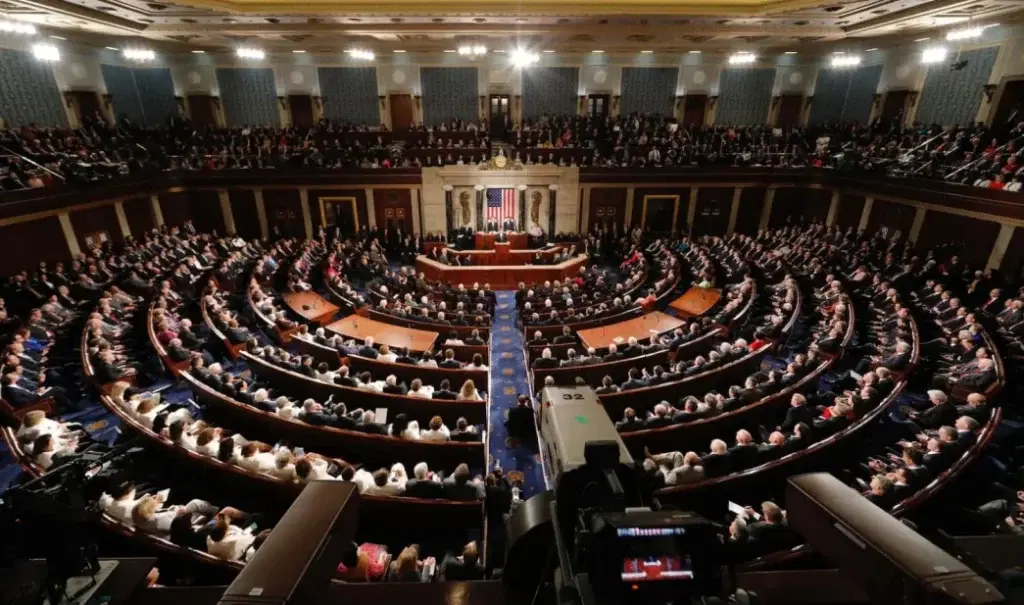
nThe US Congress on Thursday approved funding for most of the Department of Homeland Security (DHS), ending a record-breaking partial government shutdown that has disrupted critical agencies for more than two months.
nThe House approved the measure, already passed by the Senate, sending it to President Donald Trump for signature. It will fund key DHS agencies through the end of the fiscal year on September 30.
nIt does not include new money for immigration and border enforcement, leaving unresolved the political dispute that triggered the shutdown.
nThe House cleared the bill by voice vote just hours before a critical deadline, after Homeland Security Secretary Markwayne Mullin warned that emergency funds used to cover salaries would soon run dry.
nThe department has been partially shuttered since February 14, making it the longest funding lapse of its kind, at 75 days.
nThe legislation restores normal funding to agencies including the Federal Emergency Management Agency, the Coast Guard, the Transportation Security Administration and the Secret Service.
nBut Immigration and Customs Enforcement (ICE) and Border Patrol — at the center of a bitter partisan fight — are excluded from the deal.
nSpeaker of the House Mike Johnson “extended the DHS shutdown for over a month for no reason at all. This is the same bill the Senate unanimously passed five weeks ago,” said Patty Murray, the top Democrat on government funding in the upper chamber.
n“After Republicans spent months blocking disaster relief and funding for the TSA, Coast Guard, and our cyber defense agency, it is a very good thing that this bill is finally on track to be signed into law to fund these agencies.”
nThe standoff began when Democrats refused to support funding for immigration enforcement without new restrictions on tactics such as raids in sensitive locations and the use of masks by officers.
nRepublicans rejected those demands, instead pushing for full funding of the agencies without new conditions.
nThe result is a two-track approach to financing DHS.
nLawmakers have reopened most of the department for now, while Republicans move separately to secure tens of billions of dollars for ICE and Border Patrol through the “budget reconciliation” process, which would allow them to bypass Democrats.
n– ‘Safety and security’ –
nJohnson had resisted bringing the Senate compromise to a vote for weeks, calling it inadequate and insisting that immigration enforcement must be fully funded.
nBut mounting pressure from the White House, moderate Republicans and officials warning of looming payroll shortfalls forced leadership to act.
nThe prolonged impasse exposed deep divisions within the Republican Party, with hardliners opposing the partial funding bill and centrists warning of political fallout from continuing the shutdown.
nRepublican Congressman Nick Langworthy wrote to Johnson on Monday urging him to put the Senate-passed bill on the floor.
n“Thank you to (Trump) for agreeing and demanding action,” he posted on social media. “Not another day should go by with our safety and security at risk.”
nThe shutdown has taken a toll on federal workers and operations.
nThousands of DHS employees worked without pay for weeks, while more than 1,000 Transportation Security Administration staff reportedly quit. Preparations for major events, including World Cup matches scheduled in US cities this summer, were also under threat.
nDespite the resolution, the underlying political conflict remains unresolved. Republicans are pushing to approve up to $70 billion in funding for immigration enforcement agencies for the remainder of Trump’s term, while Democrats continue to demand tighter oversight and limits on enforcement practices.
nThe episode underscores the sharp partisan divide over immigration policy just months ahead of midterm elections that will determine control of Congress, and highlights the challenges facing House Republicans as they navigate internal divisions while advancing the president’s agenda.
nWith lawmakers now leaving Washington for a recess, attention is set to shift to the next phase of the funding fight — and whether Congress can resolve the dispute over immigration enforcement without another shutdown looming later this year.
nAFP
n nRelated Stories
 General News
CELEBRATING TWO YEARS OF TRANSFORMATIONAL LEADERSHIP IN THE PRESIDENTIAL AMNESTY PROGRAMME
Tomorrow, 14TH March 2026, as we look forward to the second anniversary, we reflect on the remarkable two years since the Administrator of the Preside
 General News
PRESIDENTIAL AMNESTY PROGRAMME PHASE 3: DISREGARD PURPORTED STATEMENT ON DELAYED ITA PAYMENTS — OFFICE OF NATIONAL CHAIRMAN
The Office of the National Chairman of the Presidential Amnesty Programme Phase 3, General Elaye ThankGod Dollar Slaboh, has called on beneficiaries a
 General News
RE: CLARIFICATION ON MY PERSONAL RELATIONSHIPS
PUBLIC NOTICErnrnRE: CLARIFICATION ON MY PERSONAL RELATIONSHIPSrnrnIt has become necessary to make this public clarification following the increasing