
America may remove restrictions on Iran's maritime petroleum exports
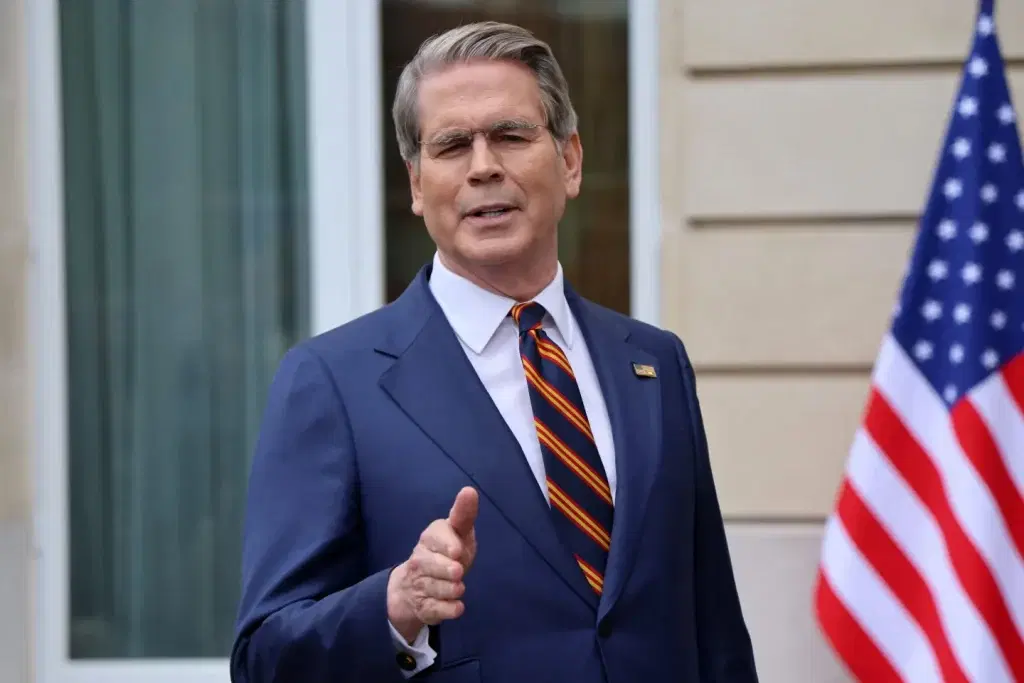
US Treasury Secretary Scott Bessent revealed on Thursday that the US might consider lifting sanctions on Iranian oil that is already in transit, as the country grapples with soaring energy costs due to the ongoing conflict in the Middle East.
nThis development comes as the US scrambles to alleviate the burden of high energy costs on American consumers, with a Trump administration official clarifying that restrictions on oil and gas exports are not being contemplated.
nAnalysts caution that easing sanctions could inadvertently benefit Tehran, which has been the target of US-Israeli attacks, although some perceive this move as a strategy to enlist partners in a coalition to reopen the Strait of Hormuz.
nDuring an interview with Fox Business on Thursday, Bessent's remarks coincided with a fresh surge in oil and gas prices following Iran's attack on the world's largest liquefied natural gas facility in Qatar and its threat to destroy the region's energy infrastructure.
nThe US government is also weighing the option of releasing more oil from its strategic reserves to help mitigate the rising costs, according to Bessent.
nThe conflict, which began with US-Israeli strikes on Iran on February 28, has led to a significant spike in energy prices, causing supply chains to become entangled and ultimately affecting US consumers.
nAround 20% of the world's crude oil and liquefied natural gas passes through the Strait of Hormuz during peacetime, highlighting the critical nature of this waterway.
nInternational benchmark Brent crude oil prices jumped 10% before easing to a 3.1% increase at $110.67 per barrel, while US gasoline prices have also risen since the start of the war.
nBessent estimated that approximately 140 million barrels of Iranian oil are currently at sea, equivalent to about two weeks of supply destined for China.
nThe goal of using these Iranian barrels is to counter Tehran's influence as Washington seeks to contain price increases, Bessent explained.
nAndy Lipow of Lipow Oil Associates noted that the optics of easing Iranian sanctions seem paradoxical, stating "it would appear that we're allowing Iran to sell their oil at the same time that we're at war with them."
nPhilip Luck of the Center for Strategic and International Studies (CSIS) pointed out that with global daily oil demand exceeding 100 million barrels, easing sanctions would only free up 1.5 days' worth of supply internationally.
nLuck told AFP that "if they're thinking about changing prices here in the United States, that's just not going to happen," but acknowledged that the move could bring minor relief to US allies and partners in Asia.
nING economist James Knightley believes that the lifting of sanctions may be an indication of Washington's desire to collaborate with partners to unblock the Strait of Hormuz, rather than a direct attempt to lower costs.
nKnightley noted that Trump has previously sought to enlist the support of France, Japan, China, Britain, and South Korea in this effort, and that the move "looks like a bit of a negotiating tactic to try and get the Chinese on their side."
nThis tactic aims to bolster the idea of a naval coalition to reopen the Strait of Hormuz, and even if lifting sanctions seems counterproductive, Washington might consider it "worth the cost" if it helps secure China's pressure on Iran, according to Knightley.
nThe potential removal of certain Iranian oil sanctions would be the latest in a series of moves by the US to curb energy price hikes, following the temporary allowance of sanctioned Russian oil sales at sea earlier this month.
nOn Wednesday, Trump waived a century-old maritime shipping law for 60 days in an attempt to help alleviate energy prices.
Related Stories
 General News
CELEBRATING TWO YEARS OF TRANSFORMATIONAL LEADERSHIP IN THE PRESIDENTIAL AMNESTY PROGRAMME
Tomorrow, 14TH March 2026, as we look forward to the second anniversary, we reflect on the remarkable two years since the Administrator of the Preside
 General News
PRESIDENTIAL AMNESTY PROGRAMME PHASE 3: DISREGARD PURPORTED STATEMENT ON DELAYED ITA PAYMENTS — OFFICE OF NATIONAL CHAIRMAN
The Office of the National Chairman of the Presidential Amnesty Programme Phase 3, General Elaye ThankGod Dollar Slaboh, has called on beneficiaries a
 General News
RE: CLARIFICATION ON MY PERSONAL RELATIONSHIPS
PUBLIC NOTICErnrnRE: CLARIFICATION ON MY PERSONAL RELATIONSHIPSrnrnIt has become necessary to make this public clarification following the increasing