
America and Iran to resume negotiations following postponement and fatal attacks
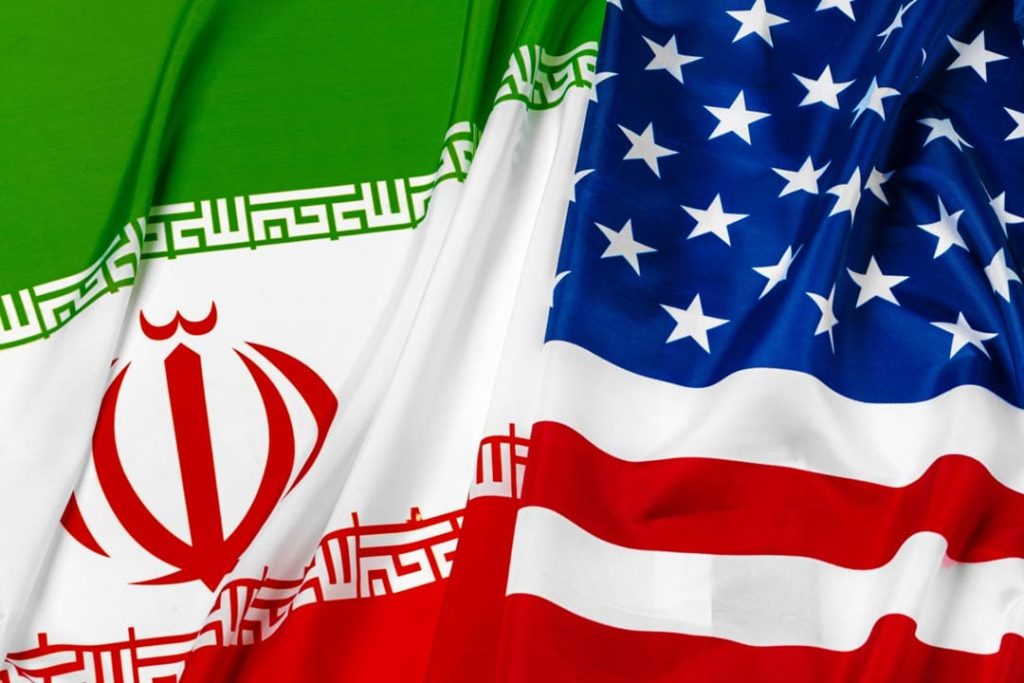
A fresh round of negotiations aimed at resolving the Middle East war is set to commence on Sunday, with Iranian negotiators and US Vice President JD Vance arriving in the Swiss host city, despite Tehran's announcement that it is once again closing the Strait of Hormuz in response to Israeli attacks in Lebanon.
nVance expressed his hopes for progress on the nuclear issue and the Lebanon ceasefire before departing for Europe, stating that these are the two key areas of focus for the negotiations.
nFollow-up talks had been scheduled to take place in Switzerland on Friday but were postponed at the last minute due to Israel's launch of deadly strikes in Lebanon, which followed the deaths of four Israeli soldiers in combat.
nWashington announced a renewed ceasefire in the region later on Friday, as a condition of its preliminary agreement with Iran, but Israeli troops clashed with Hezbollah fighters again on Saturday, with each side accusing the other of violating the truce.
nCiting a US "breach of contract" and "the Zionist regime's continuous and relentless violation of the ceasefire in southern Lebanon", Iran's central military command announced that "the Strait of Hormuz will be closed to vessel traffic".
nThe Strait of Hormuz, a crucial conduit for oil and gas shipments, had been blockaded by Iran for much of the war, causing significant disruptions to global energy markets.
nTehran had agreed to reopen the Strait under the preliminary accord signed by US President Donald Trump and his Iranian counterpart Masoud Pezeshkian, and shipping traffic had begun to recover.
nUS Central Command stated that safe passage through the international waterway had "remained intact" and that US forces were "present and vigilant" following Iran's announcement.
nTrump warned that Washington could impose its own tolls on the Strait of Hormuz if negotiators failed to complete the deal, writing on Truth Social that there would be no tolls "unless they are imposed by and for the United States of America".
nAn Iranian delegation, including parliamentary speaker Mohammad Bagher Ghalibaf and Foreign Minister Abbas Araghchi, arrived in Switzerland late on Saturday, according to state media and the Swiss foreign ministry.
nForeign ministry spokesman Esmaeil Baqaei stated that the delegation would "demand implementation of the other party's commitments" under the deal, warning that "otherwise, the entire understanding will be in trouble".
nVance arrived at the Emmen Air Base in Switzerland on Sunday morning, having previously stated that he could only stay "a day or two".
nUS negotiators Jared Kushner and Steve Witkoff were already in Switzerland, handling "some of the technical elements" of the talks, and had reported that "things are going well", according to Vance.
nPakistan, which has been helping to mediate the negotiations, announced that Prime Minister Shehbaz Sharif and army chief Asim Munir had left for Switzerland to participate in high-level talks involving US and Iranian representatives and other mediators from Qatar.
nThe talks are intended to initiate a two-month negotiation period to address issues left unresolved by the initial accord, particularly Iran's nuclear programme.
nIsrael and Hezbollah continued to exchange accusations on Saturday as fighting persisted in southern Lebanon, with the Israeli military reporting the death of one soldier, the fifth such fatality since the US-Iran deal was reached.
nAn Israeli army official stated that the military had received orders to cease fire and was operating defensively inside a security zone, while Hezbollah accused Israel of attempting to infiltrate the Ali Taher hills, a strategic location overlooking Nabatieh.
nLebanese state media reported Israeli air raids on around 20 locations, resulting in more than 30 deaths, as the overall death toll from the fighting in Lebanon surpassed 4,000, according to the health ministry.
nHezbollah lawmaker Hassan Fadlallah asserted that his group retained "the full right to confront this enemy when it attacks us", while Israel's US ambassador Yechiel Leiter maintained that Israel was "defending itself against terrorist attacks".
nFadi Zayat, a 53-year-old who fled the southern Lebanon town of Tayr Debba, told AFP that "fear dominates" the south, adding that "we returned to the village a few days ago, but our bags are ready to flee again".
nHezbollah had pulled Lebanon into the wider Middle East conflict in early March when it fired rockets at Israel in retaliation for the killing of Iran's supreme leader in US-Israeli strikes, and a previous ceasefire meant to take effect in Lebanon in April was never honoured.
Related Stories
 General News
CELEBRATING TWO YEARS OF TRANSFORMATIONAL LEADERSHIP IN THE PRESIDENTIAL AMNESTY PROGRAMME
Tomorrow, 14TH March 2026, as we look forward to the second anniversary, we reflect on the remarkable two years since the Administrator of the Preside
 General News
PRESIDENTIAL AMNESTY PROGRAMME PHASE 3: DISREGARD PURPORTED STATEMENT ON DELAYED ITA PAYMENTS — OFFICE OF NATIONAL CHAIRMAN
The Office of the National Chairman of the Presidential Amnesty Programme Phase 3, General Elaye ThankGod Dollar Slaboh, has called on beneficiaries a
 General News
RE: CLARIFICATION ON MY PERSONAL RELATIONSHIPS
PUBLIC NOTICErnrnRE: CLARIFICATION ON MY PERSONAL RELATIONSHIPSrnrnIt has become necessary to make this public clarification following the increasing