
Al Jazeera Features Bwala: A Guide to Distancing Yourself from Previous Political Views
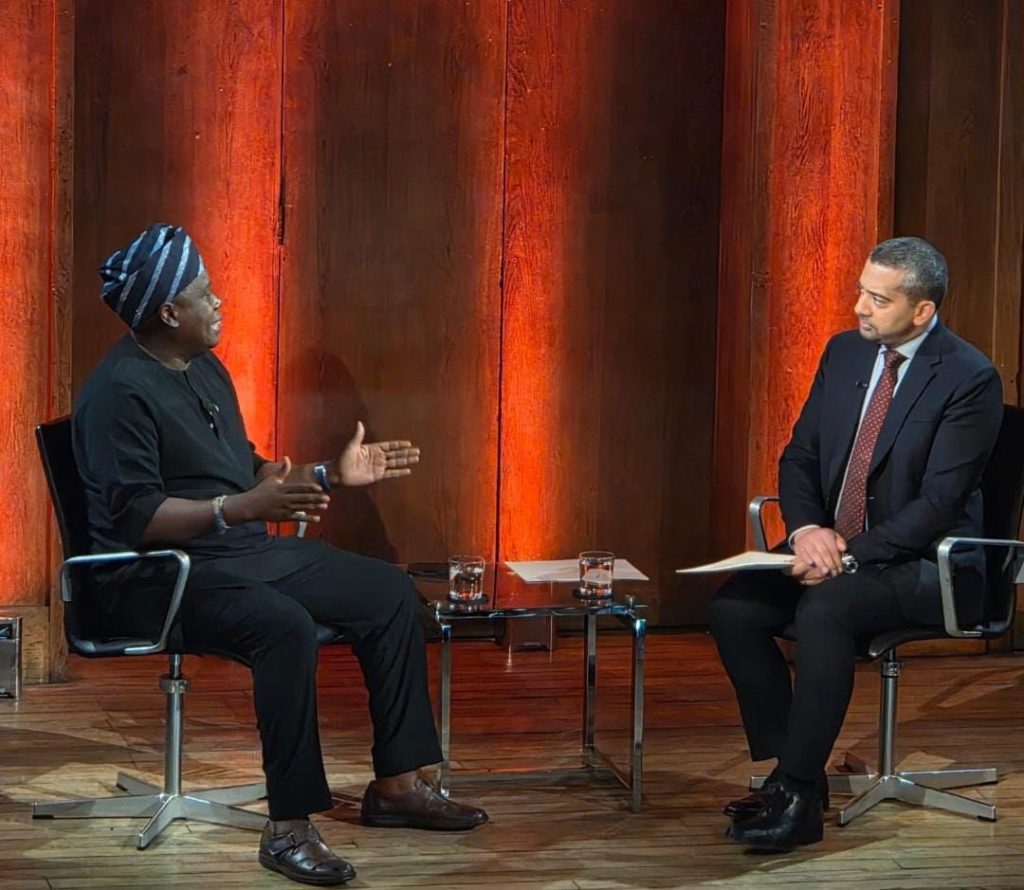
Daniel Bwala's recent appearance on Head to Head with Mehdi Hasan at Al Jazeera was a rare instance of a political interview that laid bare the fragility of credibility, rather than merely exposing policy weaknesses.
nThis was not just a difficult interview for a presidential spokesman, as public officials are expected to face tough questions as part of their job, but what made this exchange extraordinary was the fact that Bwala was confronted by his own record.
nHis past statements were quoted back to him, and his earlier criticisms of President Bola Tinubu were replayed, with allegations of corruption, abuse of power, vote-buying, militia accusations, and democratic decline resurfacing like witnesses testifying against him.
nThe real drama of the evening was not the hostile interview, but the collision between Bwala and his own words, which unraveled the familiar performance of political defense in real-time before a global audience.
nA spokesman can survive aggressive questioning and thrive on a foreign platform, but what is far harder to survive is documented contradiction, where a man's own words testify against him, causing the usual protections of partisanship to collapse.
nIt is one thing to dismiss critics, but another thing entirely to dismiss oneself, which was Bwala's burden throughout the interview, as he was defending his present self against his former self.
nChanging one's mind is not a crime, and politics is full of reversals, reassessments, and realignments, but what becomes dishonorable is refusing to explain the change, especially when a public figure has made grave accusations against a leader and later goes on to serve that same leader.
nThe public is entitled to ask simple questions, such as what changed, which earlier claims are now rejected, and what facts emerged to justify the reversal, but without clear answers, a transformation does not appear to be growth, it looks like convenience.
nOn issue after issue, Bwala appeared less interested in explaining the past than in escaping it, with denials where explanations were required, evasions where candor was needed, and appeals to "context" that sounded like retreat rather than clarification.
nThe defense relied not on persuasive truthfulness but on the hope that performance might outrun memory, but memory did not yield, making the exchange powerful, as Mehdi Hasan's aggression did not undo Bwala, but the return of his own speech did.
nHis past words entered the room, refused to leave, and sat beside him, contradicting him and stripping his defense of authority, making the most damaging witness in the interview not the host, but Daniel Bwala's own public record.
nThe wider Nigerian context made the encounter even more consequential, as Nigeria is not a country where rhetoric can easily substitute results, and the burdens of daily life are too heavy for that illusion to survive.
nInsecurity, poverty, and corruption are not abstract debates for those who live with fear, struggle with feeding, transport costs, school fees, or stability, and when national conditions grow harsher, patience for official language grows thinner, making Bwala's contradictions matter.
nThey are not merely personal embarrassments, but symbolize something larger about Nigerian politics, its ease with reinvention, loose relationship with consistency, and willingness to treat yesterday's moral outrage as today's tactical inconvenience.
nThe deeper danger revealed by Daniel Bwala's Al Jazeera outing is that public avowals are losing seriousness, allegations once made with conviction can later be shrugged off without explanation, and words once used to warn the public can be quietly abandoned.
nPolitical language becomes elastic, stretching to serve whatever the moment demands, and when this happens often enough, citizens begin to distrust not only politicians but also language itself, as democracy can survive disagreements and partisan conflicts, but what struggles to survive is the hollowing out of public speech.
nA nation where words mean little soon after utterance becomes a nation where accountability is a mere concept, which is why the Bwala interview matters, as it was not about one spokesman's uncomfortable evening on international television, but a reminder that words spoken in public life can hardly fizzle away.
nThey remain, they wait, and when the moment arrives, they return, as Bwala came to the international arena to defend the Federal Government, but instead, he confronted his history, and once that happens, the interview is no longer about defending policy, but a lesson in the enduring power of memory.
nPolitics can be rewritten, positions change, alliances shift, and narratives are reconstructed, but words, once spoken, never truly leave, they wait patiently in the public record, and when they return at the right moment, they ask the most uncomfortable question: Were you telling the truth then or now?
nUntil political speeches recover their seriousness, interviews like Daniel Bwala's will continue to expose the same uncomfortable truth: The greatest threat to political credibility is not the interviewer across the table, but the words a politician once spoke with confidence and later wished the world had forgotten.
Related Stories
 General News
CELEBRATING TWO YEARS OF TRANSFORMATIONAL LEADERSHIP IN THE PRESIDENTIAL AMNESTY PROGRAMME
Tomorrow, 14TH March 2026, as we look forward to the second anniversary, we reflect on the remarkable two years since the Administrator of the Preside
 General News
PRESIDENTIAL AMNESTY PROGRAMME PHASE 3: DISREGARD PURPORTED STATEMENT ON DELAYED ITA PAYMENTS — OFFICE OF NATIONAL CHAIRMAN
The Office of the National Chairman of the Presidential Amnesty Programme Phase 3, General Elaye ThankGod Dollar Slaboh, has called on beneficiaries a
 General News
RE: CLARIFICATION ON MY PERSONAL RELATIONSHIPS
PUBLIC NOTICErnrnRE: CLARIFICATION ON MY PERSONAL RELATIONSHIPSrnrnIt has become necessary to make this public clarification following the increasing