
Africa must build, finance, own its future — Leaders
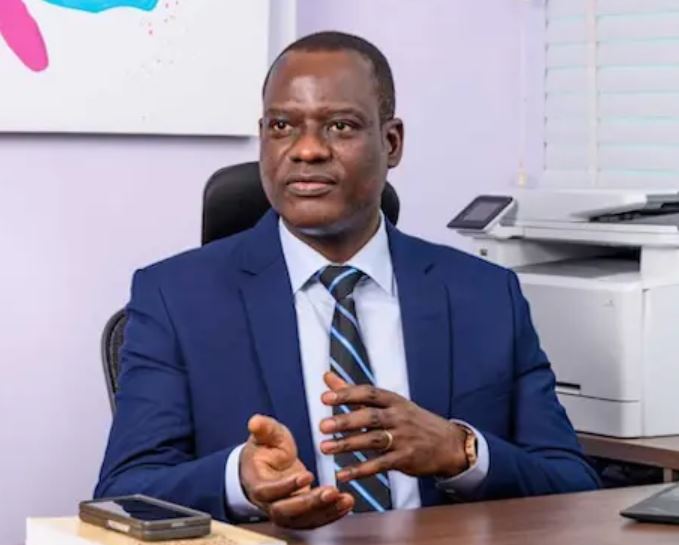
Minister of Finance and Coordinating Minister for the Economy, Taiwo Oyedele
n…Charge young leaders to take control of continent’s narrative
…Oramah: Dangote Refinery helping Africa ‘take back its mind’
…Amina Mohammed: Stop acting as recipients, start shaping global power
By Udeme Akpan
nLAGOS — Prominent African leaders, including Aliko Dangote, Deputy Secretary-General of the United Nations, Amina Mohammed, and former President and Chairman of the Board of Directors of Afreximbank, Prof. Benedict Oramah, have challenged a new generation of leaders to take control of the continent’s narrative, mobilise its resources and build institutions and enterprises capable of transforming Africa’s position in the global economy.
nThe leaders spoke at the closing of the 2026 Aliko Dangote Foundation Africa Diaspora Leadership Programme Young Global Leaders Convening in Lagos.
nOthers who spoke at the event included the Minister of Finance and Coordinating Minister of the Economy, Taiwo Oyedele; Minister of Art, Culture, Tourism and the Creative Economy, Hannatu Musawa; and Chief Executive Officer of the Rwanda Development Board, Jean Guy Afrika.
nSpeaking to Young Global Leaders from Africa and the diaspora, the speakers said the continent must move beyond being defined by its challenges and natural resources and become a producer, financier and owner of globally competitive businesses, technologies, cultural assets and institutions.
nTheir message underscored the objective of the four-day Lagos learning journey, organised around the theme, “Building Africa at Scale,” which exposed participants to Nigeria’s industrial, financial, technological and creative ecosystems.
nAmina Mohammed: Africa must shape global power
nAmina Mohammed told the young leaders that Africa’s struggle for influence was increasingly a contest over power, institutions and who gets to define the continent’s story.
nShe said Africans could no longer be satisfied with securing representation at global decision-making tables but must seek the power to shape decisions themselves.
n“We can no longer be the people that are profited from. You have to own what it is that is your power,” Mohammed said.
nRecalling conversations with young Africans about representation at the United Nations, she said they increasingly wanted more than “a seat at the table”.
n“What we really want is the pen,” she quoted them as saying, explaining that the pen symbolised the power to write the narrative.
nMohammed said African countries collectively constituted the largest regional grouping within the United Nations and played a major role in decisions taken by the global body, but often approached international affairs as recipients rather than power brokers.
nShe urged African leaders to strengthen institutions, improve strategic coordination and recognise the power embedded in the continent’s collective economic and political weight.
nShe also warned that artificial intelligence represented another rapidly emerging arena of global power in which Africa could not afford to fall behind.
nHer challenge to the Young Global Leaders was direct: “Don’t follow the status quo,” she said.
n“Have the courage of your conviction and just bloody well do it.”
nOramah: Africa must ‘take back its mind’
nOramah said one of the greatest contributions of the Dangote Petroleum Refinery was psychological, as it provided physical evidence that Africans could conceive and execute industrial projects on a global scale.
n“The greatest thing that the Dangote Refinery has done and will do for us is our ability to take back our minds,” Oramah said.
nHe said the project was helping consign to the “rear view mirror” the notion that Africa lacked the capacity to undertake complex, world-scale industrial ventures.
nBut he warned that Africa’s future required the continent to move beyond exceptional examples and systematically build productive capacity.
n“Unless we manufacture, unless we produce,” he said, Africa would struggle to transform its position in the global economy.
nOramah also challenged the continent to take greater control of its financial resources, calling on African commercial banks to embrace “developmental commercial banking” and support long-term productive investment.
nOyedele: Make it easier to build next Dangote
nMinister of Finance and Coordinating Minister of the Economy, Taiwo Oyedele, said governments must create conditions that make it easier for more African entrepreneurs to build at the scale demonstrated by Dangote.
nDescribing Dangote as “a fighter”, Oyedele said working closely with the industrialist had changed his understanding of what it took to execute major investments in Nigeria.
n“Until I got close to him, I saw that he was stressed more than the rest of us. But he would never give up,” Oyedele said.
n“What if we create the right conditions so that he will be less stressed, so that other people will be encouraged to do the same thing?”
nHe said government’s principal role should be to provide the policy and regulatory environment in which private capital could create jobs, drive innovation and develop commercially viable infrastructure.
n“The job of the government is to create the right policy environment so that the private sector can drive innovation, can create jobs and provide viable infrastructure,” he said.
nOyedele also acknowledged that economic reforms ultimately had to translate into improvements that ordinary citizens could feel.
nHe said Africa paid an enormous economic price for negative perceptions, describing the burden as a “stereotype tax”, “narrative cost” and “prejudice premium”.
nThe continent, he argued, must tell its own story more effectively and ensure that narratives of conflict, corruption and hopelessness did not continue to distort perceptions of African opportunities.
nMusawa: Take control of Africa’s story
nMusawa said changing Africa’s narrative could not be separated from developing the continent’s creative economy, which she described as a major source of jobs, economic value and global influence.
nShe urged Africans to take control of their stories and recognise culture as both an economic asset and a means of defining how Africa is understood globally.
n“We need to take a hold of our narrative,” she said, adding that Africans must think beyond themselves and build with succeeding generations in mind.
nRwanda: Build systems, not dependence
nJean Guy Afrika said the Dangote Refinery demonstrated what exceptional entrepreneurial leadership could accomplish, but warned that Africa could not build its future around extraordinary individuals being forced to overcome dysfunctional systems.
n“What Alhaji Dangote has done on the refinery is incredible. But truth be told, I think we get one in almost every lifetime,” the Rwanda Development Board chief executive said.
n“The bigger question is how do we make it so that the next investor doesn’t have to have exceptional access, exceptional patience” for an investment to succeed.
nAfrika identified policy predictability, sanctity of contracts, institutional accountability and preparation of investable assets as essential conditions for building at scale.
nDangote: Your turn to build ‘New Africa’
nPresident and Chief Executive of Dangote Industries Limited, Aliko Dangote, challenged participants to translate the Lagos experience into action.
n“What you have seen in Lagos is that Africa’s challenge is not a shortage of ideas or ambition. It is turning ambition into institutions, productive capacity and lasting value,” Dangote said.
nHe urged the Young Global Leaders to ask not simply what Africa could become, but what personal role they would play in building what he described as the “New Africa”.
nManaging Director and Chief Executive Officer of the Aliko Dangote Foundation, Zouera Youssoufou, said the foundation had supported African members of the Forum of Young Global Leaders for the past 15 years as part of a deliberate effort to expand the continent’s representation and influence within global leadership networks.
nShe said the foundation specifically funded African Young Global Leaders to participate fully in the programme and its learning journeys, giving promising leaders access to global knowledge, networks and experiences that could strengthen their capacity to make an impact on the continent.
n“This year, we decided to host the Young Global Leaders here in Lagos. The learning journey focuses on the rise of African excellence and what it takes to build Africa at scale,” Youssoufou said.
nAccording to her, the foundation wanted participants to leave Nigeria with a deeper conviction that transformative African enterprises were possible and that they, too, could build at comparable scale.
n“We want the participants to leave Lagos with the conviction that they, too, can aspire to accomplish what Alhaji Aliko Dangote has achieved over the years,” she said.
n“Ultimately, we want them to understand that they can do anything and that nothing is impossible. With patience, perseverance and grit, and with the ability to confront failure and rise again, they, too, can succeed and build Africa at scale.”
n nRelated Stories
 General News
CELEBRATING TWO YEARS OF TRANSFORMATIONAL LEADERSHIP IN THE PRESIDENTIAL AMNESTY PROGRAMME
Tomorrow, 14TH March 2026, as we look forward to the second anniversary, we reflect on the remarkable two years since the Administrator of the Preside
 General News
PRESIDENTIAL AMNESTY PROGRAMME PHASE 3: DISREGARD PURPORTED STATEMENT ON DELAYED ITA PAYMENTS — OFFICE OF NATIONAL CHAIRMAN
The Office of the National Chairman of the Presidential Amnesty Programme Phase 3, General Elaye ThankGod Dollar Slaboh, has called on beneficiaries a
 General News
RE: CLARIFICATION ON MY PERSONAL RELATIONSHIPS
PUBLIC NOTICErnrnRE: CLARIFICATION ON MY PERSONAL RELATIONSHIPSrnrnIt has become necessary to make this public clarification following the increasing