
Africa earns under 10% of $120bn chocolate market – Report
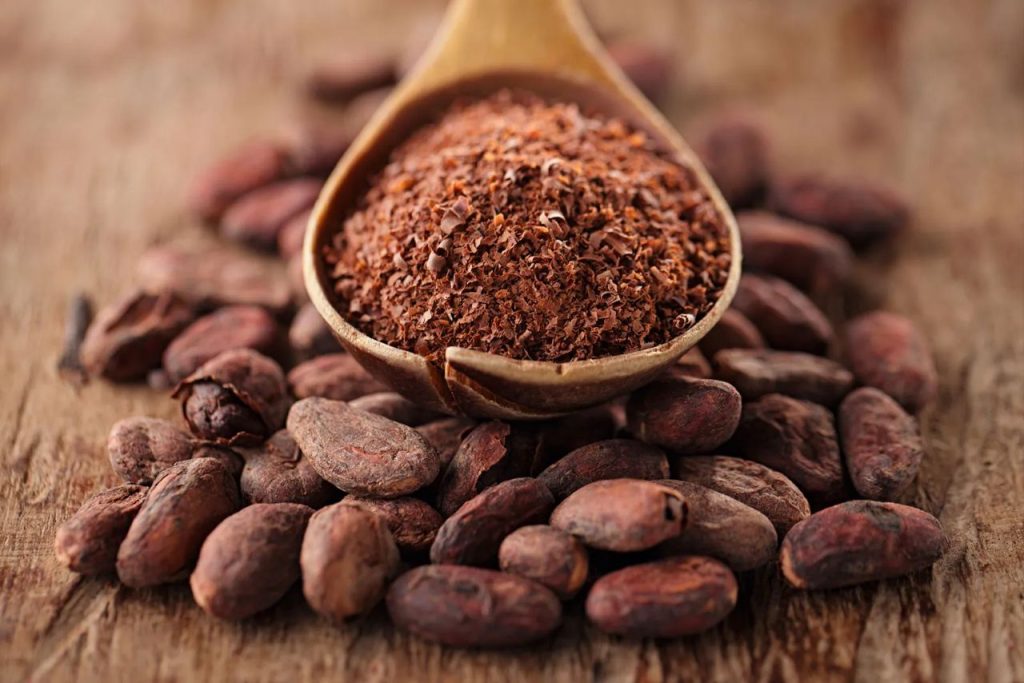
…as COCEFAAA set to unveil three-year development plan April 9
nBy Efe Onodjae
nThe Cocoa and Coffee Farmers Alliance Association of Africa (COCEFAAA) has disclosed that Africa earns less than 10 per cent of the estimated $120 billion global chocolate market, despite producing about 70 per cent of the world’s cocoa.
nThe association also announced plans to unveil its three-year development agenda for the continent on April 9, 2026, as part of efforts to reposition Africa within the global cocoa and coffee value chains.
nThe Global President of COCEFAAA, Adeola Adegoke, who made this known in a statement posted on his official Linkdenl, said the initiative is aimed at protecting the interests of smallholder farmers and other stakeholders, while addressing long-standing challenges in the sectors.
nAdegoke explained that the development plan would provide a strategic framework for stakeholder engagement and outline practical solutions to reverse the underdevelopment of cocoa and coffee production across Africa.
nHe recalled that the association recently transitioned from the Cocoa Farmers Alliance Association of Africa (COFAAA) to COCEFAAA on March 24, 2026, following a board resolution to merge cocoa and coffee stakeholders under a unified platform spanning West, Central and East Africa.
nAccording to him, both commodities share similar socio-economic and environmental challenges, including poor market access, regulatory constraints and volatility in global pricing.
nHe expressed concern that, despite Africa’s dominance in cocoa production, the continent continues to earn a disproportionately low share of the global chocolate market due to limited value addition and the continued export of raw cocoa beans. Similarly, he noted that Africa accounts for only about 3 per cent of the estimated $263.5 billion global coffee market, despite being the historical origin of coffee.
nAdegoke further identified key challenges affecting farmers to include low yields, weak processing capacity, climate change impacts, pests and diseases, as well as stringent international compliance requirements. He added that these factors continue to depress farmers’ incomes, often leaving them earning less than one dollar per day.
nHe also observed that recent market fluctuations, including the 2024–2025 cocoa price surge, exposed the vulnerability of African farmers, many of whom were unable to fully benefit due to fixed pricing systems.
nThe COCEFAAA president, however, noted that some African countries are making progress in local processing and value addition. He cited efforts by Côte d’Ivoire and Ghana to expand domestic processing capacity and improve traceability systems.
nHe said the association’s three-year plan would focus on sustainable production, improved agroforestry practices, strengthened cooperative systems, enhanced policy support, increased local processing and infrastructure development.
nAccording to him, the initiative also aligns with continental targets to boost Africa’s share of the global coffee market to 20 per cent by 2030, while promoting intra-African trade and consumption.
n nRelated Stories
 General News
CELEBRATING TWO YEARS OF TRANSFORMATIONAL LEADERSHIP IN THE PRESIDENTIAL AMNESTY PROGRAMME
Tomorrow, 14TH March 2026, as we look forward to the second anniversary, we reflect on the remarkable two years since the Administrator of the Preside
 General News
PRESIDENTIAL AMNESTY PROGRAMME PHASE 3: DISREGARD PURPORTED STATEMENT ON DELAYED ITA PAYMENTS — OFFICE OF NATIONAL CHAIRMAN
The Office of the National Chairman of the Presidential Amnesty Programme Phase 3, General Elaye ThankGod Dollar Slaboh, has called on beneficiaries a
 General News
RE: CLARIFICATION ON MY PERSONAL RELATIONSHIPS
PUBLIC NOTICErnrnRE: CLARIFICATION ON MY PERSONAL RELATIONSHIPSrnrnIt has become necessary to make this public clarification following the increasing