
AFNIS 2026: Tinubu pushes for united African front on solid minerals development
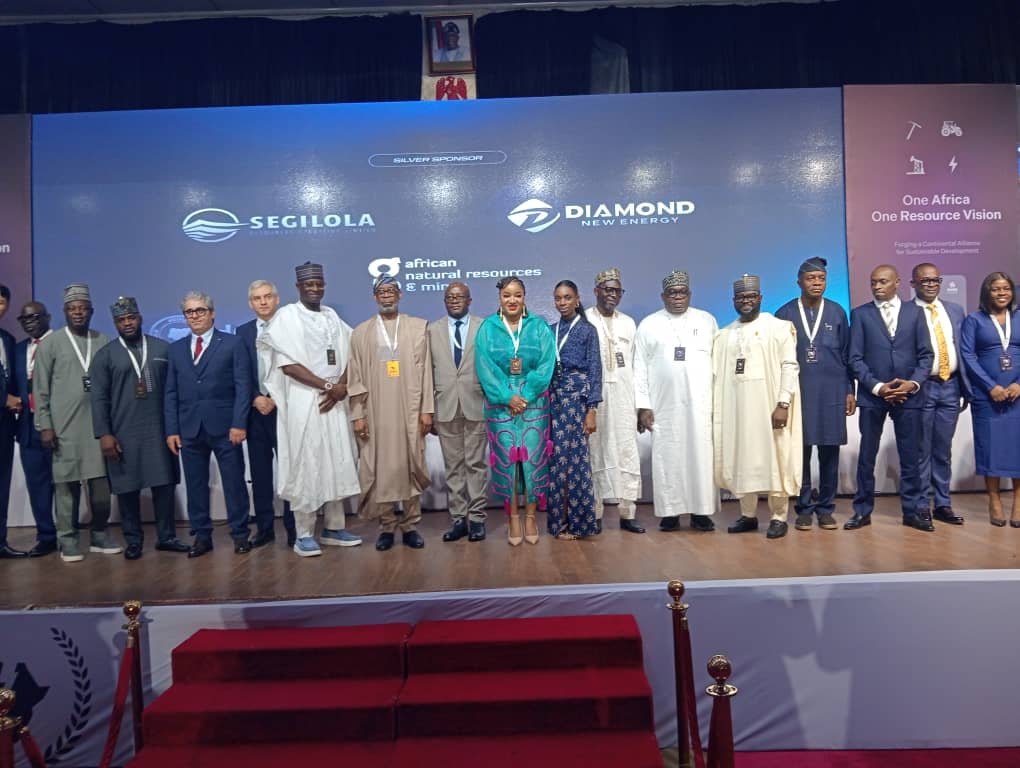
…Says Africa Must Look Inward, End Raw Mineral Exports
nBy Gabriel Ewepu
nABUJA — President Bola Tinubu on Wednesday called for a united African approach to the development of the continent’s vast solid mineral resources, urging African nations to move beyond the export of raw materials and embrace value addition, industrialisation and regional collaboration.
nSpeaking at the opening of the 2026 African Natural Resources and Energy Investment Summit (AFNIS) in Abuja, themed “One Africa, One Resource Vision,” Tinubu, represented by the Minister of Solid Minerals Development, Dr. Dele Alake, said Africa must take charge of its mineral wealth and leverage it to drive economic transformation and sustainable development.
nThe summit attracted participants from more than 15 African countries, including investors, government officials, mining companies, financial institutions and development partners.
nAccording to the President, Africa can no longer afford to approach its development agenda as fragmented economies negotiating from positions of weakness.
n“The theme ‘One Africa, One Resource Vision’ is a declaration of intent. It says Africa will no longer approach its destiny as fragmented markets, isolated producers or separate voices negotiating from positions of weakness. Africa must think together, plan together and grow together,” he said.
nTinubu noted that the continent occupies a strategic position in the global economy due to its abundant mineral resources, which are critical to the global energy transition and industrial development.
n“The world is changing rapidly, and Africa’s resources are central to that change. There can be no global energy transition without Africa’s minerals. But we must move beyond simply exporting raw materials. We must process, manufacture, create jobs and build prosperity from our resources,” he said.
nThe President stressed that Africa must strengthen its bargaining power by driving exploration, extraction, processing and manufacturing activities within the continent rather than exporting wealth through unprocessed mineral exports.
nHe said Nigeria’s resource development agenda aligns with broader continental goals of industrialisation, energy access and infrastructure development.
n“We are strengthening the foundations of industrial growth, expanding energy access and building infrastructure. Our prosperity is connected through trade, energy transfer and economic cooperation, and so must be our solutions,” he added.
nTinubu advocated deeper regional integration, suggesting that African countries should collaborate on major industrial and energy projects.
n“One African country should be able to build a refinery in another. Gas fields in one region should power factories across borders. Solar energy corridors should support a continental grid. Africa must be seen not as a collection of limitations but as one vast field of opportunity,” he said.
nThe President, however, cautioned that natural resources alone do not guarantee development, stressing the need for effective governance, leadership and partnerships between governments and the private sector.
n“History has taught us that resources without vision cannot create greatness. Resources without governance can lead to instability. Sustainable development requires leadership, innovation, capital and strong partnerships,” he stated.
nTinubu also urged investors to take advantage of Africa’s vast mineral wealth while embracing responsible and mutually beneficial partnerships.
n“Africa is open for serious business, but the Africa of today seeks a different kind of investment. We welcome partnerships that create jobs, strengthen local capacity, protect communities and respect the environment,” he said.
nHe emphasized the importance of transparency, accountability and intra-African cooperation, calling on governments across the continent to harmonise regulations, reduce trade barriers and support local enterprises.
nThe President further underscored the need for reliable energy to support industrialisation, job creation and economic growth, arguing that Africa’s energy transition must be practical and equitable.
n“A just transition must not force Africa to choose between climate responsibility and human dignity. Millions of Africans still lack access to reliable electricity. Our factories need power, our farmers need storage and processing facilities, and our hospitals and schools need energy,” he said.
nHe reaffirmed Nigeria’s commitment to pursuing an energy future that expands access, supports industrialisation, responsibly utilises gas resources and promotes renewable energy investments.
n“The goal is not simply to produce more energy. The goal is to create more opportunities for our people,” he added.
nIn his remarks, Executive Director of Mineral Resources Development at Romulus Mining and title sponsor of AFNIS 2026, Tim Tokun, said Africa must move beyond discussions and focus on concrete actions that will unlock the full potential of its mineral resources.
nAlso speaking, Chairman of the Senate Committee on Solid Minerals, Senator Ekong Samson, called for stronger collaboration among African countries to position the continent’s mining sector for greater growth and competitiveness.
nSimilarly, Chairman of the House Committee on Solid Minerals, Hon. Gaza Gbefwi, commended the Tinubu administration for reforms that have boosted revenue generation in the mining sector, noting that earnings had surpassed N1 trillion under the leadership of the Ministry of Solid Minerals Development.
nHe, however, urged the Federal Government to prioritise exploration funding to strengthen Nigeria’s competitiveness in the global minerals market.
nEarlier, Secretary-General of the African Minerals Strategy Group (AMSG), Moses Engadu, said African countries must work together to build industries around their mineral resources rather than continue exporting raw materials.
nAccording to him, Africa has the potential to emerge as a major economic force in the 21st century by promoting value addition, industrialisation and strategic partnerships across the continent.
n nRelated Stories
 General News
CELEBRATING TWO YEARS OF TRANSFORMATIONAL LEADERSHIP IN THE PRESIDENTIAL AMNESTY PROGRAMME
Tomorrow, 14TH March 2026, as we look forward to the second anniversary, we reflect on the remarkable two years since the Administrator of the Preside
 General News
PRESIDENTIAL AMNESTY PROGRAMME PHASE 3: DISREGARD PURPORTED STATEMENT ON DELAYED ITA PAYMENTS — OFFICE OF NATIONAL CHAIRMAN
The Office of the National Chairman of the Presidential Amnesty Programme Phase 3, General Elaye ThankGod Dollar Slaboh, has called on beneficiaries a
 General News
RE: CLARIFICATION ON MY PERSONAL RELATIONSHIPS
PUBLIC NOTICErnrnRE: CLARIFICATION ON MY PERSONAL RELATIONSHIPSrnrnIt has become necessary to make this public clarification following the increasing