
AFCON 2027: 21 spots up for grabs, 3 countries already qualified — all you need to know
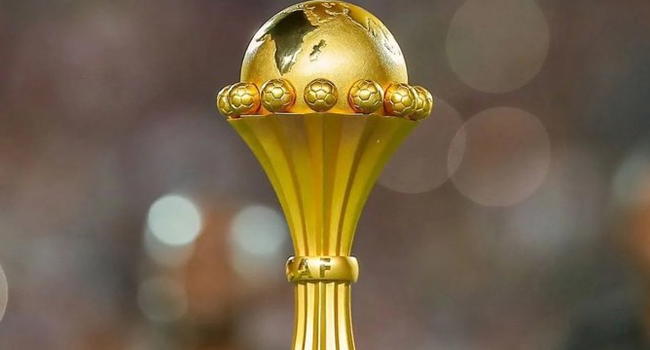
The race for the 2027 Africa Cup of Nations, AFCON, has officially begun, with 48 countries battling for 21 available places at the tournament in Kenya, Tanzania and Uganda.
nThe three East African countries will host the AFCON 2027 edition and have already secured automatic qualification, leaving the remaining nations to fight for the 21 spots still available.
nThe qualification format also means that not every group will produce two qualifiers, making the race particularly significant for teams drawn alongside the three hosts.
nHere is everything to know about the AFCON 2027 qualifying process.
n1. 48 countries are competing for 21 places
nA total of 48 nations have been drawn into 12 groups of four teams.
nEach team will play six matches — home and away against the other three countries in its group.
nAt the end of the qualifying campaign, 21 teams will join the three hosts to complete the 24-team AFCON 2027 lineup.
n2. Kenya, Tanzania and Uganda are already qualified
nAs the three host nations, Kenya, Tanzania and Uganda have automatic places at AFCON 2027.
nTheir participation does not depend on their performance in the qualifying groups.
nHowever, they will still compete in the qualifying campaign, creating a special situation in the three groups containing the hosts.
n3. How many teams qualify from each group?
nIn the nine groups without a host nation, two teams will qualify.
nThat means:
n- n
- Group A — 2 qualifiers n
- Group B — 2 qualifiers n
- Group C — 2 qualifiers n
- Group E — 2 qualifiers n
- Group F — 2 qualifiers n
- Group G — 2 qualifiers n
- Group I — 2 qualifiers n
- Group J — 2 qualifiers n
- Group K — 2 qualifiers n
That produces 18 qualifiers.
nThe remaining three places will come from the groups containing the host nations.
n4. Only one non-host team can qualify from the three host groups
nThis is where the qualification race becomes different.
nThe three host nations are spread across three groups:
nGroup D
n- n
- South Africa n
- Guinea n
- Kenya n
- Eritrea n
Group H
n- n
- Tunisia n
- Uganda n
- Libya n
- Botswana n
Group L
n- n
- Nigeria n
- Madagascar n
- Tanzania n
- Guinea-Bissau n
Because Kenya, Uganda and Tanzania are already qualified as hosts, only one additional team can qualify from each of those groups.
nTherefore:
n- n
- Group D produces one additional qualifier n
- Group H produces one additional qualifier n
- Group L produces one additional qualifier n
That gives the remaining three places needed to reach 21 qualifiers.
n5. Nigeria’s Group L is particularly important
nNigeria have been drawn in Group L alongside Madagascar, Tanzania and Guinea-Bissau.
nTanzania are already qualified as one of the hosts.
nAs a result, Nigeria do not need to finish in a conventional top-two position to qualify.
nInstead, the Super Eagles must finish above Madagascar and Guinea-Bissau to take the group’s single available qualification place.
nThis makes every point in Nigeria’s six matches potentially crucial.
n6. Who cannot qualify from the host groups?
nThe three hosts cannot be eliminated from AFCON 2027 because they already have guaranteed places.
nHowever, the other teams in their groups are effectively competing for one qualification ticket.
nFor example, in Group L, Nigeria, Madagascar and Guinea-Bissau are competing for the one available place alongside already-qualified Tanzania.
nThe same principle applies to South Africa, Guinea and Eritrea in Group D, and Tunisia, Libya and Botswana in Group H.
n7. What happens in the other nine groups?
nThe qualification process is more straightforward in the other groups.
nThe top two teams after the six group matches will qualify for AFCON 2027.
nThere is therefore little room for error, with teams needing to accumulate enough points to finish inside the top two.
n8. Full list of the 12 qualifying groups
nGroup A
nMorocco, Gabon, Niger, Lesotho
nGroup B
nEgypt, Angola, Malawi, South Sudan
nGroup C
nCôte d’Ivoire, Ghana, The Gambia, Somalia
nGroup D
nSouth Africa, Guinea, Kenya, Eritrea
nGroup E
nDR Congo, Equatorial Guinea, Sierra Leone, Zimbabwe
nGroup F
nBurkina Faso, Benin, Mauritania, Central African Republic
nGroup G
nCameroon, Comoros, Namibia, Congo
nGroup H
nTunisia, Uganda, Libya, Botswana
nGroup I
nAlgeria, Zambia, Togo, Burundi
nGroup J
nSenegal, Mozambique, Sudan, Ethiopia
nGroup K
nMali, Cape Verde, Rwanda, Liberia
nGroup L
nNigeria, Madagascar, Tanzania, Guinea-Bissau
n9. When will the qualifiers be played?
nThe qualifying campaign is scheduled across three international windows.
nThe first two matchdays are being played in September and October 2026, followed by further fixtures in November 2026 and the final two matchdays in March 2027.
nBy the end of Matchday 6, all 21 remaining AFCON places will have been decided.
n10. When is AFCON 2027?
nThe 2027 Africa Cup of Nations will be staged in Kenya, Tanzania and Uganda from 19 June to 17 July, 2027.
nThe tournament will feature 24 teams, consisting of the three automatic qualifiers and the 21 countries that emerge from the qualifying campaign.
nThe competition will bring together the continent’s leading national teams for the first AFCON edition to be jointly hosted by the three East African countries.
n nRelated Stories
 General News
CELEBRATING TWO YEARS OF TRANSFORMATIONAL LEADERSHIP IN THE PRESIDENTIAL AMNESTY PROGRAMME
Tomorrow, 14TH March 2026, as we look forward to the second anniversary, we reflect on the remarkable two years since the Administrator of the Preside
 General News
PRESIDENTIAL AMNESTY PROGRAMME PHASE 3: DISREGARD PURPORTED STATEMENT ON DELAYED ITA PAYMENTS — OFFICE OF NATIONAL CHAIRMAN
The Office of the National Chairman of the Presidential Amnesty Programme Phase 3, General Elaye ThankGod Dollar Slaboh, has called on beneficiaries a
 General News
RE: CLARIFICATION ON MY PERSONAL RELATIONSHIPS
PUBLIC NOTICErnrnRE: CLARIFICATION ON MY PERSONAL RELATIONSHIPSrnrnIt has become necessary to make this public clarification following the increasing