
Adeleke Re-elected in Landslide Victory, Overwhelming Opposition from APC and Other Parties in Osun State
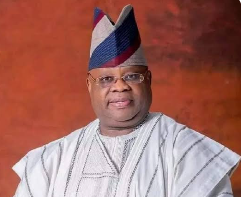
Governor Ademola Adeleke's success in the 2026 Osun State governorship election can be attributed to his impressive performance in his strongholds, decisive wins in key local government areas, and his ability to accumulate substantial vote margins that the All Progressives Congress (APC) could not overcome.
nThe results from the 30 local government areas, as compiled by the Independent National Electoral Commission (INEC), showed Adeleke, who ran on the Accord Party platform, defeating the APC candidate, Bola Oyebamiji, in 19 local government areas, while the APC won 11, and the African Democratic Congress (ADC) finished a distant third in the three-party contest.
nThe final vote tally for the three leading parties revealed that Accord secured 511,067 votes, APC garnered 444,815 votes, and ADC recorded 17,180 votes, with Adeleke holding a 66,252-vote lead over his closest challenger.
nBeyond the numbers, Adeleke's victory also reflected the confidence he exuded throughout the campaign, having repeatedly downplayed concerns over the perceived political weight behind the APC campaign.
nDays before the election, Adeleke described himself as a "bulldozer", declaring that he was not intimidated by what he characterized as federal might or the support of some governors for his opponent, and he challenged them to bring their full political weight into the contest.
nAdeleke's declaration became a defining statement of his campaign as he sought to convince voters that the election would ultimately be decided by the people of Osun rather than the influence of political heavyweights outside the state.
nThe results suggest that Adeleke was able to translate that confidence into a strong electoral performance, with his victories in key areas such as Ede-North and Ede-South providing a substantial cushion that APC struggled to erase with its own victories.
nIn Ede-North, Accord scored 35,427 votes, while APC recorded 10,283, giving Adeleke a margin of 25,144 votes in one local government, and in Ede-South, Accord polled 26,188 votes, compared with APC's 6,219, giving the governor another 19,969-vote advantage.
nThe state capital, Osogbo, also contributed significantly to Adeleke's performance, with Accord securing 36,480 votes, while APC polled 30,474, and Adeleke winning the council by 6,006 votes.
nAdeleke dominated the Ife area, winning Ife-East, Ife-Central, and Ife-North, with Accord polling 27,201 votes against APC's 18,600 in Ife-East, and 21,171 votes against APC's 15,913 in Ife-Central.
nAPC, however, secured Ife-South, polling 14,678 votes against Accord's 13,507, a margin of 1,171 votes, but overall, the four Ife councils produced 75,758 votes for Accord and 58,804 for APC, giving Adeleke a combined advantage of 16,954 votes.
nAdeleke's victory was not confined to Ede, Osogbo, and Ife, as he also won Egbedore, Iwo, and Oriade, with Accord scoring 19,278 votes against APC's 11,194 in Egbedore, and 27,085 votes against APC's 19,660 in Iwo.
nDespite losing the election, the results showed that APC remained a major political force in Osun, with Oyebamiji winning 11 of the 30 LGAs and recording some impressive margins, including a 19,038-vote advantage in Irewole.
nAPC also won Boripe, with 19,963 votes against Accord's 12,448, a margin of 7,515 votes, and secured victories in Olorunda, Ilesa-East, Ife-South, Ola-Oluwa, Isokan, Obokun, Atakumosa-West, and Atakumosa-East.
nThe challenge for APC was the distribution and size of those victories, as the party won several LGAs, but its combined margins were not enough to offset the much larger margins accumulated by Adeleke in his strongest areas.
nThe 2026 election provides an interesting lesson in electoral mathematics, as a candidate does not necessarily need to win every local government to secure a statewide victory, but rather accumulate a substantial overall lead, which Adeleke achieved with his 19 victories producing 511,067 votes.
nThe ADC did not come close to challenging either Accord or APC for overall victory, but its performance remains relevant to the analysis, with the party polling 17,180 votes across the 30 LGAs, and its strongest showing in Ejigbo, where it scored 5,053 votes.
nThe election was ultimately a contest between two dominant political structures, with APC demonstrating its strength by winning 11 LGAs and posting large margins in some of them, but Adeleke's Accord Party carried 19 LGAs and produced sufficiently large margins in key councils to establish a lead that APC could not overcome.
nThe final figures tell the story, with Accord securing 511,067 votes, APC garnering 444,815 votes, and ADC recording 17,180 votes, and Adeleke's lead over APC standing at 66,252 votes.
nAdeleke's victory was therefore not simply about winning 19 local governments against APC's 11, but about where he won, how many votes he accumulated there, and the size of the margins he created, with Ede-North and Ede-South providing the biggest cushion, and Osogbo, Ife, Egbedore, Iwo, and Oriade strengthening his position.
nBefore the election, Adeleke had presented himself as a "bulldozer", insisting that he was not intimidated by federal might or the governors backing his opponent, and after the votes were counted, the numbers showed that the governor had indeed built a formidable electoral advantage, winning 19 LGAs, polling 511,067 votes, and defeating APC by 66,252 votes.
Related Stories
 General News
CELEBRATING TWO YEARS OF TRANSFORMATIONAL LEADERSHIP IN THE PRESIDENTIAL AMNESTY PROGRAMME
Tomorrow, 14TH March 2026, as we look forward to the second anniversary, we reflect on the remarkable two years since the Administrator of the Preside
 General News
PRESIDENTIAL AMNESTY PROGRAMME PHASE 3: DISREGARD PURPORTED STATEMENT ON DELAYED ITA PAYMENTS — OFFICE OF NATIONAL CHAIRMAN
The Office of the National Chairman of the Presidential Amnesty Programme Phase 3, General Elaye ThankGod Dollar Slaboh, has called on beneficiaries a
 General News
RE: CLARIFICATION ON MY PERSONAL RELATIONSHIPS
PUBLIC NOTICErnrnRE: CLARIFICATION ON MY PERSONAL RELATIONSHIPSrnrnIt has become necessary to make this public clarification following the increasing