
Achieving genuine well-being requires a feminist approach, according to Tochi Okafor
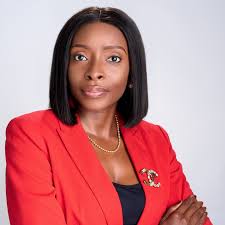
The month that was supposed to be a celebration of women's progress globally turned out to be a stark reminder of the harsh realities faced by Nigerian women, as the disturbing footage from the Ozoro festival in Delta State laid bare the fact that freedom is not an inherent right for them, but a fragile privilege that can be taken away at any moment.
nThe visuals of a large group of men chasing and assaulting a woman in broad daylight at the Ozoro festival are a blot on the nation's democratic fabric, and they signify a systemic failure to uphold the basic rights of half the population, with the lack of swift and decisive punishment for the perpetrators sending a clear message that Nigerian women are not truly free, but rather living on borrowed time.
nPrior to the Ozoro festival, a set of deep-seated beliefs and attitudes had been ingrained in the minds of some men, giving them the audacity to think that such behavior is acceptable, and it is essential to examine the stimuli that have led to this mindset, using the lens of Ivan Pavlov's classical conditioning theory, which suggests that repeated exposure to certain stimuli can create involuntary behavioral responses.
nFrom a developmental perspective, the mental frameworks, or "Schema," that people use to organize information are built from a young age, and in many Nigerian households, boys are socialized to believe that masculinity is synonymous with dominance, while girls are taught to be submissive and domesticated, with the division of labor along gender lines not just being about household chores, but also about instilling a psychological script that tells boys their time is for personal development and leisure, while girls' time is for service and convenience.
nThe concept of the Id, as described by Sigmund Freud, refers to the primitive, impulsive part of the human psyche, which must be balanced by the Superego, or the moral conscience, but at the Ozoro festival, there was a complete collapse of the Superego, as men felt no moral hesitation in committing assault, because their conditioning had led them to believe that a woman's body is public property if she steps outside the boundaries set by society.
nThis is not just a case of "bad behavior," but a psychological pathology rooted in the belief that women are inferior, and it is essential to recognize the deep-seated resistance to female independence that exists in a significant portion of Nigerian society, which struggles with the idea of a woman possessing absolute freedom and autonomy, rather than just being granted permission or allowed to exist within certain boundaries.
nA woman's freedom to make choices, such as dressing as she pleases, saying no to a suitor, choosing a child-free life, or pursuing a career, is often met with resistance and even violence, because of a faulty internal script that suggests a woman exists solely for the benefit of men, and if she forgets her "place," she will be reminded of it through shame, control, or violence.
nThe idea that a culture that requires the sexual harassment and suffering of women to be sustained is not a heritage, but a crime scene, is a stark reality that must be acknowledged, and it is time to reclaim the word "feminism" from its negative connotations and recognize it as a radical belief in the absolute freedom and autonomy of women to exist, speak, and move freely, without being limited by their biology or societal expectations.
nFeminism is not a Western import or a war against men, but a call to recognize the inherent value and dignity of every woman, and to create a society where women are not just seen, but heard, and equipped with the tools and resources necessary to achieve their dreams, and when we embrace this ideology, we don't just help women, we heal the soul of the nation, and unlock the potential of half the population.
nA society that suppresses the brainpower and talent of 50% of its population is destined for stagnation, and to move beyond the trauma of Ozoro, we need to move beyond performative outrage and work towards structural shifts in how we raise, employ, and govern, starting with parents educating their children without limits or biases, and recognizing the value and potential of every girl child.
nFor workplaces, it means promoting equity over optics, seeing the value in women's contributions, and providing them with the necessary tools and support to thrive, such as mentorship, flexible hours, and equal pay, and removing the "motherhood penalty" that often holds them back from advancing in their careers.
nAs a society, we must deconstruct gendered roles and challenge the "Boys' Club" mentality that treats female leaders as anomalies rather than the norm, and recognize that women are equals in every sense, deserving of the same opportunities and respect as men, and that their freedom is not a gift from men, but a birthright from God.
nThe sight of dozens of men chasing one woman at the Ozoro festival is a terrifying indicator of a belief system that views women as prey, but behavior can be unlearned, and schemas can be rebuilt, and it is essential to demand justice for the victims of Ozoro, but also to demand a change in the Nigerian psyche, and to build a Nigeria where a woman can walk through any market, any festival, and any boardroom, knowing that her freedom is not a gift, but a fundamental human right.
nTrue change will not come solely from the courtroom, but from our classrooms and living rooms, where we must begin the intentional work of unlearning the outdated psychological scripts that have been passed down through generations, and as parents, employers, and members of society, we must stop raising our boys to be masters and our girls to be servants, and instead create an equal playing field where everyone has the opportunity to thrive.
nCreating an equal society is not the job of women alone, but the responsibility of every Nigerian who believes in justice, and we must all become feminists in the truest sense, advocating for the absolute autonomy of every woman to exist, speak, and move freely, and recognizing that a woman's freedom is not a "provocation" to be punished, but a standard to be protected.
nLet us commit to building a nation where no woman has to ask for "permission" to be herself, and where every girl child can grow up with the knowledge that she is valued, respected, and empowered to achieve her dreams, and anything less would be a betrayal of our shared humanity, and the time to rewrite the script is now, and it is essential that we all play our part in creating a better future for Nigeria.
Related Stories
 General News
CELEBRATING TWO YEARS OF TRANSFORMATIONAL LEADERSHIP IN THE PRESIDENTIAL AMNESTY PROGRAMME
Tomorrow, 14TH March 2026, as we look forward to the second anniversary, we reflect on the remarkable two years since the Administrator of the Preside
 General News
PRESIDENTIAL AMNESTY PROGRAMME PHASE 3: DISREGARD PURPORTED STATEMENT ON DELAYED ITA PAYMENTS — OFFICE OF NATIONAL CHAIRMAN
The Office of the National Chairman of the Presidential Amnesty Programme Phase 3, General Elaye ThankGod Dollar Slaboh, has called on beneficiaries a
 General News
RE: CLARIFICATION ON MY PERSONAL RELATIONSHIPS
PUBLIC NOTICErnrnRE: CLARIFICATION ON MY PERSONAL RELATIONSHIPSrnrnIt has become necessary to make this public clarification following the increasing