
Abuja's swift transformation comes at a price for locals as forests give way to development and construction.
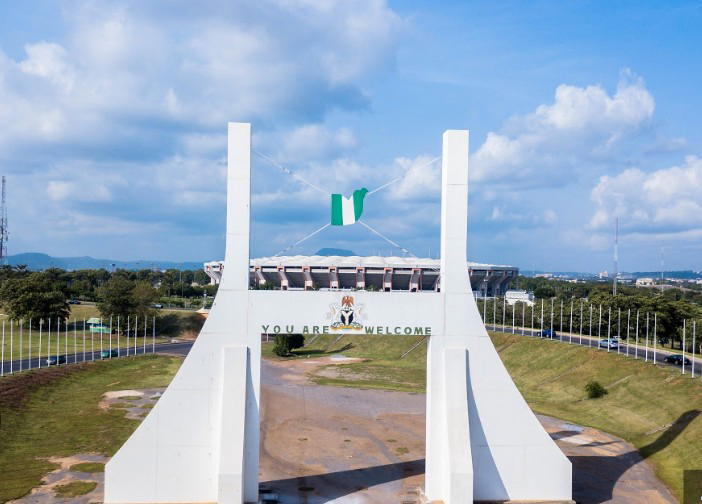
Abuja, once renowned for its rolling hills and lush green belts, is rapidly losing its natural shield to unrelenting urban expansion, with chainsaws and bulldozers replacing trees and forests that once cooled the city and absorbed its floods.
nThe city's master plan, which envisioned a harmonious balance between nature and development, is under siege as rapid population growth and uncontrolled construction erase the very green spaces that defined the capital, threatening the dream of a climate-resilient Abuja.
nSatellite images reveal the alarming rate of deforestation, with forested hills around Gwarimpa, Kubwa, and Jabi shrinking year by year, replaced by sprawling housing estates, highways, and commercial complexes, leaving bare patches of land and dusty roads in their wake.
nResidents on the outskirts of Lokogoma and Dutse-Alhaji report that streams have dried up or overflowed after rains, a direct consequence of lost forest buffers, as the city's natural systems are disrupted by the relentless urban expansion.
nBetween 2010 and 2023, forest cover in the Federal Capital Territory declined by at least 15–20%, with some formerly dense patches almost entirely erased, according to satellite data, which also shows a significant drop in forestland from about 4,059 km² in 1987 to 2,265 km² by 2021.
nAbuja's population has skyrocketed from a few hundred thousand in the 1980s to over 3.6 million today, with thousands more arriving every month, fueling a real estate frenzy that is transforming the city's landscape almost overnight.
nNeighborhoods like Gwagwalada, Kubwa, and Jabi have mushroomed into dense settlements, with forested areas cleared to make way for housing estates, markets, and highways, as the green buffers once protecting the city from flooding and extreme heat vanish under relentless urban sprawl.
nPrivate developers are capitalizing on soaring demand, marketing "dream homes" to a growing middle class while green spaces disappear, and for every estate that rises, hills are flattened, trees uprooted, and wetlands drained, reducing natural buffers against heat and flooding to concrete foundations.
nThe proliferation of estates has also pushed informal settlements deeper into remaining forest zones, creating a cycle of deforestation that is difficult to control, as the city's climate vulnerability intensifies with each passing day.
nInfrastructure projects, hailed as signs of modernity, are silently carving through the city's green belts, with large-scale projects like the Abuja-Kaduna expressway upgrade and ongoing urban ring roads displacing vegetation and altering natural water flow.
nSatellite data and environmental monitoring reveal a clear trend: average temperatures in the FCT have risen by 1.2°C over the past decade, linked directly to the loss of trees and green cover, as the city experiences the urban heat island effect in full force.
nGeospatial studies of the city reveal a significant drop in forestland, signaling rapid deforestation linked with urban expansion, and research indicates that the FCT experienced a roughly 61% reduction in closed and open canopy vegetation between 1987 and 2014.
nNigeria continues to lose about 400,000 hectares of forest each year due to deforestation from logging, agriculture, and urbanization, one of the highest rates globally, and Abuja's 61% reduction in canopy vegetation between 1987 and 2014 places it among the fastest green-cover declining capitals in Africa.
nPopulation growth in Abuja mirrors that of other African cities like Nairobi or Addis Ababa, but its rapid estate proliferation and aggressive infrastructure projects are intensifying climate vulnerability more sharply than in some other capitals, as the city's residents face increasing flood risk, heat waves, and other environmental conditions.
nIn Kubwa, flash floods have become routine after heavy rains, with roads washed out, homes partially submerged, and residents struggling to navigate streets that were once passable, as the city's drainage systems, designed with forested catchments in mind, can no longer cope with the volume of runoff from cleared hills and impermeable surfaces.
nThe 2022 rainy season alone saw widespread flooding strike large parts of the city, affecting about 24,713 residents across several area councils, including Abuja Municipal Area Council, AMAC, Bwari, and Abaji, with thousands displaced, homes and infrastructure damaged, and entire neighborhoods experiencing inundation due to heavy rains and overwhelmed drainage systems.
nA total of 131 structures were reported damaged in the city alone during that season, and flash flooding in 2025 also paralyzed parts of the city, with areas such as Asokoro, Guzape, Jabi, Kado, and Wuse submerged and roads rendered impassable by knee-deep waters during intense downpours.
nAbuja's rural outskirts tell a different story, one of hardship, shrinking farmlands, and a changing climate that threatens livelihoods, as farmers in Gwagwalada, Kwali, and Bwari struggle to cope with the loss of natural systems that once sustained their crops.
nTrees that once protected crops from harsh sun and helped retain soil moisture are gone, exposing fields to intense heat and faster evaporation, and the loss of vegetation also accelerates soil erosion, reducing yields and forcing farmers to clear even more land in search of productive soil.
nNigeria has formally joined the global fight against climate change, submitting successive Nationally Determined Contributions, NDCs, outlining how it plans to cut greenhouse gas emissions and adapt to climate risks, including deforestation and land-use change.
nUnder its latest NDC, Nigeria has pledged to reduce emissions by around 29% by 2030 and 32% by 2035 compared with business-as-usual scenarios, while setting a pathway to net-zero emissions by 2060, and the plan also specifically targets land use and forestry, aiming to reduce deforestation by about 60% and plant millions of trees annually.
nAbuja's rapid expansion has sparked a heated debate among planners, environmentalists, and policymakers, with proponents of aggressive urban development arguing that building new estates, roads, and commercial hubs is essential to meet the needs of a booming population.
nA realtor, Anyebe Victor, argued that urbanization is the cure, not the disease, and that halting high-density development in central districts would not stop population growth, but instead push thousands of residents outward into satellite communities where low-density housing could consume vast stretches of forest land.
nVictor also links urbanization to cleaner energy use, noting that moving families into estates connected to gas and electricity reduces dependence on charcoal and wood, and for him, the greater threat to Abuja's ecosystem is poverty-driven, unregulated land use, not cranes on construction sites.
nA policy expert and environmentalist, Jeremiah Ato, raised alarm over the increasing temperature levels in the Federal Capital Territory, warning that Abuja might become unlivable within the next two decades if urgent environmental reforms were not implemented.
nAto stressed the need for sustainable development practices, noting that rapid urbanization in the nation's capital had significantly reduced green spaces and vegetative cover, and he called on the Federal Capital Territory Administration, FCTA, to urgently review its development policies and introduce laws that would make tree planting mandatory in all estates and construction projects within the city.
Related Stories
 General News
CELEBRATING TWO YEARS OF TRANSFORMATIONAL LEADERSHIP IN THE PRESIDENTIAL AMNESTY PROGRAMME
Tomorrow, 14TH March 2026, as we look forward to the second anniversary, we reflect on the remarkable two years since the Administrator of the Preside
 General News
PRESIDENTIAL AMNESTY PROGRAMME PHASE 3: DISREGARD PURPORTED STATEMENT ON DELAYED ITA PAYMENTS — OFFICE OF NATIONAL CHAIRMAN
The Office of the National Chairman of the Presidential Amnesty Programme Phase 3, General Elaye ThankGod Dollar Slaboh, has called on beneficiaries a
 General News
RE: CLARIFICATION ON MY PERSONAL RELATIONSHIPS
PUBLIC NOTICErnrnRE: CLARIFICATION ON MY PERSONAL RELATIONSHIPSrnrnIt has become necessary to make this public clarification following the increasing