
83-yr-old Zimbabwe President wins Senate backing for term extension
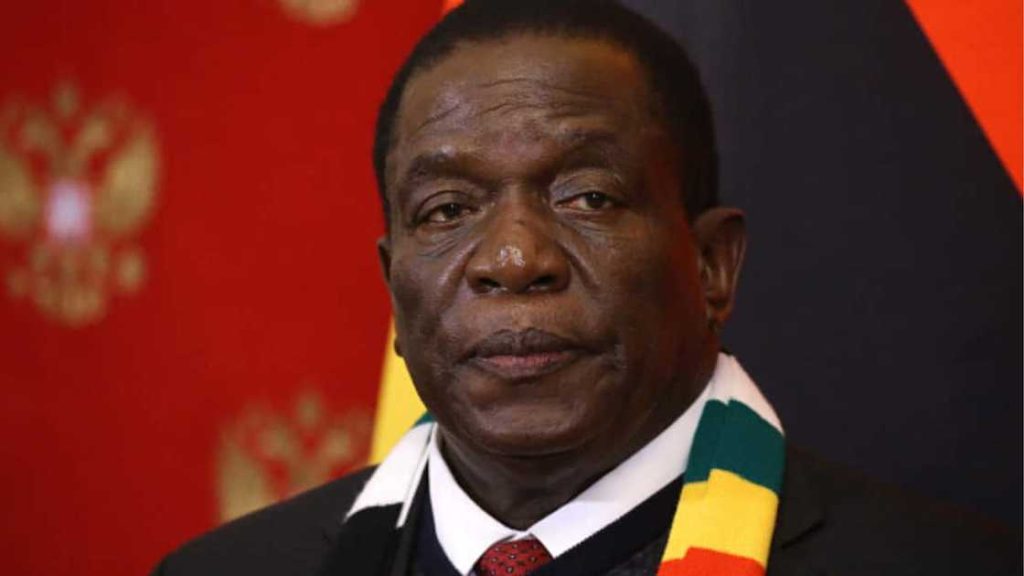
Zimbabwe’s Senate on Wednesday overwhelmingly approved controversial constitutional amendments that would keep President Emmerson Mnangagwa in office until 2030, giving the changes full parliamentary support after earlier consent from the lower house.
nThe amendments are among the most contentious political issues in the country where 83-year-old Mnangagwa’s Zanu-PF party holds a strong majority in parliament and has ruled since independence in 1980.
nSenate president Mabel Chinomona said 75 senators voted in favour and four against.
nThe bill also sailed through the national assembly on June 18, when 216 voted in favour and 42 against.
nThe bill will have to return to the National Assembly to sign off on technical adjustments before being signed into law by Mnangagwa, an official said.
nThe raft of sweeping changes — labelled a “constitutional coup” by critics — includes a provision that would extend the presidential and parliamentary terms from five to seven years.
nThis means that the last of Mnangagwa’s constitutionally limited two terms would be extended until 2030.
nAnother amendment gives parliament the power to appoint the president, doing away with direct presidential elections that were introduced in 1987, seven years after independence.
nWeakened opposition –
nZimbabwe’s opposition, weakened by years of repression and tainted elections, charges that the measures will entrench Zanu-PF’s grip on power in the resource-rich nation.
nActivists who have tried to mobilise resistance have reported intimidation and violence, including arrests or assault by suspected state agents.
nMnangagwa — nicknamed “The Crocodile” because of his ruthlessness — came to power in 2017 in a military-backed coup that ousted Robert Mugabe at the age of 93 and after 37 years in power.
nJudged by some analysts as more autocratic than his predecessor, he was elected for two five-year terms in 2018 and 2023.
nWhen the cabinet approved in February the plan to extend his term, it said this would “enhance political stability and policy continuity to allow development programmes to be implemented to completion”.
nTurn to the courts
nOpposition figures have vowed to continue to challenge the amendments in court.
nThey were an “effective breach” of constitutional provisions, including on the right to vote for public officials, and so should be put to a national referendum, senior opposition figure and former senator David Coltart told AFP.
n“I have no doubt that the faction of Zanu-PF promoting this will ignore their constitutional obligations,” Coltart said.
n“The only way we will be able to get a referendum is if the Constitutional Court issues an order that this is compulsory, as it is.”
nThe Constitutional Court, however, threw out on June 17 an earlier bid to challenge the amendment bill, saying it had no legal grounding.
nProminent journalist Hopewell Chin’ono said on X that the enactment of the bill “will represent a further consolidation of Zanu-PF’s hold on power and diminish the prospects of Zimbabwe having a president from outside the ruling party in the foreseeable future.”
nMusa Kika, director of the Institute for Human Rights and Development in Africa NGO, said the bill should be referred to the judiciary “if only for the record, and to also expose them for being complicit in constitutional mutilation.”
nRejecting the need for a referendum, officials have claimed a public consultation process through hearings and written submissions showed overwhelming support.
nHuman Rights Watch said in March that authorities were using violence and intimidation against opponents of the amendments.
n“Over the last few months, the police and unidentified armed men have threatened, harassed, and beat up several people who are opposed to the proposed constitutional amendment,” it said in a statement.
n nRelated Stories
 General News
CELEBRATING TWO YEARS OF TRANSFORMATIONAL LEADERSHIP IN THE PRESIDENTIAL AMNESTY PROGRAMME
Tomorrow, 14TH March 2026, as we look forward to the second anniversary, we reflect on the remarkable two years since the Administrator of the Preside
 General News
PRESIDENTIAL AMNESTY PROGRAMME PHASE 3: DISREGARD PURPORTED STATEMENT ON DELAYED ITA PAYMENTS — OFFICE OF NATIONAL CHAIRMAN
The Office of the National Chairman of the Presidential Amnesty Programme Phase 3, General Elaye ThankGod Dollar Slaboh, has called on beneficiaries a
 General News
RE: CLARIFICATION ON MY PERSONAL RELATIONSHIPS
PUBLIC NOTICErnrnRE: CLARIFICATION ON MY PERSONAL RELATIONSHIPSrnrnIt has become necessary to make this public clarification following the increasing