
8 most employable courses to study in the UK in 2026

For international students considering studying in the United Kingdom, UK choosing a course with strong employment prospects can be just as important as selecting a university.
nWith demand continuing across healthcare, technology, engineering, finance and emerging industries, some degree programmes offer stronger career opportunities than others.
nHere are some of the most employable courses to consider in the UK in 2026.
n1. Medicine, Dentistry and Healthcare
nMedicine and other healthcare-related courses remain among the strongest options for students seeking stable career prospects in the UK.
nThe National Health Service (NHS), private hospitals and other healthcare providers continue to require skilled professionals across several specialisations.
nEmployment rate: Around 95%
Career options: Doctor, dentist, nurse, pharmacist, physiotherapist and biomedical scientist.
Healthcare professionals can also specialise in areas such as public health, medical research and clinical sciences.
n2. Engineering
nEngineering remains an important part of the UK’s infrastructure, manufacturing and energy sectors.
nStudents can specialise in mechanical, civil, electrical, renewable energy or other engineering disciplines.
nCareer options: Civil engineer, electrical engineer, mechanical engineer, project manager and renewable energy consultant.
nEmerging opportunities are also developing in areas such as smart infrastructure, robotics, renewable energy systems and aerospace.
nUniversities including Imperial College London and the University of Manchester are known for their engineering programmes and industry links.
n3. Computer Science, Artificial Intelligence and Cybersecurity
nThe continued expansion of the UK’s technology sector has increased demand for graduates with computing and digital skills.
nComputer science students can build careers in software development, artificial intelligence, cloud computing and cybersecurity.
nCareer options: Software engineer, data analyst, cybersecurity specialist, AI researcher and cloud engineer.
nTechnology companies, financial institutions, consulting firms and government organisations all require professionals with advanced digital skills.
n4. Business, Management and Finance
nThe UK’s position as a major international business and financial centre makes business-related degrees another popular choice among students.
nGraduates can work across banking, consulting, marketing, operations and financial technology.
nCareer options: Business analyst, financial consultant, marketing strategist and operations manager.
nSome of the fastest-growing areas include fintech, business analytics and digital marketing.
nUniversities such as Warwick, the London School of Economics and Political Science (LSE) and Manchester also have strong connections with employers.
n5. Data Science and Big Data Analytics
nAs organisations increasingly rely on data to make business and policy decisions, professionals who can analyse and interpret large datasets are in demand.
nA degree in data science can open opportunities across several industries.
nCareer options: Data analyst, data scientist and machine learning engineer.
nGraduates can find opportunities in finance, e-commerce, healthcare, technology and public policy.
nUniversities such as Edinburgh and Southampton offer programmes focused on data analysis and its practical applications.
n6. Law, Economics and Accounting
nLaw, economics and accounting remain attractive options for students interested in corporate services, finance, government and professional careers.
nCareer options: Legal executive, economist, financial analyst and auditor.
nStudents pursuing law should note that completing a law degree alone does not automatically qualify them to practise as a solicitor or barrister in the UK. Additional professional qualifications may be required.
nEconomics and accounting graduates, meanwhile, can pursue careers in banking, consulting, financial services and corporate organisations.
n7. Architecture and Design
nArchitecture and design combine creative skills with technical knowledge and can lead to careers connected to construction, urban development and sustainable infrastructure.
nCareer options: Architect, urban designer and interior consultant.
nGrowing interest in sustainable buildings, smart cities and environmentally friendly development is creating new opportunities for professionals with relevant design and technical skills.
n8. Emerging Fields: Renewable Energy, Logistics, Digital Marketing and Biotechnology
nSome of the UK’s fastest-developing career opportunities are emerging outside traditional degree choices.
nThese include:
n- n
- Renewable energy: Opportunities are expanding alongside the UK’s transition towards cleaner energy and climate technology. n
- Logistics and supply chain: The growth of global trade and e-commerce continues to create demand for supply chain professionals. n
- Digital marketing: Businesses increasingly rely on digital platforms to reach customers, creating opportunities in content, social media, search and performance marketing. n
- Biotechnology: Advances in healthcare, pharmaceuticals and life sciences are driving demand for professionals in biotechnology and related fields. n
What should students consider before choosing a course?
nWhile employability is an important factor, students should also consider tuition fees, living costs, professional qualification requirements, university reputation, placement opportunities and the availability of jobs in their chosen field.
nInternational students should also check the latest UK immigration and post-study work rules before making a decision, as visa policies can affect their options after graduation.
nUltimately, the most employable course is one that combines strong demand with the student’s skills, interests and long-term career plans.
n nRelated Stories
 General News
CELEBRATING TWO YEARS OF TRANSFORMATIONAL LEADERSHIP IN THE PRESIDENTIAL AMNESTY PROGRAMME
Tomorrow, 14TH March 2026, as we look forward to the second anniversary, we reflect on the remarkable two years since the Administrator of the Preside
 General News
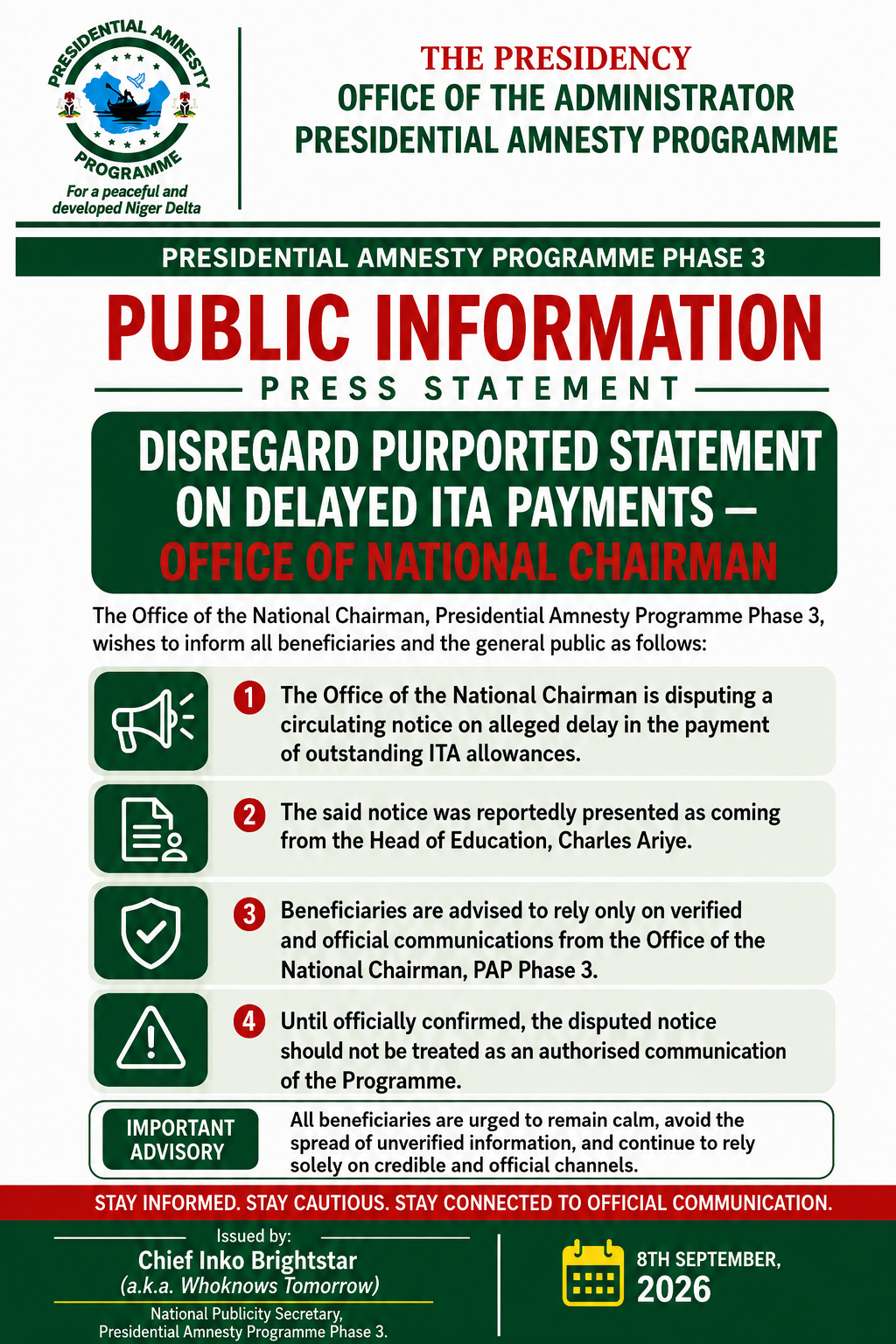
PRESIDENTIAL AMNESTY PROGRAMME PHASE 3: DISREGARD PURPORTED STATEMENT ON DELAYED ITA PAYMENTS — OFFICE OF NATIONAL CHAIRMAN
The Office of the National Chairman of the Presidential Amnesty Programme Phase 3, General Elaye ThankGod Dollar Slaboh, has called on beneficiaries a
 General News
RE: CLARIFICATION ON MY PERSONAL RELATIONSHIPS
PUBLIC NOTICErnrnRE: CLARIFICATION ON MY PERSONAL RELATIONSHIPSrnrnIt has become necessary to make this public clarification following the increasing