
744 Former Militants Seek Redemption: A Threat or a Route to Reconciliation?
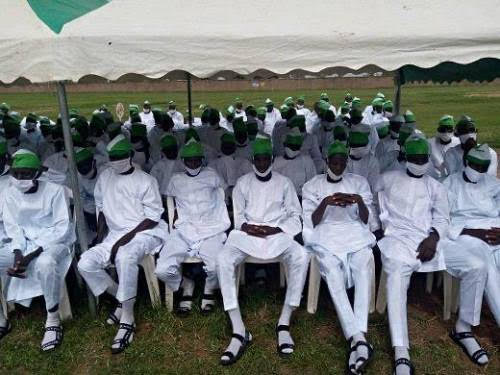
Nigeria, a nation grappling with the aftermath of countless attacks by Boko Haram terrorists, bandits, kidnappers, and other criminal elements, is now faced with the daunting task of reintegrating 744 former terrorists into society.
nThe country's wounds, still fresh from the devastation in states such as Benue, Plateau, Taraba, and Kwara, are a stark reminder of the deep-seated scars of terrorism that will take time to heal.
nA deafening outrage swept across social media last week, sparked by the Nigerian military's announcement of the graduation and reintegration of 744 former terrorists, who had undergone a 24-week training in the de-radicalization program under Operation Safe Corridor in Gombe State.
nAs these ex-terrorists prepare to return to the communities they once destroyed, many Nigerians are left wondering about the true meaning of this graduation and what exactly is being celebrated.
nThe timing of this development couldn't be more ill-fated, as insecurity continues to spike across the country, making the notion of "forgiving" mass murderers a difficult pill to swallow, and a perceived slap in the face of the soldiers who have made the ultimate sacrifice.
nThe fierce debates on this matter have ignited a firestorm on social media, with citizens questioning the fairness of a system that appears to favor the villain over the victim, as evident in a post by Victor, who expressed his outrage, stating, "Not fair at all, gallant officers sacrificed their lives on the line of duty, only for the enemies they fought against to be reintegrated just because they are ‘repentant.’"
nBaba Babs, a Facebook user, echoed similar sentiments, lamenting, "The more we see, the less we understand, these are people who should have been smoked out instantly."
nThe controversy surrounding the reintegration of these ex-terrorists raises fundamental questions about Nigeria's justice system, particularly about who qualifies for forgiveness, and whether it is the terrorist who has committed heinous crimes or the young protester imprisoned for advocating for good governance.
nBy setting 744 ex-terrorists free after just six months of rehabilitation, the government risks perpetuating a message that crime pays and terror earns a shortcut to a fresh start, a notion that many Nigerians find difficult to accept.
nA Facebook user, identified as Ur Villagehead, posed a thought-provoking question, "If these men are truly repentant, why aren’t they being used as assets to dismantle the networks they left behind, why aren’t they leading soldiers to the hideouts of their former commanders?"
nMany Nigerians are skeptical about the effectiveness of the 24-week program in scrubbing clean the souls of men trained to kill, and are nursing a terrifying possibility that these graduates could become "Trojan Horses," providing the insurgents with vital information about the military's operations.
nAnother pressing concern is the livelihood of these 744 ex-militants, who have been equipped with diverse skills, but may still struggle to find employment in a country where millions of honest youths are roaming the streets without jobs.
nThe ceremony, which marks the homecoming of these "repentant" men, is perhaps the most disturbing aspect of this policy, as they are being sent back to the very communities they once terrorized, leaving many to wonder if the government is setting the stage for a cycle of revenge.
nThe military views the program as a "complementary approach" to ending terrorism, but the Nigerian public sees it as a ticking time bomb, requiring transparency, sincerity, strict monitoring, and a clear plan to provide for these men to prevent the monster of terrorism from being fed.
nAs the nation watches with bated breath, Nigerians can only pray that this act of mercy, which some believe is the best way forward, doesn't ultimately haunt the country in the form of more ambushes and mass funerals, and that the government's efforts to reintegrate these ex-terrorists will yield the desired outcome of lasting peace and security.
Related Stories
 General News
CELEBRATING TWO YEARS OF TRANSFORMATIONAL LEADERSHIP IN THE PRESIDENTIAL AMNESTY PROGRAMME
Tomorrow, 14TH March 2026, as we look forward to the second anniversary, we reflect on the remarkable two years since the Administrator of the Preside
 General News
PRESIDENTIAL AMNESTY PROGRAMME PHASE 3: DISREGARD PURPORTED STATEMENT ON DELAYED ITA PAYMENTS — OFFICE OF NATIONAL CHAIRMAN
The Office of the National Chairman of the Presidential Amnesty Programme Phase 3, General Elaye ThankGod Dollar Slaboh, has called on beneficiaries a
 General News
RE: CLARIFICATION ON MY PERSONAL RELATIONSHIPS
PUBLIC NOTICErnrnRE: CLARIFICATION ON MY PERSONAL RELATIONSHIPSrnrnIt has become necessary to make this public clarification following the increasing