
5 ways new visa rules could affect Nigerians, other Africans traveling to Europe
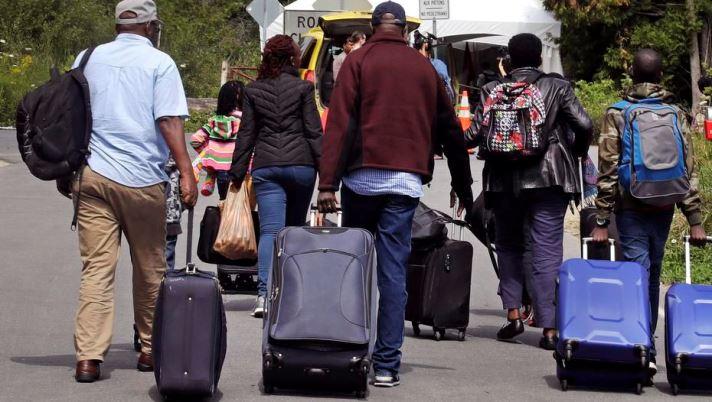
Calls for tighter border controls and changes to free movement in Europe are raising concerns about how future travel could affect Africans who visit, study, work or live in European countries.
nThe debate has intensified following a rise in irregular migration to Spain, with about 49,000 migrants from Morocco reportedly arriving in the country.
nFrench presidential hopeful Marine Le Pen has called for France to strengthen its borders and restrict free movement within the Schengen Area to European Union nationals.
nIn a post on X, she wrote: “Faced with the massive and coordinated influx of migrants into Spain, encouraged by the Spanish government, France must without delay strengthen controls at its borders. And in 2027, we will put an end to this madness by reserving Schengen free movement for EU nationals.”
nWhile the proposal remains a political position rather than an official European Union policy, any major changes to Europe’s border and travel system could have implications for Africans.
nHere are five ways such changes could affect Africans:
n1. More restrictions on movement in Europe
nThe Schengen Area allows people to travel between most participating European countries without routine internal border checks.
nMany Africans who legally live in EU countries can currently move within the area under the conditions attached to their residence permits.
nIf free movement were restricted to EU nationals, some non-EU residents could face additional checks or travel requirements.
n2. Travelling to Europe could become harder
nAfricans already face significant challenges when applying for European visas.
nAccording to Schengen visa statistics, six of the 10 countries with the highest visa rejection rates globally are in Africa.
nComoros recorded a 61.3 per cent rejection rate, followed by Guinea-Bissau at 51 per cent, Ghana at 47.5 per cent, Mali at 46.1 per cent, Sudan at 42.3 per cent and Senegal at 41.2 per cent.
nFurther restrictions could make travel more difficult for Africans visiting Europe for tourism, business, education or family purposes.
n3. African residents in Europe could face tighter controls
nThe impact would not necessarily be limited to people applying for visas from Africa.
nMillions of Africans living legally in European countries hold residence, work, student or family-reunification permits that can give them varying degrees of mobility within the Schengen Area.
nChanges to the rules could therefore affect how easily some non-EU residents travel between European countries.
n4. Visa costs could become an even bigger concern
nThe financial burden of visa applications is already substantial for many African travellers.
nResearch by London-based mobility think tank LAGO Collective found that African applicants lost nearly €60 million ($67.5 million) in non-refundable Schengen visa fees in 2024 after their applications were rejected.
nIn 2023, Schengen countries reportedly generated about $906 million from visa applications, with around $145 million coming from rejected applications.
n5. Africa-Europe travel could face greater uncertainty
nAfrican countries are among the biggest sources of Schengen visa applications.
nMorocco submitted 591,401 applications in 2023, making it the fourth-largest source globally. Algeria recorded 474,032 applications, while South Africa, Tunisia and Nigeria also ranked among the largest applicant countries.
nWith migration from Africa expected to continue growing, changes to European border and visa policies could have wider implications for tourism, education, business, employment and family travel.
nFor now, however, the proposal to reserve free movement for EU nationals remains a political pledge and is not an official EU policy. Any changes would require decisions at the relevant national and European levels.
n nRelated Stories
 General News
CELEBRATING TWO YEARS OF TRANSFORMATIONAL LEADERSHIP IN THE PRESIDENTIAL AMNESTY PROGRAMME
Tomorrow, 14TH March 2026, as we look forward to the second anniversary, we reflect on the remarkable two years since the Administrator of the Preside
 General News
PRESIDENTIAL AMNESTY PROGRAMME PHASE 3: DISREGARD PURPORTED STATEMENT ON DELAYED ITA PAYMENTS — OFFICE OF NATIONAL CHAIRMAN
The Office of the National Chairman of the Presidential Amnesty Programme Phase 3, General Elaye ThankGod Dollar Slaboh, has called on beneficiaries a
 General News
RE: CLARIFICATION ON MY PERSONAL RELATIONSHIPS
PUBLIC NOTICErnrnRE: CLARIFICATION ON MY PERSONAL RELATIONSHIPSrnrnIt has become necessary to make this public clarification following the increasing