
2027: Who will count Tinubu’s votes?
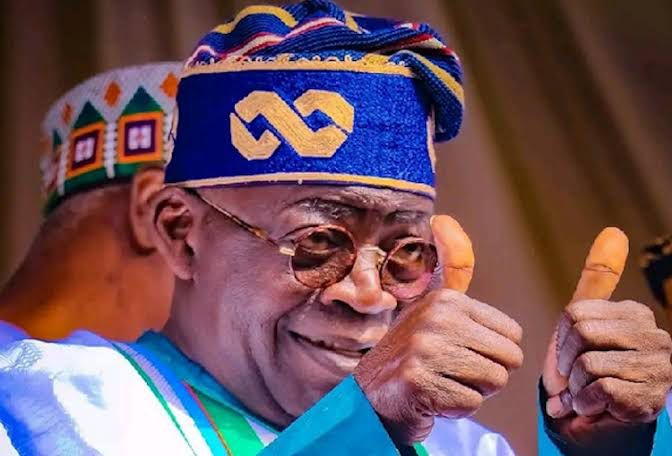
President Tinubu
n… as pressure mounts on INEC over partisan academics
nBy Luminous Jannamike, ABUJA
nThe bigger question may not be who Nigerians vote for, but who handles those votes after the ballots are cast. Between voting and the final declaration is a chain of officials whose neutrality can determine whether the result is accepted.
nRead Also: 37 Niger Miners Tragedy: Blood, ‘foam’ in their mouths, burns on body – Governor
nThe issue came into focus after reports that more than 600 senior academics from public universities in Northern Nigeria and the Federal Capital Territory endorsed President Bola Ahmed Tinubu for a second term in 2027. Some political figures believe the lecturers have every right to support a candidate. The concern, however, is that academics are often recruited by INEC for sensitive election duties.
nThe Question Behind the Endorsement
nThe African Democratic Congress has focused on that overlap. Its National Publicity Secretary, Mallam Bolaji Abdullahi, said publicly backing a candidate and later handling that candidate’s election results raises an obvious conflict-of-interest concern.
n“You cannot campaign for a candidate and then be entrusted with counting the votes and declaring winners in the same election that your candidate is contesting in,” the ADC said.
nThe party is not saying academics should give up their political rights. It accepts that they can support candidates, but argues that public political activity should matter when they are being considered for roles that require neutrality.
nThat is a fair point to examine. A university professor does not stop being a citizen because INEC needs election officials. At the same time, political participation should not automatically be dismissed as irrelevant when the person may later collate results involving a candidate he or she openly supported.
nThe challenge is to protect both rights: the right to participate in politics and the public’s right to trust those managing the election.
nWhere the Referee Analogy Fits
nMark Adebayo, Chief Communications Adviser to the Adewole Adebayo-Bugaje Presidential Campaign Council, takes a stricter view. He said academics who openly take partisan positions should not be involved in INEC assignments.
n“Any academic that openly expresses partisan political support or opinion automatically unqualified to participate in any form of assignments for INEC,” Adebayo told Saturday Vanguard.
nHe likened such an appointment to allowing a match official to take part in the game he is meant to supervise.
n“For such a person to be involved in election assignments is akin to allowing a referee or linesman to play in a match he is officiating. We will oppose any such development seriously,” Adebayo said.
n“It is absolutely unacceptable,” he added.
nBut an academic who later serves as an election official remains a citizen with political rights. Does supporting a candidate automatically mean that person cannot perform an official duty fairly?
nThat is where a blanket ban becomes difficult. If every academic who has ever expressed a political preference is excluded, INEC could lose a large part of its potential workforce.
nThere is also a difference between holding a private political view, publicly endorsing a candidate, working on a campaign and holding a political appointment.
nThe real question is what kind of conduct should disqualify someone. Should it be any political opinion, a recent public endorsement, campaign work, membership of a party structure or a formal political appointment? Or should INEC assess each case on its facts instead of adopting a rule that could sweep up ordinary civic participation?
nNeutrality is also about confidence, says CHRICED
nMeanwhile, the Centre for Human Rights and Civic Education (CHRICED) has taken the argument further. Its Executive Director, Comrade Ibrahim Zikirullahi, said the concern was about ‘clear, recent partisan political involvement’ among academics who could be appointed as Returning and Collation Officers.
n“Academic status is not a guarantee of electoral neutrality,” CHRICED said.
nThat point matters because voters cannot see everything that happens after they leave the polling unit. They cannot personally follow every result from the polling station to the collation centre and then to the final declaration. Their confidence depends partly on whether the officials involved appear trustworthy.
nZikirullahi drew a distinction between actual misconduct and the suspicion created by a compromised appearance.
n“The danger is not only actual wrongdoing, it is the appearance of compromised neutrality,” Zikirullahi said.
nCHRICED argued that a recent partisan role could cast doubt on the result, even if the official performs the job honestly.
nThat does not mean the academics who endorsed Tinubu would manipulate votes. Neither does the available information show that INEC plans to appoint them to sensitive positions in 2027. Those facts are not yet established.
nWhat INEC Can Clarify Now
nINEC can deal with the issue before it becomes a bigger problem. The ADC wants the commission to publish clear rules on when a prospective election official should be disqualified for publicly endorsing a candidate, taking part in partisan activities or showing an obvious political affiliation.
nIt also wants the names of proposed Returning and Collation Officers released early enough for political parties and citizens to raise objections.
nCHRICED has made similar demands. It called for clear selection criteria, the exclusion of officials whose recent partisan activities create a reasonable appearance of conflict, consistent standards across the country and disclosure of recent endorsements, campaign roles, political appointments and other significant partisan engagements.
nGreater transparency would not prevent academics from taking part in politics. It would give INEC a clearer way to identify possible conflicts and explain its decisions. It would also allow objections to be considered under known rules rather than through political accusations.
nThe argument over 2027 is really about the short but important distance between a vote being cast and a result being trusted. Nigerians cannot be expected to accept the final declaration if they have no confidence in the people handling the stages they cannot personally observe.
nAs Zikirullahi said, “The 2027 election must not only produce a result, it must produce a result Nigerians can trust.”
n nRelated Stories
 General News
CELEBRATING TWO YEARS OF TRANSFORMATIONAL LEADERSHIP IN THE PRESIDENTIAL AMNESTY PROGRAMME
Tomorrow, 14TH March 2026, as we look forward to the second anniversary, we reflect on the remarkable two years since the Administrator of the Preside
 General News
PRESIDENTIAL AMNESTY PROGRAMME PHASE 3: DISREGARD PURPORTED STATEMENT ON DELAYED ITA PAYMENTS — OFFICE OF NATIONAL CHAIRMAN
The Office of the National Chairman of the Presidential Amnesty Programme Phase 3, General Elaye ThankGod Dollar Slaboh, has called on beneficiaries a
 General News
RE: CLARIFICATION ON MY PERSONAL RELATIONSHIPS
PUBLIC NOTICErnrnRE: CLARIFICATION ON MY PERSONAL RELATIONSHIPSrnrnIt has become necessary to make this public clarification following the increasing