
2027 Presidential Election: What Are the Limits of Makinde's PDP-APM Partnership?
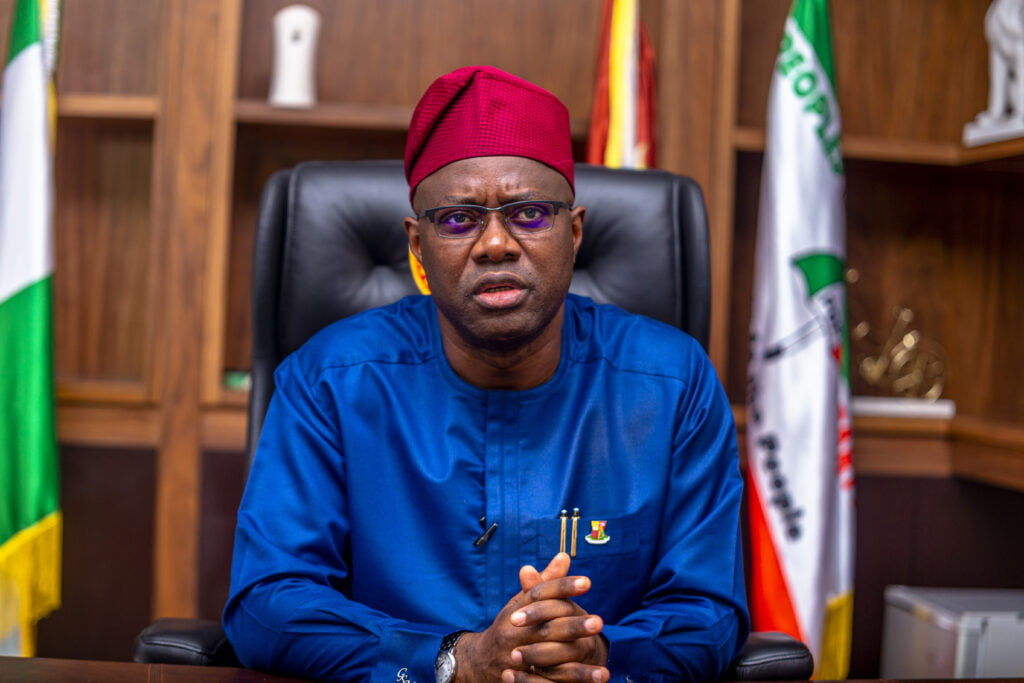
On Thursday, May 14, Governor Seyi Makinde of Oyo State announced his intention to run for president in the 2027 election on the platform of the Peoples Democratic Party, PDP, in alliance with the Allied Peoples’ Movement, APC.
nThis declaration marked a significant shift in the politics of Oyo State, as it was not just a presidential ambition, but the unveiling of a broader political experiment rooted in coalition-building, the same strategy that propelled Makinde to power in 2019.
nThe stakes are significantly higher this time, as Makinde aims to replicate the alliance model that worked in Oyo State at the national level, against the formidable machinery of the All Progressives Congress, APC.
nBefore thousands of supporters at a mega rally organised by the PDP and APM, the governor announced a new opposition alliance, which he hoped could become the foundation of a national political movement ahead of the 2027 polls.
nThe event followed the formal signing of a Memorandum of Understanding between the PDP and APM at the PDP South-West Secretariat in Ibadan, supervised by the governor and the National Chairman of the APM, Yusuf Mamman Dantalle.
nA deeper political question lies beneath the symbolism of party agreements and campaign rhetoric: can the alliance model that worked in Oyo State be successfully replicated at the national level?
nMakinde’s emergence as governor in 2019 remains one of the clearest examples of successful opposition coalition politics in recent Nigerian history, where several opposition parties and influential political figures closed ranks to remove the APC from power in the state.
nFormer Governor Rashidi Ladoja, now the Olubadan of Ibadanland, and leaders from parties such as the African Democratic Congress, ADC; Social Democratic Party, SDP; and Zenith Labour Party, ZLP merged their political structures into the PDP in support of Makinde’s candidacy.
nMakinde defeated APC candidate, Mr Adebayo Adelabu, by polling 515,621 votes against Adelabu’s 357,982, with observers crediting the coalition with neutralising the APC’s dominance by pooling grassroots structures, regional influence and anti-incumbency sentiments into a single electoral force.
nSix years later, Makinde appears convinced that the same formula could become the basis for a national opposition resurgence, although coalition politics at the federal level is infinitely more complicated than state-level alliances.
nAt the Ibadan rally, Makinde framed the emerging alliance as a democratic necessity rather than a narrow partisan arrangement, arguing that Nigeria’s democratic foundations were under pressure due to increasing interference in opposition politics nationwide.
nThe governor said the gathering represented more than a political rally, explaining that it was an attempt to retrace the country’s democratic journey and understand how Nigeria arrived at its current political situation.
nMakinde warned that the country was approaching a dangerous political crossroads where democratic competition itself appeared threatened, and accused unnamed political actors of deliberately weakening opposition parties in pursuit of a one-party state.
nHe said, “We have continued to witness interference in the affairs of opposition parties across our beloved country, with the clear intention of steering Nigeria towards a one-party state.”
nHis comments reflected a growing sentiment among opposition figures who believed Nigeria’s democratic space is shrinking amid defections, internal crises and the expanding influence of the APC across key political institutions.
nMakinde insisted that genuine democracy could not survive without vibrant political competition, warning, “Without a multi-party system, there can be no true democracy. So, where is our democracy today?”
nThe alliance is fundamentally political, but its organisers understood that public frustration over economic conditions may become the opposition’s strongest weapon heading into 2027, with Nigeria grappling with severe inflation, rising food prices, energy costs and worsening living conditions.
nSecurity challenges also remain persistent across several parts of the country, and Makinde lamented that worsening economic and security realities had forced many Nigerians into daily survival struggles, saying, “The economic and security situations continue to worsen, forcing the majority of Nigerians into survival mode on a daily basis.”
nHe lampooned those in authority for treating public office as private property rather than a responsibility entrusted to them by citizens, and sought to redefine opposition politics beyond traditional party structures.
nMakinde argued that the opposition was no longer limited to politicians or political parties, but included ordinary Nigerians dissatisfied with the direction of the country, saying, “The opposition in Nigeria is not limited to political parties alone. The opposition is every ordinary Nigerian for whom this country is no longer working.”
nHe added that opposition parties remained committed to working together to provide Nigerians with a credible alternative, saying, “And the opposition political parties in Nigeria remain committed to working together to present a credible alternative for our people.”
nThe presidential hopeful also sought to present the emerging coalition as an act of resistance against political intimidation and public despair, arguing that Nigerians had been pushed to the brink by worsening conditions and political manipulation.
nMakinde maintained that there was an expectation in some quarters that Nigerians would become too exhausted by hardship to demand accountability, saying, “We have been pushed to the brink, with the expectation that we will turn against one another in confusion and desperation.”
nHe stated that the ruling establishment assumed that the daily struggle for survival would weaken citizens’ capacity to resist poor governance, saying, “Their greatest assumption is that we will become too exhausted from the daily struggle to survive to resist or demand better.”
nMakinde argued that the emerging alliance had already disproved assumptions that opposition parties could never unite, saying, “They concluded that the opposition could never unite. I stand before you to say clearly: that was a grave miscalculation.”
nThe most politically symbolic moment of the rally came when Makinde announced the ‘Reset Nigeria Movement’, calling on opposition parties to close ranks and describing the alliance between the PDP and APM as the beginning of a larger political coalition.
nFor now, Makinde’s declaration has undoubtedly altered the early political conversation surrounding 2027, as he has positioned himself not merely as another aspirant but as a possible architect of opposition consolidation.
nThe real test lies ahead: whether opposition parties can sustain unity beyond public declarations; whether Nigerians can be persuaded that the alliance offered a credible governing alternative; and whether Makinde himself can successfully transition from influential governor to national political force.
Related Stories
 General News
CELEBRATING TWO YEARS OF TRANSFORMATIONAL LEADERSHIP IN THE PRESIDENTIAL AMNESTY PROGRAMME
Tomorrow, 14TH March 2026, as we look forward to the second anniversary, we reflect on the remarkable two years since the Administrator of the Preside
 General News
PRESIDENTIAL AMNESTY PROGRAMME PHASE 3: DISREGARD PURPORTED STATEMENT ON DELAYED ITA PAYMENTS — OFFICE OF NATIONAL CHAIRMAN
The Office of the National Chairman of the Presidential Amnesty Programme Phase 3, General Elaye ThankGod Dollar Slaboh, has called on beneficiaries a
 General News
RE: CLARIFICATION ON MY PERSONAL RELATIONSHIPS
PUBLIC NOTICErnrnRE: CLARIFICATION ON MY PERSONAL RELATIONSHIPSrnrnIt has become necessary to make this public clarification following the increasing