
2027: Federal Government Will Not Give In to Coercion by Politically Desperate Individuals - Attorney General
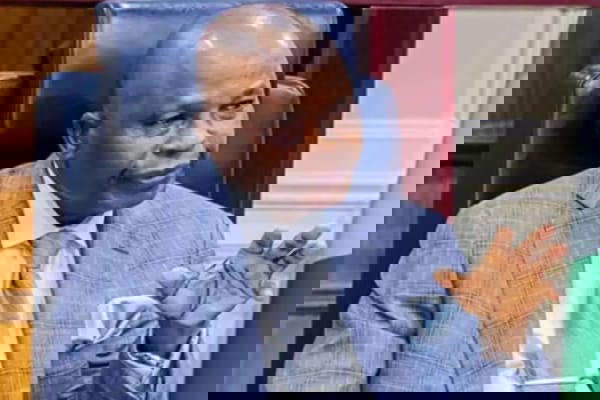
The Attorney-General of the Federation and Minister of Justice, Prince Lateef Fagbemi, SAN, has emphasized that those fueling hatred must be halted, as the federal government will not give in to coercion from individuals he termed as political desperados.
nPrince Fagbemi made this statement on Thursday, while delivering a speech at the conference of the National Association of Judiciary Correspondents, which took place in Abuja.
nHe stressed that political desperados must act responsibly and within the boundaries of the law, adding that relevant government agencies will not be hindered from performing their duties if anyone violates the law.
nThe government, according to Prince Fagbemi, will not yield to blackmail, regardless of who is affected, and will not tolerate violence, hate speech, or any other form of criminal behavior.
nHe urged citizens to demonstrate patriotism and protect the unity of the country, as the government will not allow anyone to incite chaos.
nPrince Fagbemi's stance comes amidst widespread concerns among opposition parties, who have alleged that anti-corruption agencies are targeting their members.
nThere are also suspicions that the government is involved in the internal conflicts within opposition parties, but Prince Fagbemi emphasized that the media has a crucial role to play in the lead-up to the 2027 general elections.
nHe cautioned that the media, as a vital stakeholder, should not be used to divide the nation, and instead, should serve as a bridge between the Independent National Electoral Commission, political actors, and over 90 million potential voters.
nPrince Fagbemi urged the media to remember that the country's unity is paramount and should not be compromised for the sake of elections.
nThe current administration views the media as partners and has ensured that they can perform their duties without intimidation or threats, as evident in his office's relationship with the media.
nAccording to Prince Fagbemi, the theme of the conference, "The Role of the Judiciary in Deepening Democracy in Nigeria", is fitting and highlights the judiciary's role in strengthening the country's democracy.
nThe judiciary, as the third arm of government, provides the legal foundation that enables democracy to function beyond elections, and without an independent and active judiciary, democratic gains can be quickly reversed.
nPrince Fagbemi's prepared speech was read by a senior Ministry of Justice official, Mr Hussain Oloyede, who emphasized that the Nigerian judiciary deepens democracy by interpreting the 1999 Constitution and ensuring that both the government and citizens act within its boundaries.
nChief Justice of Nigeria, Justice Kudirat Kekere-Ekun, stressed that in every constitutional democracy, the strength of institutions is measured not only by the decisions they make but also by the degree to which those decisions are understood, trusted, and accepted by society.
nJustice Kekere-Ekun noted that the judiciary serves as the guardian of constitutional order, resolves disputes according to law, protects citizens' rights and liberties, and ensures that governance remains subject to legal restraint.
nThe meaning and impact of judicial work, according to Justice Kekere-Ekun, extend beyond the courtroom and reach the public largely through those responsible for reporting and interpreting judicial proceedings.
nThe CJN emphasized that accurate, responsible, and contextual reporting is essential for sustaining public confidence in the administration of justice.
nJustice Kekere-Ekun assured that the judiciary remains committed to independence, impartiality, fairness, and transparency, and that the media bears the responsibility of accuracy, fairness, and contextual analysis.
nThe CJN, who was represented by the Administrator of the National Judicial Institute, Justice Babatunde Adejumo, added that when both institutions faithfully discharge their responsibilities, they reinforce each other and strengthen the democratic foundations of the nation.
nThe Nigerian Bar Association, represented by its General Secretary, Dr Mobolaji Ojibara, argued that as the nation strengthens its democratic institutions, the National Judicial Council must continue to discharge its mandate of sanctioning erring judicial officers.
nAccording to the NBA, public confidence in the judiciary extends beyond the correctness of judicial decisions and encompasses the perceived integrity, fairness, and reliability of the entire system.
nThe NBA emphasized that institutional trust is built when citizens are confident that judges are selected based on merit, that misconduct is addressed promptly and fairly, and that standards are applied uniformly.
nThe Chairman of the Abuja Chapter of NAJUC, Mr Kayode Lawal, stated that the conference was conceived as a forum for interaction and cross-fertilization of ideas between critical stakeholders in the nation's judiciary and journalists.
nMr Lawal added that the conference is part of the periodic refresher programs of the body, an affiliate of the Nigeria Union of Journalists, to keep members updated on modern developments and enable them to perform their duties optimally.
Related Stories
 General News
CELEBRATING TWO YEARS OF TRANSFORMATIONAL LEADERSHIP IN THE PRESIDENTIAL AMNESTY PROGRAMME
Tomorrow, 14TH March 2026, as we look forward to the second anniversary, we reflect on the remarkable two years since the Administrator of the Preside
 General News
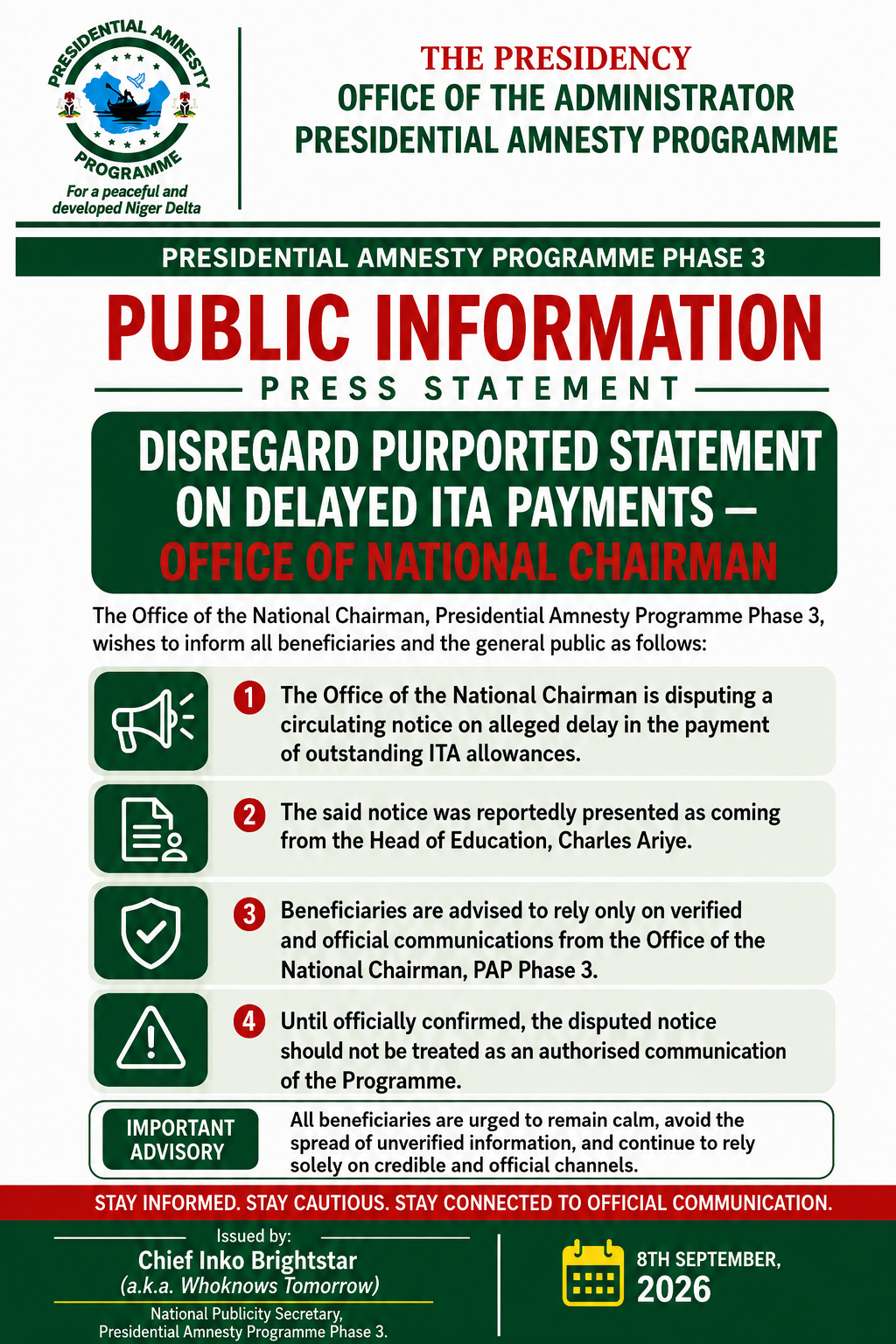
PRESIDENTIAL AMNESTY PROGRAMME PHASE 3: DISREGARD PURPORTED STATEMENT ON DELAYED ITA PAYMENTS — OFFICE OF NATIONAL CHAIRMAN
The Office of the National Chairman of the Presidential Amnesty Programme Phase 3, General Elaye ThankGod Dollar Slaboh, has called on beneficiaries a
 General News
RE: CLARIFICATION ON MY PERSONAL RELATIONSHIPS
PUBLIC NOTICErnrnRE: CLARIFICATION ON MY PERSONAL RELATIONSHIPSrnrnIt has become necessary to make this public clarification following the increasing