
2027 Election Candidate Nominations: Omo-Agege's Situation Stands Apart as Legally Adherent
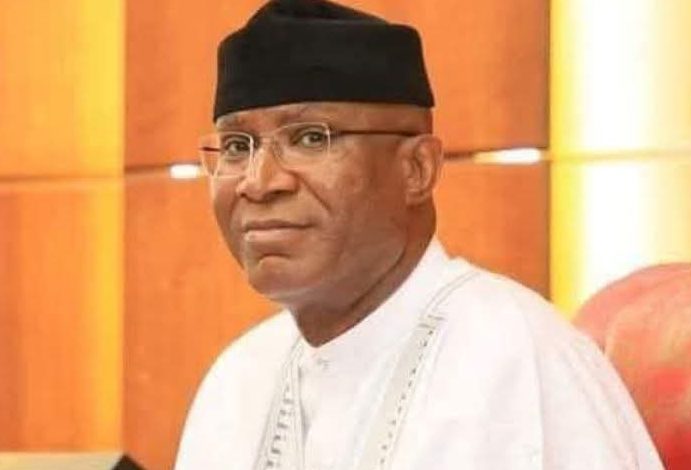
The electorate of Delta Central Senatorial District is convinced that the All Progressives Congress (APC) committed a grave injustice by annulling Senator Ovie Omo-Agege's landslide victory in the senatorial primaries on 18th May, 2026.
nAccording to credible evidence gathered across all 85 wards of the district, Omo-Agege won emphatically, polling 109,516 votes against 7,698 for his rival, Senator Ede Dafinone.
nThe APC's decision to annul Omo-Agege's victory was allegedly influenced by Governor Sheriff Oborevwori's desire to retire Omo-Agege from politics, along with other leaders of the old APC bloc and their supporters, as punishment for challenging him in the 2023 governorship election.
nAn Urhobo-hater-in-chief, who fears Omo-Agege's return to the Senate would weaken her control over the Urhobo Nation, is believed to have played a key role in the annulment of his victory.
nFollowing the annulment, Omo-Agege migrated his grassroots political machinery to the new Nigerian Democratic Congress (NDC), having laid the groundwork beforehand, and comfortably secured the NDC's senatorial ticket for Delta Central.
nThis move strategically upended Oborevwori's plan to "cage and padlock" Omo-Agege and his people as retired lame ducks in the APC, and was seen as an uppercut to Oborevwori's demigod posturing.
nOmo-Agege's decision to join the NDC was driven by an incisive understanding of the law and a blend of Sun Tzu and Machiavellian tactics, and has altered Delta's 2027 electoral calculus with seismic effects extending beyond his own race.
nThe electorate of Delta Central is gearing up to withstand any rigging schemes that may lie ahead, with all options now effectively on the table.
nOmo-Agege's principled exit from the APC has further consolidated his standing as a leader with clear convictions on the true spirit of electoral democracy.
nThe APC had required aspirants to secure written withdrawals from other aspirants before the primaries, and Omo-Agege's participation in the primaries could be seen as an academic exercise, given that he had withdrawn from the race and deposed to a statement on oath affirming that withdrawal.
nSome analyses have suggested that Omo-Agege's move to the NDC may breach the law, but this is not correct, as his movement is firmly anchored on strong legal grounds.
nThe question arises as to whether the law prohibits a qualified citizen from subscribing to the membership of a different political party to protect and advance his political rights, where those rights are violated in his own party.
nSection 40 of the Constitution guarantees a citizen the fundamental right to belong to any political party for the protection of his interests, and does not require a citizen to remain in a party where his interests or rights are permanently violated.
nA citizen's right to belong to any party of his choice is constitutionally protected, and no law exists in opposition to Section 40 of the Constitution.
nThe Supreme Court has reaffirmed the supremacy of the Constitution, stating that every law or regulation must accord with its dictates, as seen in the case of Mene-Okotie v. Pan Ocean Oil Corp. Ltd. (2025).
nJoining a new party to advance one's political interest is not among the constitutional "disqualification criteria" emphasized in Section 85 of the Electoral Act, 2026.
nThe Electoral Act does not disqualify an aspirant who participated in the primaries of one party from participating in the primaries of, or being nominated as a candidate by, another party, subject to mandatory conditions.
nThe Supreme Court has stated that there is a vast difference between participation at the primaries and being actually nominated by a party, as seen in the case of Jime v. Hembe (2023).
nUnless duly nominated by a party, an aspirant is free to move to another party to advance his political interest, provided other equities favour him, as clarified by Kekere-Ekun, JSC (now CJN) in Jime (supra).
nSome analyses have suggested that joining the NDC after participating in the tainted APC primaries may breach the law, but this is not correct, as Omo-Agege's movement to the NDC is firmly anchored on strong legal grounds.
nThe House of Representatives initiated an amendment of Section 77 of the Electoral Act on 11th March 2026, to prohibit dual party membership, but this process remains inchoate and has not received the Senate's concurrence or presidential assent.
nThe amendment, sponsored by Rt. Hon. Julius Ihonvbere, seeks to add subsections (8), (9), and (10) to Section 77, but its validity and constitutionality may be challenged if it is ever fully passed and tested in court.
nSome lawmakers, including Rt. Hon. Hassan Fulata, have argued that the amendment strips an alleged offender of membership in both parties once dual registration is merely alleged, violating the offender's constitutionally guaranteed right to freedom of association under Section 40 of the Constitution.
nIt has been insinuated that Omo-Agege may have run afoul of Section 77(4) of the Electoral Act 2026, which requires a political party to submit its membership register to the Independent National Electoral Commission (INEC) no later than 21 days before the date fixed for its primaries.
nHowever, the law frowns upon 'multiple nomination', provided for in Section 35 of the Electoral Act 2026, and not 'double membership', and Omo-Agege's membership of the NDC is not tainted by his previous membership of the APC.
nThe law mandates a political party to maintain a digital membership register, issue membership cards to its members, and submit its register to INEC before the primaries, but does not prohibit a citizen from joining a new party to protect and advance his political rights.
nThe question arises as to who bears the reasonable and lawful duty to delist a resigned member's name from a party's register: the party or the resigned member, and it is clear that the party bears this duty.
nSenator Omo-Agege's movement to the NDC has nothing to do with the recent judgments of the Federal High Court in Suits Nos. FHC/ABJ/CS/517/2026 and FHC/ABJ/CS/720/2026, which focused on the powers of INEC with respect to election timelines and administrative guidelines for the 2027 general elections.
nFinally, Senator Omo-Agege's case is in a class of its own and is compliant with the law in all material respects, and he is free to pursue his political ambitions without any legal hindrance.
nOmo-Agege's situation is unique and firmly grounded in law, and he is OK to proceed with his political career.
Related Stories
 General News
CELEBRATING TWO YEARS OF TRANSFORMATIONAL LEADERSHIP IN THE PRESIDENTIAL AMNESTY PROGRAMME
Tomorrow, 14TH March 2026, as we look forward to the second anniversary, we reflect on the remarkable two years since the Administrator of the Preside
 General News
PRESIDENTIAL AMNESTY PROGRAMME PHASE 3: DISREGARD PURPORTED STATEMENT ON DELAYED ITA PAYMENTS — OFFICE OF NATIONAL CHAIRMAN
The Office of the National Chairman of the Presidential Amnesty Programme Phase 3, General Elaye ThankGod Dollar Slaboh, has called on beneficiaries a
 General News
RE: CLARIFICATION ON MY PERSONAL RELATIONSHIPS
PUBLIC NOTICErnrnRE: CLARIFICATION ON MY PERSONAL RELATIONSHIPSrnrnIt has become necessary to make this public clarification following the increasing