
2027: Another Incident Puts ADC at Risk of Collapse
Inside the Shehu Musa Yar’Adua Centre in Abuja, a different story unfolds, one of a packed hall filled with supporters standing shoulder to shoulder, and aides moving quickly between clusters, as conversations overlap and prominent opposition figures like Atiku Abubakar, Peter Obi, and Rabiu Kwankwaso draw attention.
nAisha Yesufu, a frontline activist and Deputy Chairman of the committee overseeing Membership, Revalidation, Mobilisation and Registration within the African Democratic Congress, stands composed, her posture firm, her gaze steady, as she declares, “We are not intimidated, we are not afraid, we are not thinking of giving up.”
nShe adds, more quietly but with weight, “Nigeria is at war, going into 2027, Nigeria is at war, and we are fighting for our lives and the soul of this nation,” a statement that sounds heavy, but when examined closely, reveals a simpler, more unsettling reality: a political party fighting for its existence.
nThe crisis facing the African Democratic Congress is not one problem, but many, all unfolding at the same time, each one tightening the other, including a fight for control, a court order freezing movement, a regulator stepping away, and a case that could end the party itself.
nThe crisis began as a legal challenge on September 2, 2025, when a suit was filed at the Federal High Court questioning the legitimacy of the current leadership of the ADC, with the claimant, Nafiu Bala Gombe, asking the court to recognise him as acting national chairman.
nThe case has moved slowly but steadily, with motions, objections, and jurisdictional arguments, until it reached the Court of Appeal, which on March 12, 2026, ordered all parties to maintain the ‘status quo ante bellum’ and warned against any action that could render the final judgment useless.
nThe Independent National Electoral Commission stepped back after the ruling, withdrawing recognition from all sides, stopping dealings with the party, and refusing to monitor any activities, citing the need to avoid disobeying a court order.
nFor party members, this means planning in the dark, with one ward organiser, Moses Shekwolo, postponing three meetings ahead of the upcoming congresses scheduled to commence on April 9, saying, “We don’t even know which list will eventually stand at the end of the day.”
nThe ADC has fixed dates for its internal processes, including congresses from April 9 to 12, a national convention on April 14, primaries from April 23 to May 30, and submission of membership register on May 10, but the court is expected to hear the case again on April 17, leaving the party facing a stark choice: move ahead without INEC, and risk everything being voided later, or wait for the courts, and risk missing the election entirely.
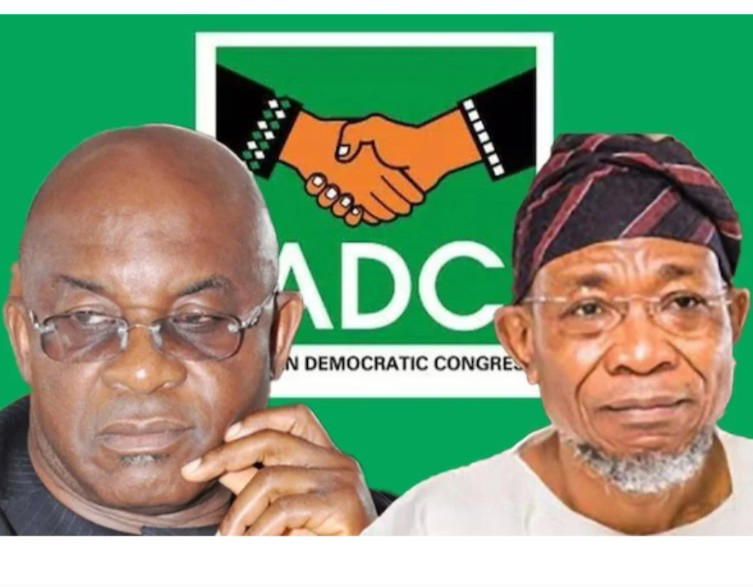
nThe question of who controls the party remains unanswered, with the current leadership, backed by a coalition of opposition figures including David Mark, on one side, and the faction in court led by Nafiu Bala Gombe, on the other, each with their own claims and arguments.
nBeyond the headline case, other legal battles are unfolding quietly, including applications to stop congresses, counter-arguments challenging those requests, and disputes over INEC's powers, all of which carry the potential to reshape what happens next.
nA separate case, less visible but potentially more final, is asking the court to compel INEC to deregister the African Democratic Congress and several other parties entirely, based on a constitutional question about whether INEC is obligated to strike off parties that fail to meet minimum electoral performance thresholds.
nThe plaintiffs argue that some parties, including the ADC, fell short in 2023 and should no longer be legally recognised, with the case hanging over everything, and its success potentially having immediate and absolute implications, including the party ceasing to exist.
nSeveral outcomes are possible, including a swift court ruling, a prolonged case, proceeding without INEC, a negotiated settlement, or a deregistration ruling, each carrying risk and uncertainty.
nNigeria's political history offers warnings, including the Peoples Democratic Party crisis of 2016, the All Progressives Congress crisis in Rivers State, and the deregistration of 74 parties in 2020, all of which reshaped the next general election.
nThis crisis is different, however, as it is compressed, with a live court case, a freezing order, a regulator stepping back, a deregistration threat, and an election timetable measured in weeks, all combining to tighten the crisis and squeeze every decision into a risk.
nDavid Mark, Interim National Chairman of the African Democratic Congress, has demanded a change in the leadership of INEC, accusing the government of plotting a one-party state, saying, “We demand the immediate resignation or sack of the INEC Chairman, Professor Amupitan, and all the National Commissioners… This attack on democracy will not stand.”
nJega Mahmud, a public affairs analyst, has warned of a deliberate weakening of the opposition, urging caution from INEC, saying, “The impression INEC is giving is that it is part of the scheme to destroy all opposition parties.”
nInibehe Effiong, a prominent constitutional and human rights lawyer, has criticised INEC's actions, describing them as a conspiracy that could eliminate meaningful electoral contestation in 2027, saying, “It seems that the ruling party… is so scared of a fair contestation.”
nBolaji Abdullahi, National Publicity Secretary of the African Democratic Congress, has rejected INEC's interpretation of the Court of Appeal order, affirming the party's resolve to proceed with its planned activities, saying, “We reject INEC's interpretation of the Court of Appeal ruling.”
nSolomon Dalung, former Minister of Youth and Sports Development and an ADC chieftain, has pushed back strongly against INEC's warning and freeze, insisting the party would not be deterred, saying, “If INEC is confused, ADC cannot be confused.”
nBack in the Yar’Adua Centre, the noise continues, with people talking, arguing, and calculating what comes next, and at the centre of it, Aisha Yesufu remains steady, not talking about court orders or procedure, but about people, and what happens if all of this collapses.
Related Stories
 General News
CELEBRATING TWO YEARS OF TRANSFORMATIONAL LEADERSHIP IN THE PRESIDENTIAL AMNESTY PROGRAMME
Tomorrow, 14TH March 2026, as we look forward to the second anniversary, we reflect on the remarkable two years since the Administrator of the Preside
 General News
PRESIDENTIAL AMNESTY PROGRAMME PHASE 3: DISREGARD PURPORTED STATEMENT ON DELAYED ITA PAYMENTS — OFFICE OF NATIONAL CHAIRMAN
The Office of the National Chairman of the Presidential Amnesty Programme Phase 3, General Elaye ThankGod Dollar Slaboh, has called on beneficiaries a
 General News
RE: CLARIFICATION ON MY PERSONAL RELATIONSHIPS
PUBLIC NOTICErnrnRE: CLARIFICATION ON MY PERSONAL RELATIONSHIPSrnrnIt has become necessary to make this public clarification following the increasing